 The Bitcoin Beacon
ANDE will plug thousands of seized mining machines into surplus hydropower from Itaipú and mine for the state itself — a first for the utility.
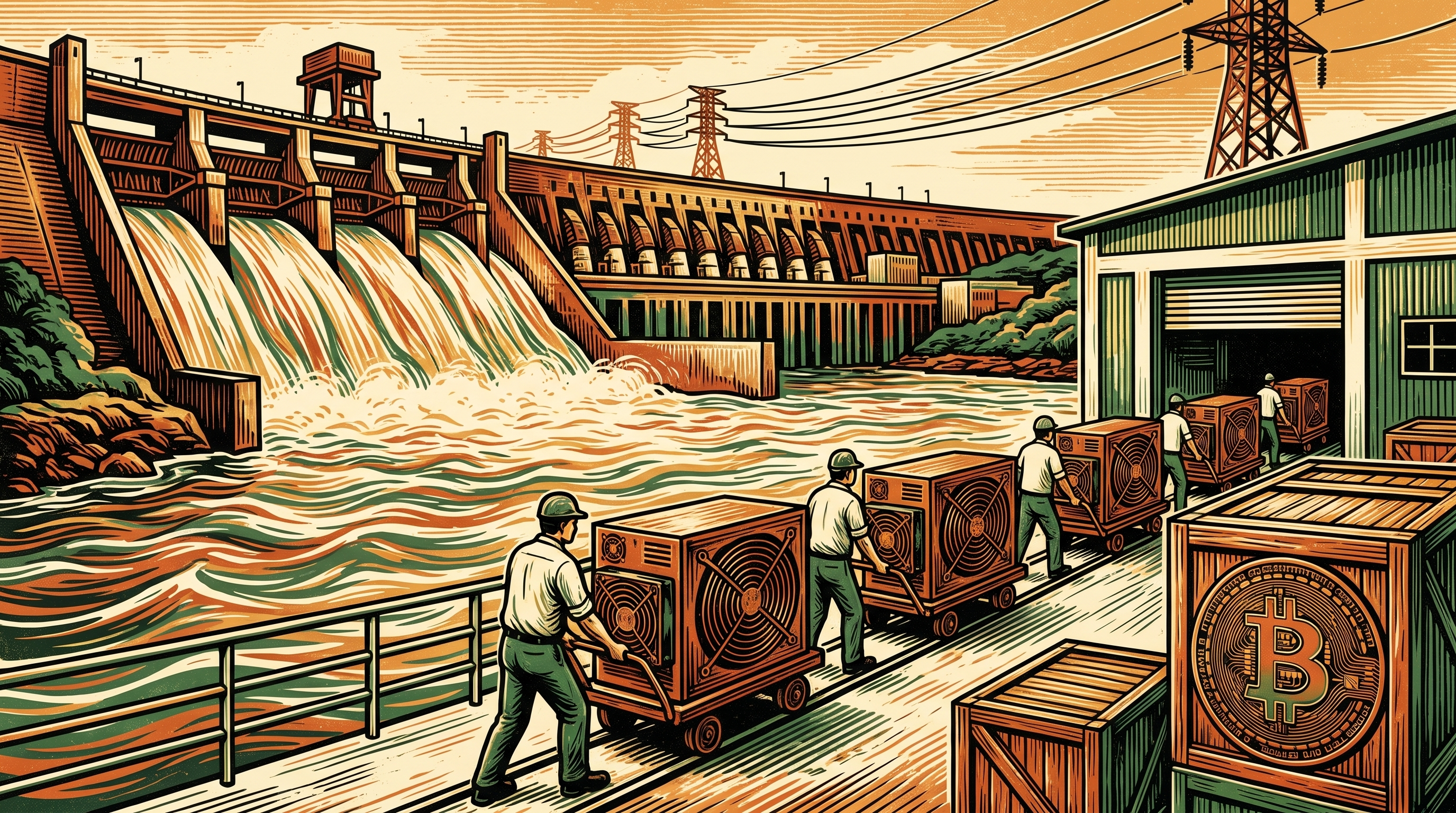
ASUNCIÓN — For two years, Paraguay’s state electricity monopoly hunted bitcoin miners — raiding warehouses, cutting illegal high-voltage taps, hauling away rigs by the thousand. Now it wants to switch them back on and run them itself. ANDE, the Administración Nacional de Electricidad, has signed a memorandum of understanding with the infrastructure firm Morphware to build a government-run bitcoin mining operation powered by confiscated machines and surplus hydroelectric power.
It is a first-of-its-kind move for the utility: the same body that polices the grid becoming a miner on it. ANDE will host and own the operation; Morphware, whose founder Kenso Trabing described its role as “an advisory one,” supplies the technical know-how the utility lacks.
The plan runs on two Paraguayan gluts. The first is power. Paraguay co-owns the Itaipú dam on the border with Brazil, one of the largest hydroelectric plants on earth, and for decades has exported much of its share at low, treaty-defined prices. Routing some of that electricity into state-owned mining, rather than selling it cheap across the border, is the entire economic logic: keep the value at home.
The second surplus is hardware. Since early 2024 ANDE has run a nationwide crackdown on unmetered mining. In Salto del Guairá alone it seized 2,738 rigs after finding a single illegal connection drawing roughly 1.1 billion guaraníes — about $146,000 — in stolen power every month. Similar raids pushed the national stockpile of confiscated ASICs close to 30,000 units. Those machines have been sitting idle in storage. The pilot will plug in about 1,500 of them, installed at existing utility buildings next to substations that can be fitted with ventilation, transformers and proper metering.
The utility that seized the machines will now earn from them — contraband turned into a state revenue line.
Paraguay is joining a small club of states that treat spare energy as a way to accumulate bitcoin directly. El Salvador points geothermal power from state plants into mining and adds the coins to its national reserve. Bhutan’s sovereign wealth fund has quietly mined with hydropower since at least 2019. Kazakhstan this year began taking up to a tenth of the coins its licensed miners produce. Each is a variation on the same idea: own the infrastructure, keep the energy domestic, and let the state — not only private operators — capture the upside.
An MoU is not a running mine. Converting substations into hosting sites takes capital and time, and a state utility with no mining experience is leaning heavily on an outside advisor to make it work. There is also a governance question a democracy should ask: a government that both seizes machines and profits from mining has an incentive to keep seizing them. And a sovereign miner accumulating coins is, like Bhutan, a potential future seller whose decisions move for budget reasons, not market ones.
Still, the direction is notable. A national grid operator that spent two years treating bitcoin mining as theft has decided the smarter play is to do it on purpose.
Why it matters: when a state power company mines bitcoin with its own surplus hydropower, energy that used to be exported cheap becomes a sovereign bitcoin position — and the line between regulator and miner disappears.
Free. Five minutes. No hype.
Subscribe free