 The Bitcoin Beacon
Under rules in force since August 1, Kazakhstan gives bitcoin miners cheaper power in exchange for up to 10% of every coin, funneled into a state reserve.
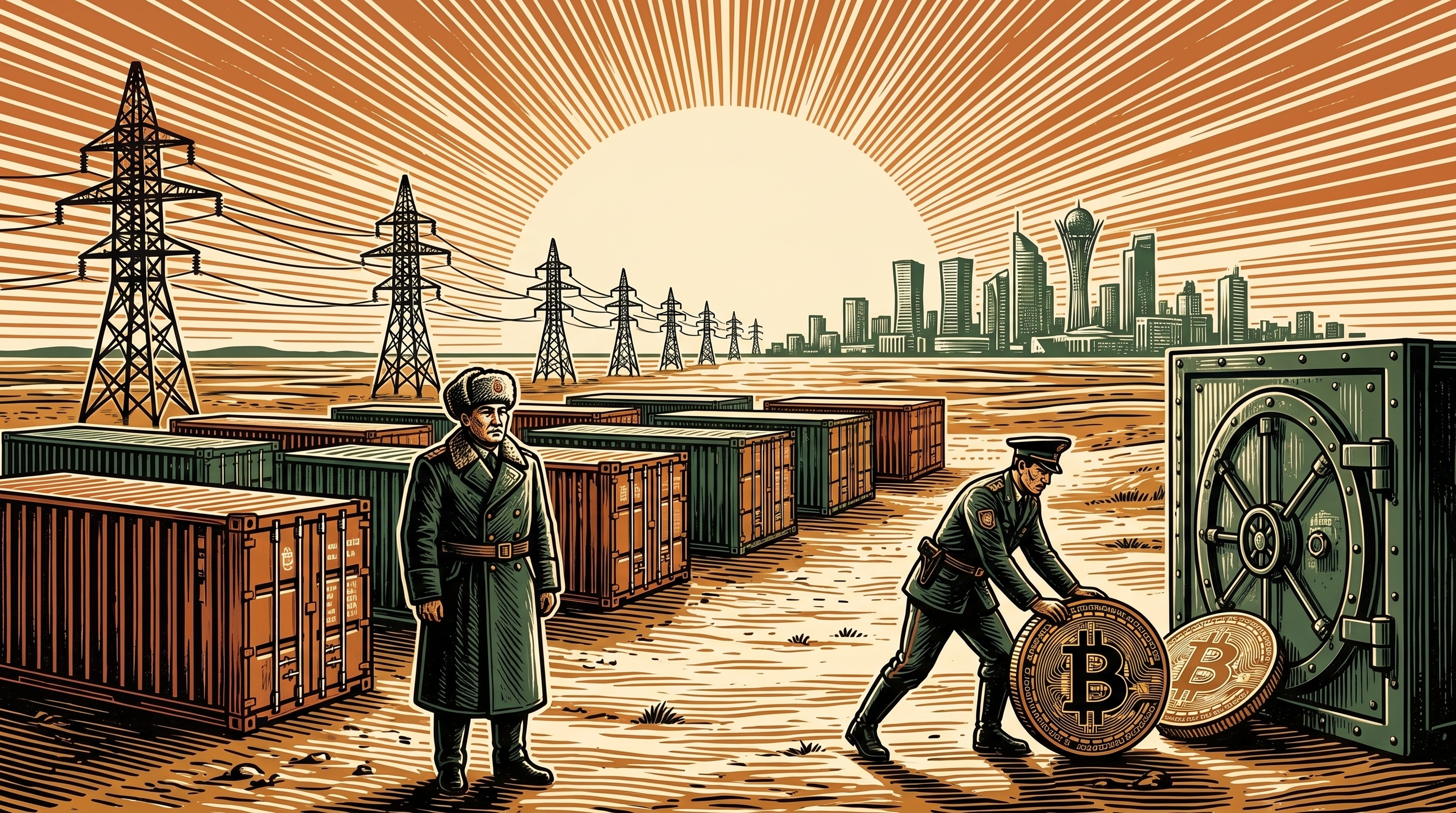
ASTANA — Most governments that want bitcoin have to buy it or seize it. Kazakhstan has found a third way: it takes a cut of every coin its miners produce. Under rules in force since August 1, the state now claims a share of domestic bitcoin production and routes it into a national reserve.
The mechanism is a bargain. Miners that enroll in the country's “strategic mining” program get preferential access to electricity — the scarce, decisive input in a business where power is most of the cost. In exchange, they hand the state up to 10% of the bitcoin they mine. The government keeps the coins as a sovereign reserve rather than selling them immediately.
This is a striking turn for a country that spent the last few years wrestling with its miners. When China expelled the industry in 2021, Kazakhstan absorbed a huge share of the world's hashrate almost overnight, then buckled under the load: power shortages, blackouts blamed partly on unregistered mining, and a scramble to meter and tax the sector. The state's instinct then was control. Now the instinct is ownership.
Kazakhstan has paired the mining rule with a broader digital-asset push. It has set a 2026 deadline for a national digital-asset fund, floated a state-linked “CryptoCity” project, and begun using its digital tenge central-bank currency in public procurement. The through-line is a government that has decided digital assets are infrastructure to be captured, not contraband to be chased.
Kazakhstan is not alone in the logic. Bhutan mined a national bitcoin stack with hydropower. El Salvador ran a volcano-powered state mine. The United Arab Emirates has quietly accumulated a mining reserve worth hundreds of millions of dollars. What these states share is a realization that if you have cheap or stranded energy, you can convert it directly into a hard, liquid reserve asset without ever touching an exchange.
The state no longer merely taxes the miners. It owns a slice of what they make.
A production share is cleaner than a cash tax for a government that wants exposure to bitcoin. It accrues the asset itself, denominated in bitcoin, growing as the network grows, without the political awkwardness of a finance ministry placing buy orders. And it gives the state a reason to keep the lights on for miners rather than switch them off in a shortage: idle rigs pay no dividend to the treasury.
The model has obvious failure points. A 10% levy on output, on top of power costs, squeezes miners whose margins are already thin; if the terms are worse than a neighboring jurisdiction, rigs are mobile and will leave. Enforcement depends on metering every machine honestly, which Kazakhstan has struggled to do before. And a “reserve” is only a reserve if the government holds it — a cash-strapped state may find the temptation to sell into a rally hard to resist, as sovereign holders from Bhutan onward have shown.
Why it matters: a decade after governments tried to ban bitcoin mining, one of the world's biggest mining hubs has decided the smarter move is to own a piece of every coin the industry produces on its soil.
Free. Five minutes. No hype.
Subscribe free