 The Bitcoin Beacon
Bitdeer signed a 28-megawatt co-mining deal with Soluna at a wind-powered South Texas site, adding about 1.93 exahash as other miners defect to AI.
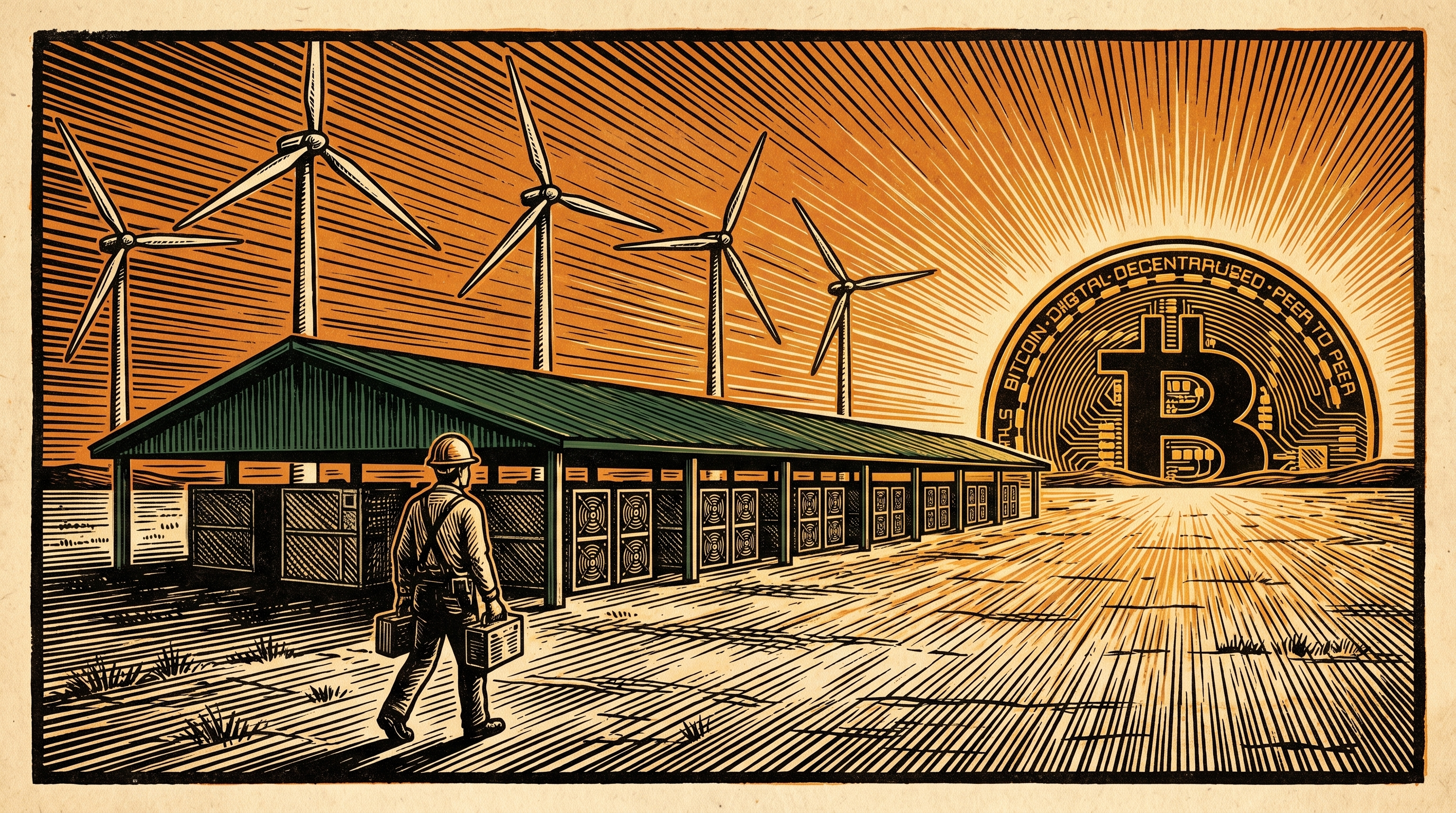
AUSTIN, Texas — The loudest story in bitcoin mining this year is the exodus: publicly traded miners tearing up their business plans to rent their power and land to artificial-intelligence companies instead. Bitdeer is betting the other way. This week it signed a deal to put more machines in the ground and mine more bitcoin, not less.
The agreement, struck with the renewable-energy developer Soluna Holdings, covers 28 megawatts at Soluna's wind-powered Project Kati 1 site in South Texas. Bitdeer will install its own SEALMINER A2 Pro Air rigs there, adding roughly 1.93 exahash per second to its fleet. The machines begin switching on this month, deployed in batches as capacity comes online.
The structure is a co-mining arrangement rather than a simple hosting contract. Soluna supplies the site, the power and turnkey operations; Bitdeer owns the mining hardware; and the two companies split the bitcoin the machines produce. For Soluna, whose pitch is monetizing surplus and curtailed renewable power, it turns wind that might otherwise be wasted into hashrate. For Bitdeer, it is cheap, clean electricity attached to a partner that runs the physical plant.
The SEALMINER line is central to why Bitdeer can keep expanding while others retreat. Bitdeer designs its own chips, which lowers its cost per terahash and lets it deploy new capacity without buying from a rival like Bitmain. When the price a miner earns per unit of hashrate is under pressure — and after the 2024 halving, with network hashrate now around 905 exahash, it has been — owning the supply chain is the difference between growth and retreat.
The contrast with the rest of the industry is stark. Marathon and Riot, two of the largest listed miners, turned net sellers of bitcoin this year to fund AI ambitions. Hyperscale Data just shut a 340-megawatt bitcoin site in Michigan entirely to convert it to AI compute under a contract worth as much as $1.2 billion. The math driving them is not subtle: a megawatt pointed at AI inference can earn several times what the same megawatt earns hashing bitcoin at today's prices.
One camp is trading hashrate for compute. Bitdeer is buying the hashrate they're selling.
Bitdeer's wager is that this is a cycle, not a one-way door. Hashprice — the revenue a miner earns per unit of work — is depressed now, but it moves with bitcoin's price and with transaction fees, both of which can rise. Miners who expand into the trough own more of the network's rewards when the trough ends. And unlike an AI data center, which requires long-term contracts and enormous certainty about demand, a bitcoin mine can be switched on and off with the market.
Twenty-eight megawatts is modest — a single AI campus can dwarf it — and Bitdeer itself has flirted with high-performance computing, so this is not a purity test. But direction is information. At a moment when the marginal listed miner is defecting to AI, one of the sector's most cost-efficient operators is signing new capacity to mine bitcoin with wind power. That is a vote on where the block reward is heading.
Why it matters: bitcoin's security depends on miners choosing to hash. As rivals convert megawatts to AI, every operator that keeps expanding is holding the network's defenses up.
Free. Five minutes. No hype.
Subscribe free