 The Bitcoin Beacon
Hyperscale Data quit a 340-megawatt bitcoin mine for a $1.2 billion AI deal and Marathon and Riot turned sellers, while Bitdeer doubled down. The network's security hangs on who stays.
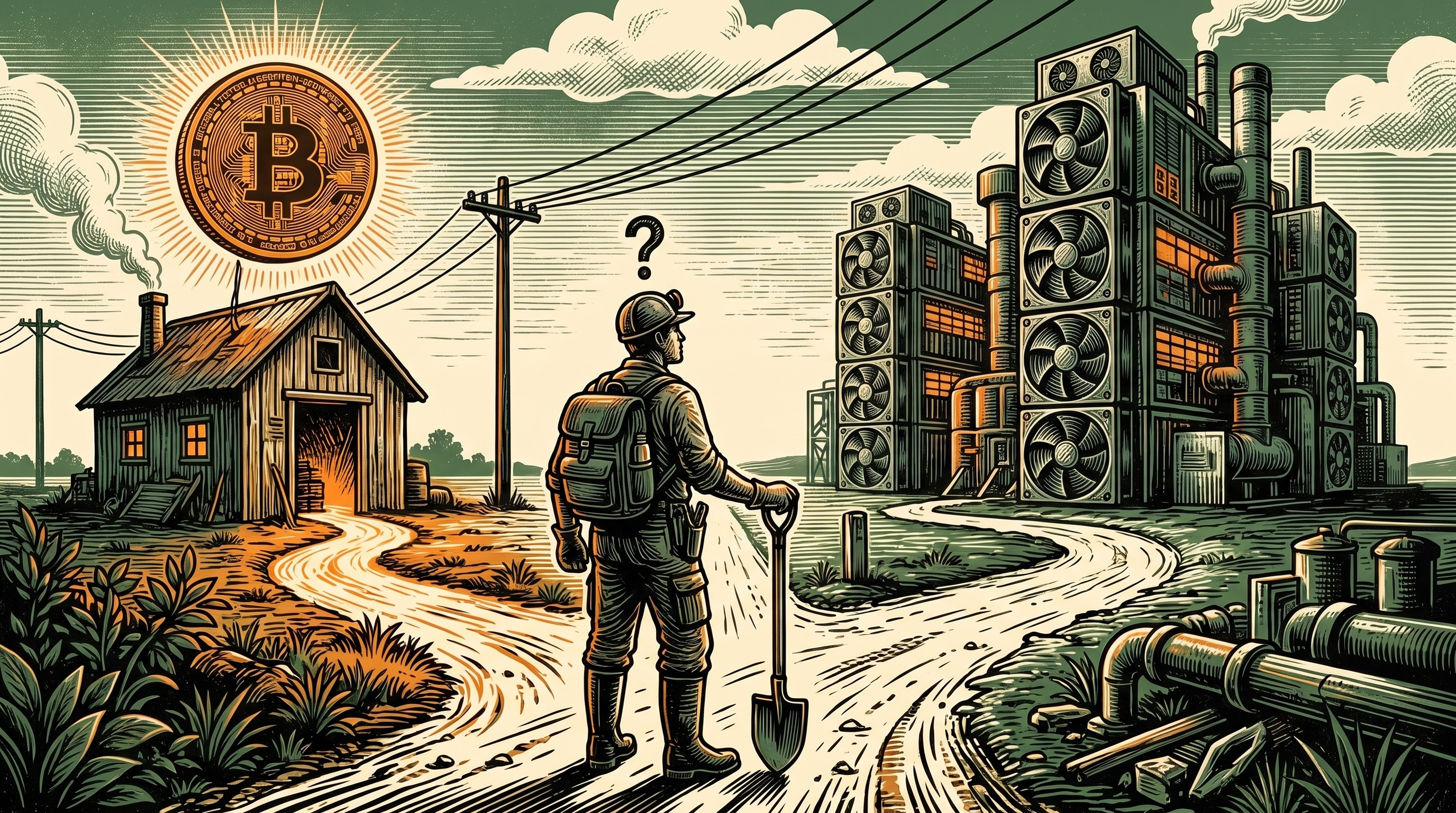
THE TAKE — A bitcoin miner and an AI data center are, physically, almost the same thing: a warehouse of chips drinking electricity. That resemblance is now forcing a decision on the industry, and the answers are splitting it in two.
On September 1, Hyperscale Data shut down all bitcoin mining at its 340-megawatt facility in Michigan and began converting the site to run AI graphics chips instead. The contract behind the switch guarantees the company $1.2 billion for 20 megawatts over ten years, scalable to 52 megawatts for $3.0 billion. At full build, that is about $2.88 million per megawatt per year — comfortably more than the same power earns hashing bitcoin at today's prices. To fund the retrofit, the company sold 65 bitcoin for $5.1 million and put its idle mining hardware up for sale.
Hyperscale is not an outlier. Marathon and Riot, two of the biggest listed miners, turned net sellers of bitcoin this year to bankroll AI ambitions of their own. The direction of travel among public miners is unmistakable: sell the coins, rent the megawatts, chase the compute.
And then there is Bitdeer, which this week signed a new 28-megawatt deal to mine more bitcoin with Texas wind power. Its bet is that the AI rush is a phase of a cycle, not the end of mining — that hashprice is low now but rises with bitcoin's price and its fees, and that whoever expands into the trough owns more of the reward when it lifts.
Every rig that defects to AI is hashrate the network no longer has — a wager that Nvidia pays better than the block reward.
Both camps can be right at once, because they are answering different questions. The defectors are answering “what earns the most per megawatt this quarter?” The holdouts are answering “what will this asset be worth in a cycle?” The market, for now, is rewarding the first question. AI demand is real, immediate and priced in dollars; the block reward is volatile and, since the 2024 halving, smaller.
Here is the part that should focus bitcoiners' minds. Bitcoin's security is not an abstraction; it is the sum of the hashrate pointed at it, and hashrate is the sum of miners who choose to stay. Network hashrate sits near 905 exahash today, close to a record. But every operator that converts a site to AI is subtracting from that total, or at least declining to add to it. If the marginal miner always defects to compute, the network's defenses stop growing.
The reassuring counterargument is that bitcoin does not need any particular miner. When rigs leave, difficulty adjusts downward, the remaining miners earn more per unit of work, and the economics that drove the exodus reverse. A high enough price, or a fee market that finally shows up, pays miners to come back. The network has survived every prior wave of miner migration by exactly this mechanism.
Still, the AI boom is the first competitor that wants the same warehouses, the same chips and the same cheap power that bitcoin does, and can outbid for all three. That is new. For years the question was whether bitcoin mining was worth its energy. Now the question is whether bitcoin can keep its energy at all — and the answer will be written one 28-megawatt deal at a time, by the miners who decide to keep hashing.
Free. Five minutes. No hype.
Subscribe free