 The Bitcoin Beacon
The kingdom that mined a billion-dollar bitcoin stack with hydropower has offloaded more than $110 million this year, cutting its holdings by roughly two-thirds.
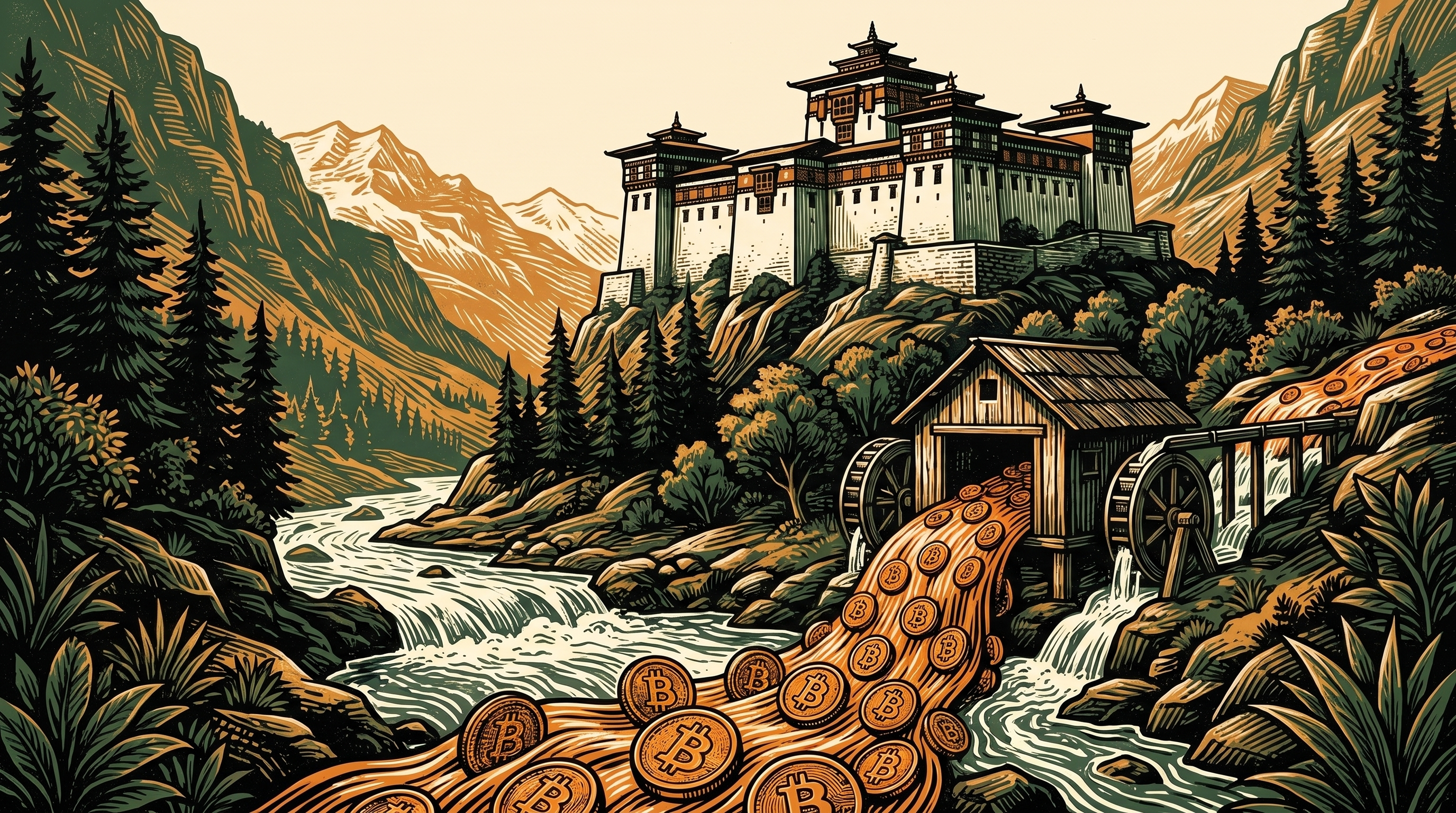
THIMPHU — Most governments that hold bitcoin got it by seizing it from criminals. Bhutan earned its stack the hard way, mining coins with surplus hydropower from its glacial rivers since 2019. Now the tiny Himalayan kingdom is doing something few sovereign holders have: steadily selling. Bhutan has offloaded more than $110 million in bitcoin in 2026, cutting its holdings by roughly two-thirds from their peak, according to on-chain analysis reported this year.
The seller is Druk Holding & Investments, the state-owned sovereign fund that runs both the mining program and the wallets. At its height in late 2024, Bhutan’s stash was worth more than $1.4 billion — a sum that rivaled a meaningful slice of the country’s GDP. The drawdown has been methodical rather than panicked: a series of transfers in the single-digit-to-low-tens of millions, routed in part through firms like QCP Capital and exchanges including Binance.
Exact figures vary by source and date, a reminder that sovereign on-chain accounting is an estimate, not a disclosure. Reporting through 2026 has put Bhutan’s remaining holdings somewhere between roughly 3,950 and 5,400 BTC, down from about 13,000 at the peak — a decline of 58% to 70% depending on the tally. One tracked move alone, a 973 BTC transfer worth about $72 million in mid-March, accounted for a large share of the year’s sales.
What the data agree on is direction. Bhutan is a net seller, and it appears to have largely stopped mining: analysts note no inflows above $100,000 in more than a year, the signature of idled machines.
Bhutan never treated bitcoin as a monument. It treated it as a sovereign investment to be deployed. The kingdom faces real bills — youth unemployment, emigration, and Gelephu Mindfulness City, an ambitious special economic zone the government is trying to fund. A sovereign wealth fund exists to spend when spending serves the country; converting an appreciated, volatile asset into infrastructure is what such funds are for.
El Salvador built a stack to hold forever. Bhutan built one to spend. Both are bitcoin strategies.
The contrast writes itself. El Salvador has made a doctrine of never selling, adding to its reserve and treating the balance as a national statement. Bhutan mined quietly, sold quietly, and is turning coins into concrete. Neither is obviously right; they are different theories of what a state should do with a hard, liquid asset.
For the market, the takeaway is more sober. A sovereign that keeps selling in measured clips is a persistent, price-insensitive source of supply — a modest overhang, but a real one. It also proves something bulls sometimes gloss over: exit liquidity for a nation-sized position exists, and Bhutan has repeatedly used it without moving the market much.
The open question is whether Bhutan restarts mining if margins recover, or continues to draw the stack down toward zero. And whether other quiet sovereign miners — the kind that accumulate without announcements — follow the same arc from accumulation to liquidation as their national priorities change.
Why it matters: the first country to mine a national bitcoin reserve is now spending it, a live test of whether sovereign bitcoin is a permanent treasury or just another asset to sell when the state needs cash.
Free. Five minutes. No hype.
Subscribe free