 The Bitcoin Beacon
Miners in the Besqala valley pay no tax until 2035 — but they must plug into the state’s electricity meters and route every sale back through Uzbek banks.
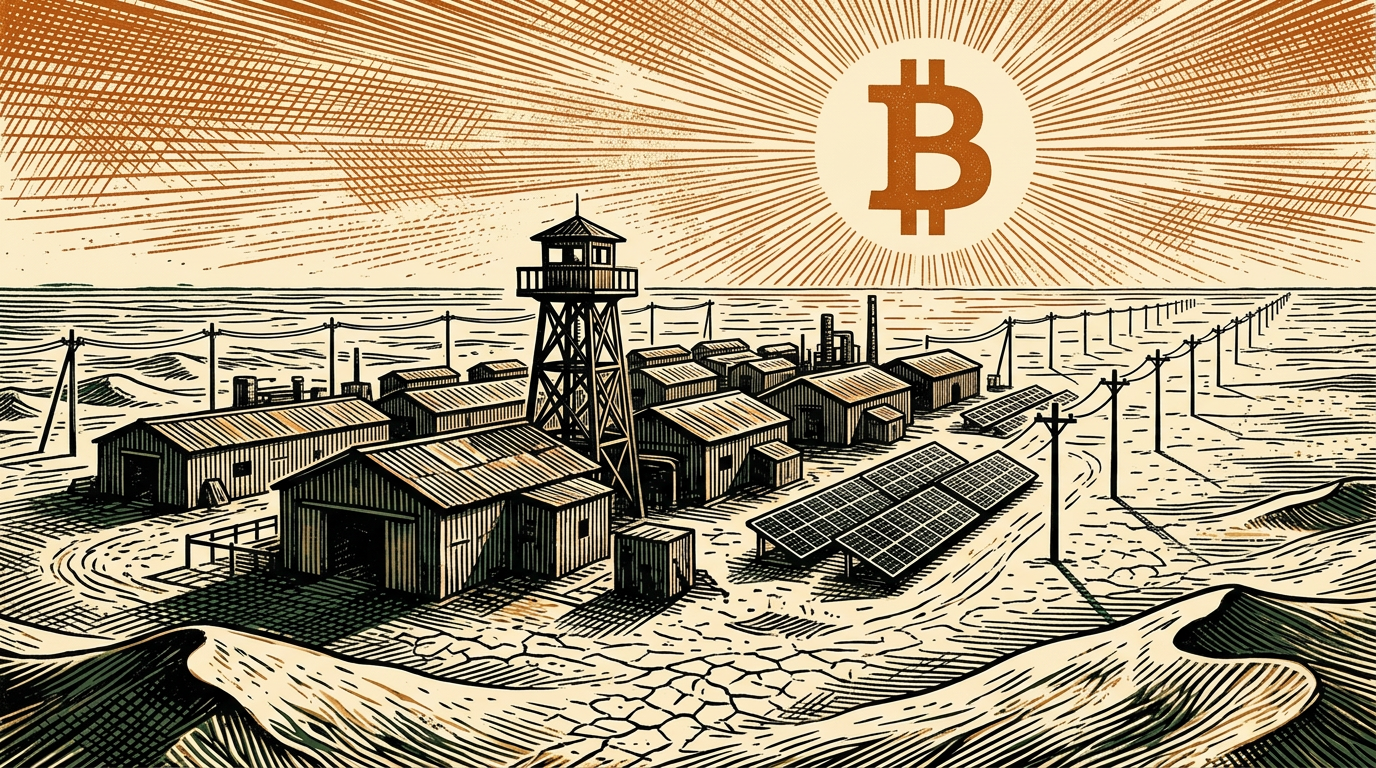
NUKUS, Uzbekistan — Uzbekistan has drawn a map for how an authoritarian state can welcome bitcoin miners without ceding an inch of control. By decree of President Shavkat Mirziyoyev, the entire republic of Karakalpakstan has become the Besqala Mining Valley, a special zone where mining income pays no tax until 2035 — and where every watt and every coin is watched.
The incentives are real. Inside Besqala, income from mining is exempt from tax through 2035, replaced by a flat 1% monthly fee on revenue paid to the zone’s directorate. Operators get access to the national grid at a set premium tariff — reported at 1,800 som per kilowatt-hour — supplemented by hydrogen power plants the government plans to build in the region, on a grid that leans increasingly on renewables. The Ministry of Justice approved the operating rules on July 8.
The price of the tax break is total visibility. To qualify, a miner must be a legal entity registered in Karakalpakstan, integrate directly into ASKUE, the national automated electricity-metering system, and route all proceeds from digital-asset sales back into the Uzbek banking system. Nothing runs off-grid, off-book or off-shore. It is a mining haven with the surveillance dial turned to maximum — capital that can enter freely but cannot leave unwatched.
A tax-free zone where the state meters every kilowatt and banks every coin is a haven and a leash at once.
The design is aimed squarely at miners fleeing tighter quotas and rising costs in neighboring Kazakhstan, long the region’s mining hub. And it is pitched, pointedly, at a place that needs the work: Karakalpakstan is geographically isolated and environmentally scarred by the collapse of the Aral Sea, and the government presents Besqala as regional development as much as digital-asset policy.
It is also a template. A wave of states now wants the jobs, the power sales and the tax skim that mining can bring, without the permissionless independence that drew people to bitcoin in the first place. Uzbekistan’s answer — come mine, but plug into our meters and our banks — is the clearest statement yet of that bargain, and other governments are watching it as a model.
Why it matters: bitcoin’s energy is going where states will host it — and the terms increasingly on offer are cheap power in exchange for full surveillance.
Besqala’s tax exemption to 2035, the 1% monthly revenue fee, the 1,800 som/kWh tariff, planned hydrogen plants, the July 8 operating rules, the Karakalpakstan registration requirement, and the ASKUE metering and banking-repatriation conditions are per the reporting above; the decree and regulations date to April–July 2026 and are presented here as the current framework, highlighted again in the Aug 30 digest. No single new dated development this week — run as the state of play. Informational only — not financial advice.
Free. Five minutes. No hype.
Subscribe free