 The Bitcoin Beacon
A press release costs nothing. A held, funded reserve is a budget line and a political fight — and the gap between the two is widening.
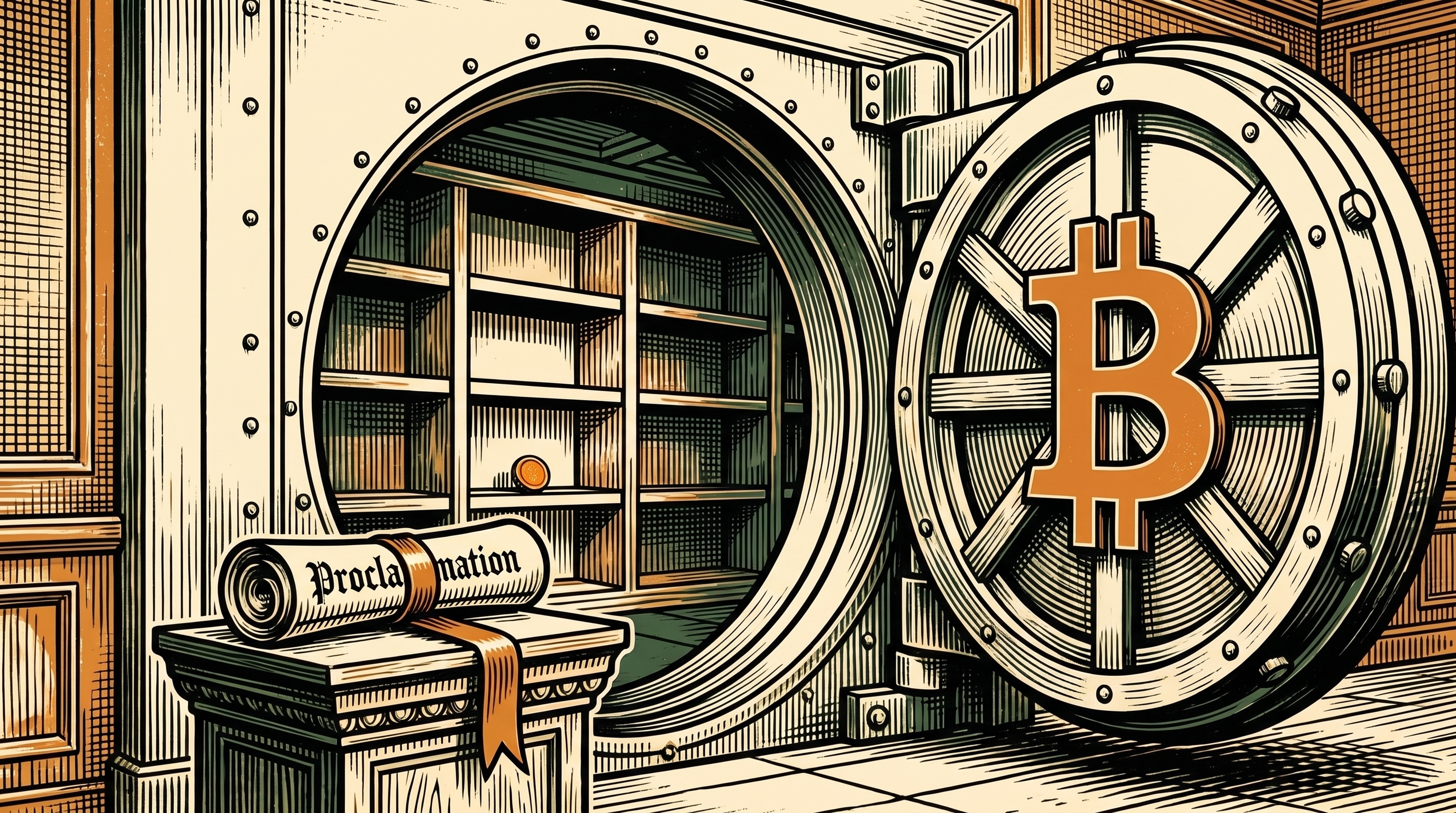
THE TAKE — Missouri wrote a bitcoin reserve into law this week and funded it with donations. That is not an outlier. It is the template for how governments now do “bitcoin reserve”: announce the vessel, skip the fuel.
The genre is everywhere. Pakistan declared a Strategic Bitcoin Reserve in 2025, complete with a 2,000-megawatt mining allocation and a promise to seed it from assets already in state custody — yet analysts note the reserve has no funded balance sheet, and the country’s own central bank has declined to endorse it. U.S. states pass enabling laws with no appropriations behind them. The announcement is the deliverable; the coins are optional.
The instructive counter-case is Bhutan. It did the hard thing — quietly built real state holdings through mining over several years, no press conference required. And in 2026 it has been selling, drawing its reserve down sharply to fund the budget. Bhutan is the rare sovereign that actually accumulated bitcoin at scale, which is precisely why it has something to sell when the treasury needs cash.
Put the two patterns side by side and the lesson sharpens. The governments making noise mostly hold little. The government that held a lot makes no noise — and is now a net seller. A reserve is only a reserve when it is funded, and a funded reserve is a live political asset that gets spent under pressure.
A press release is free. A funded reserve is a budget line — and budget lines get raided.
There is a real case for the symbolic version. A law on the books is a precedent; it normalizes bitcoin as a legitimate treasury asset and lowers the political cost of funding it later, when a surplus or a crisis makes the timing right. Donation-funded and appropriation-free designs also protect taxpayers from carrying price risk on a volatile asset — a genuine virtue, not just an excuse. El Salvador’s daily one-coin buy started small and compounded into a real position. Symbols can become substance.
But they usually don’t on their own. The honest way to read the wave of 2026 reserve announcements is as cheap signaling until proven otherwise — a bet that costs nothing to place and buys a headline. The test is not whether a jurisdiction passed a law or issued a statement. It is whether, a year later, there are coins in the vault that no one has quietly sold.
Why it matters: judge sovereign bitcoin adoption by balance sheets, not press releases — and by then, most of this year’s reserves will still be empty.
Opinion. Pakistan reserve details are per TFTC and Crypto Briefing; the “announcement vs. balance sheet” framing follows GL Insight. Bhutan’s 2026 drawdown is per on-chain trackers and prior reporting; exact figures vary by source and date. Informational only — not financial advice.
Free. Five minutes. No hype.
Subscribe free