 The Bitcoin Beacon
A Bitcoin Core developer paid in bitcoin at an El Zonte restaurant and was told it was the first such payment all month — five years after the town taught the country to spend it.
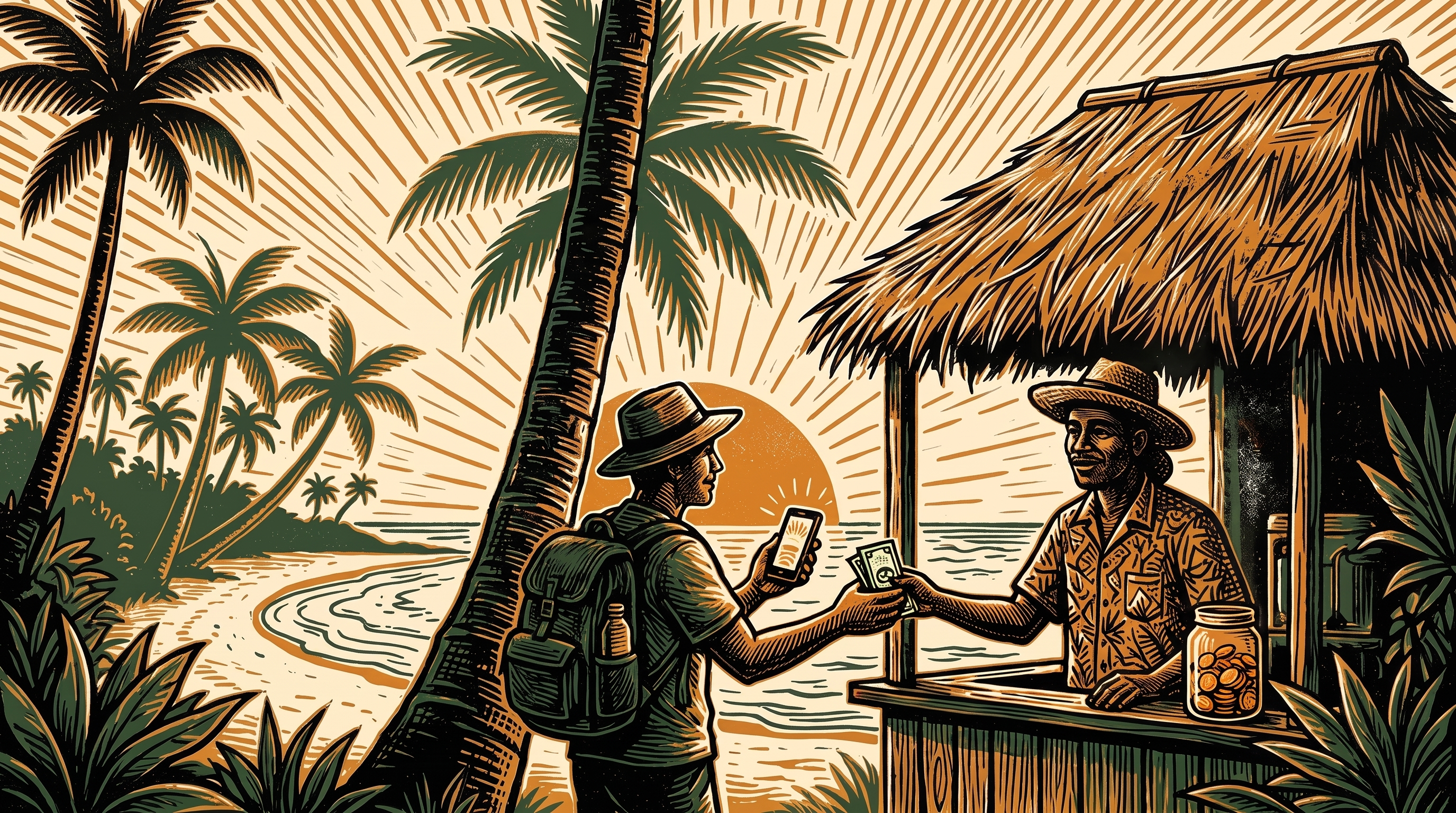
EL ZONTE, El Salvador — A bitcoin payment used to be unremarkable in this Pacific surf town, the place that gave El Salvador its Bitcoin Law. This month it was an event. When Jon Atack, a Bitcoin Core contributor who has lived in the country since 2022, paid for a meal in bitcoin at a local restaurant, the staff told him it was the first bitcoin payment they had taken all month. Almost everyone now pays by card.
El Zonte is where “Bitcoin Beach” began in 2019, a grant-funded experiment that turned a village into a working circular economy and, in 2021, helped persuade President Nayib Bukele to make bitcoin legal tender nationwide. The anecdote Atack shared — corroborated by several outlets this week — is a single till on a single street. But it lands because the trend behind it is measurable.
A Universidad Centroamericana survey found that 8.1% of Salvadorans used bitcoin for a purchase in 2024, down from 25.7% in 2021. The share of people transacting fell as the price rose. Bitcoin became something to hold, not something to hand over the counter.
Two things pulled in the same direction. In January 2025, under a $1.4 billion IMF loan agreement, the Legislative Assembly voted 55–2 to strip bitcoin of mandatory-acceptance status. Merchants no longer had to take it; many stopped. The Fund’s first program review pressed the government to keep its aggregate bitcoin holdings flat, scale back the state’s role in the Chivo wallet, and tighten oversight. By late 2025 the IMF said negotiations to sell the government’s stake in Chivo were advanced.
The other force was the market. When an asset doubles, spending it feels like a mistake — the classic reason a rising store of value makes a poor medium of exchange. A pupusa bought with bitcoin at $30,000 looks expensive at $77,000.
The reserve kept growing while the checkout line emptied. El Salvador became a saver, not a spender.
Here is the paradox at the center of the Salvadoran experiment. As everyday payments thinned, the state’s own stack grew: the government has continued its policy of buying roughly one bitcoin a day, and its public reserve now runs to thousands of coins worth hundreds of millions of dollars. The headline holding rose even as the thing the law was sold on — ordinary people paying for ordinary goods — faded.
That is not nothing. A sovereign treasury accumulating bitcoin is a real form of adoption, and one many governments are now copying. But it is a different claim than the original one. The 2021 pitch was financial inclusion and cheaper remittances at the point of sale. What endured is a balance-sheet bet.
The circular economy has not vanished. Surf-tourist hubs, a handful of committed merchants, and remittance flows through Lightning-enabled apps still move bitcoin, and El Salvador remains far ahead of most countries on infrastructure and familiarity. The honest reading is narrower than either the boosters or the obituary writers prefer: bitcoin here is widely held and lightly spent.
For the rest of the world watching El Salvador as the test case, that distinction is the lesson. Making bitcoin legal tender is a decree. Making it money people reach for is a habit — and habits, unlike laws, cannot be passed in a single vote.
Why it matters: the country that proved bitcoin could be legal tender is now proving how hard it is to keep it circulating once the same coins are worth holding.
The single-restaurant anecdote is Jon Atack’s account as reported above. The 8.1%/25.7% figures are from a Universidad Centroamericana (UCA) survey cited in that coverage. El Salvador’s exact state bitcoin holdings and the status of the Chivo sale vary by public tracker and reporting date; figures here are directional. Informational only — not financial advice.
Free. Five minutes. No hype.
Subscribe free