 The Bitcoin Beacon
A conforming, Fannie Mae–eligible loan now lets buyers pledge bitcoin for the down payment without selling it — no taxable sale, and a fresh layer of leverage on a volatile asset.
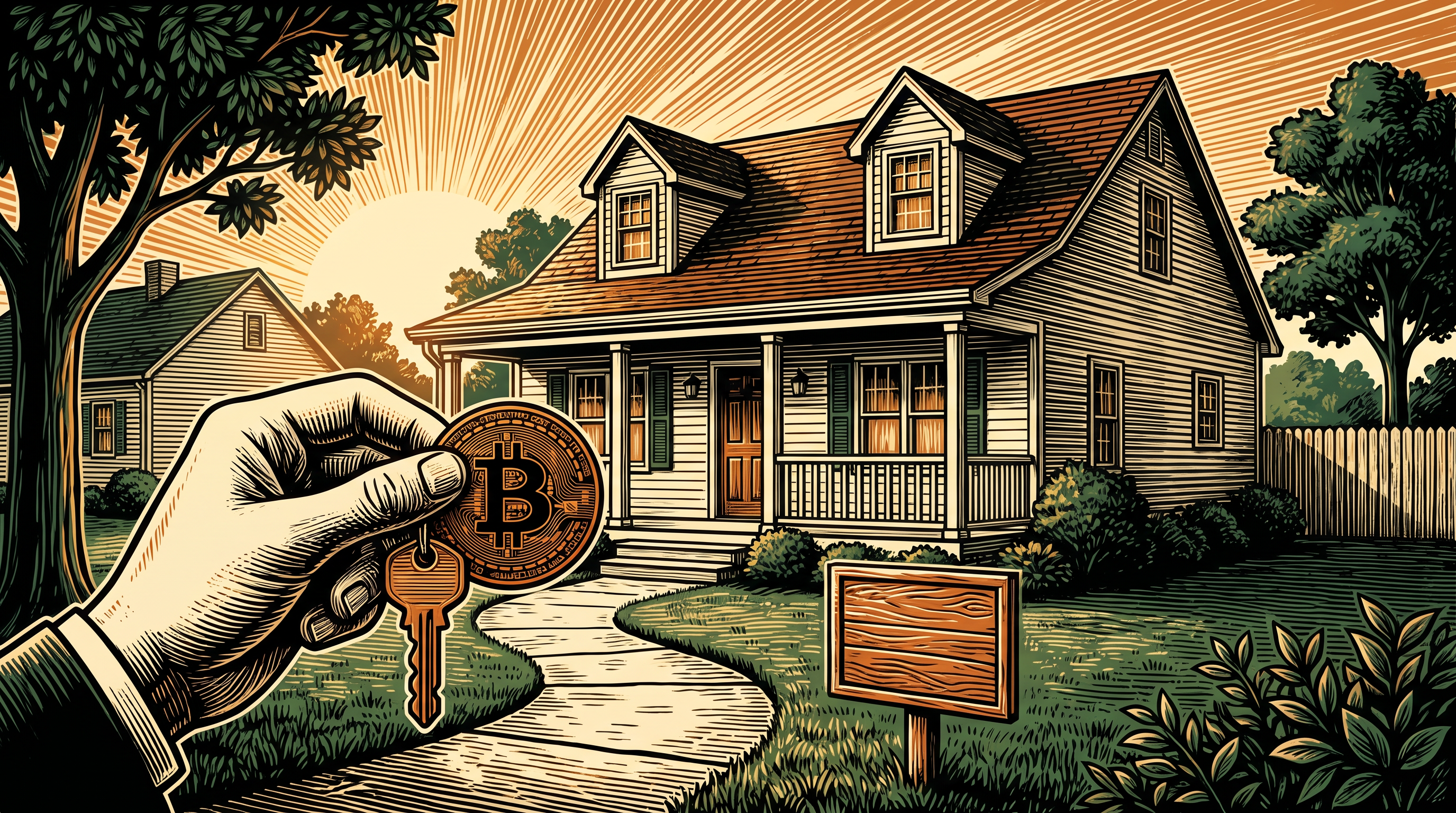
NEW YORK — On Aug. 26, the online lender Better and the exchange Coinbase opened a mortgage that does something new: it lets a buyer put bitcoin to work as collateral without ever selling it. Pledge the coins, keep the upside, and fund the cash down payment on a house — all without triggering the tax bill a sale would.
The product had been in a limited test since Aug. 12 for eligible Coinbase One members. What makes it notable is not that it exists but where it plugs in: these are conforming loans, eligible for Fannie Mae backing, the same plumbing that underwrites ordinary American mortgages.
A borrower pledges bitcoin — or USDC — as collateral against a down-payment loan, rather than liquidating holdings to raise cash. The coins are locked, not spent, so the buyer avoids a capital-gains event and keeps exposure to bitcoin’s price.
The ratio is conservative on paper: pledged bitcoin must be worth 250% of the down-payment loan. Put up $100,000 of bitcoin and you can borrow $40,000 toward the down payment. Coinbase One members approved through Better also get a lender-funded closing-cost credit worth 1% of the mortgage, up to $10,000.
Pledge $100,000 of bitcoin, borrow $40,000 toward the house — and never trigger the tax a sale would.
Better and Coinbase opened a waitlist for an earlier version in June. Of the respondents, 76% were already Coinbase One users and 60% said they planned to buy a home within six months; the companies projected more than $260 million in loan volume before general availability. The pitch lands on a specific frustration: long-term holders who want a house but don’t want to sell coins to get one, and eat the tax and the lost upside in the process.
The mortgage is one signal in a wider shift. The same week, Galaxy opened retail credit lines backed by bitcoin at 8.99% APR, again without requiring customers to sell. Across the market, the pattern is the same: firms are building ways to borrow against bitcoin rather than trade it.
Being usable as loan collateral is a real form of monetary maturity. Gold, equities and homes all do this job; bitcoin doing it inside the conforming-mortgage system, with Fannie Mae eligibility, is a step from speculative asset toward balance-sheet asset.
But collateral cuts both ways. A pledge is a margin position by another name. If bitcoin falls hard, an over-collateralised loan can face a top-up or a forced liquidation — and that pressure now sits next to a family’s home financing rather than a trading account. The 250% cushion is designed to absorb ordinary volatility, not a 2022-style drawdown. Layering household debt on a swing asset is exactly the kind of structure that looks conservative until the collateral moves 40% in a quarter.
Why it matters: bitcoin is being written into the mortgage system as collateral — a genuine use, and a new channel through which a bitcoin drawdown can reach the real economy.
Figures — the 250% collateral ratio, the $100k→$40k example, the 1% (up to $10,000) closing-cost credit, and the >$260M projected volume — are per the launch coverage above. Galaxy’s 8.99% APR retail credit line is per The Rio Times’ Aug. 27 market wrap. USDC is a stablecoin; this piece covers the bitcoin-collateral option. Informational only — not financial advice.
Free. Five minutes. No hype.
Subscribe free