 The Bitcoin Beacon
Treasury’s new Iran measures name digital assets for the first time — squeezing the exchanges and desks in the middle while the base-layer network stays out of reach.
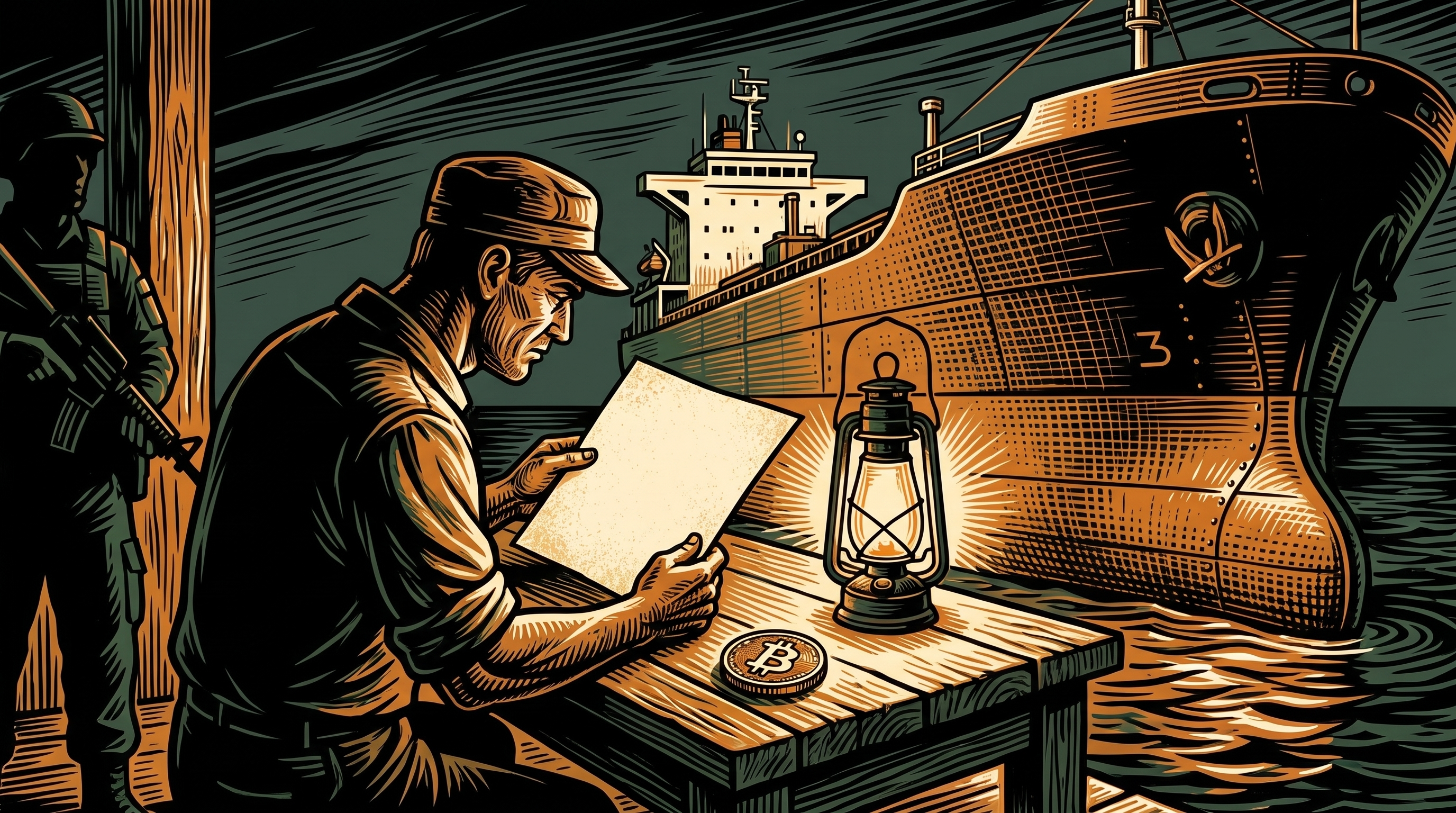
On August 24, Treasury Secretary Scott Bessent launched what he called Operation Economic Outcast, a “whole-of-government economic campaign” against Iran. The package designated nearly 60 individuals, entities and vessels and, for the first time, added digital assets to the list of sectors that can trigger U.S. secondary sanctions — alongside technology, gold, aviation and shipping.
Secondary sanctions are the part that reaches past America’s borders. They threaten any foreign company or bank that keeps doing business in a designated sector with the loss of its own access to the U.S. dollar — a way to make the rest of the world enforce Washington’s rules by choosing the dollar over Iran. Naming crypto as one of those sectors means an exchange or over-the-counter desk in a third country that helps move Iranian money now risks the same treatment as an oil trader or a shipping line.
Iran has spent years using digital assets to work around a banking blockade: mining bitcoin with subsidized power, routing export receipts through exchanges, and leaning on stablecoins to settle trade the dollar system won’t touch. Treasury’s own action named platforms it says helped fund the Islamic Revolutionary Guard Corps. Putting the whole sector under secondary sanctions is an attempt to close that side door.
The pressure points are the intermediaries — the exchanges with bank accounts, the OTC desks with offices, the counterparties in China, the United Arab Emirates, Turkey and Iraq that Washington warned could lose U.S. access. The UAE has already moved: it said last week it would halt trade and financial dealings with Iran after Tehran fired missiles toward Emirati territory.
Here the story splits. Almost everything Treasury can actually reach is custodial: a company holding customer funds, a desk clearing trades, a bank moving fiat. Those are seizable, nameable and bound to a jurisdiction — exactly the chokepoints sanctions are built for. A bitcoin payment between two self-custodied wallets is none of those things. There is no company to designate, no account to freeze, no border to police.
That is the double edge of a neutral bearer network. The same censorship resistance that lets a saver in a collapsing economy hold money no government can confiscate also lets a sanctioned state move value the same way. Washington can raise the cost of the on-ramps and off-ramps — the exchanges where bitcoin becomes dollars — but it cannot switch off the base layer.
The measure’s bite depends on one country. China buys the bulk of Iran’s exported oil, and if Beijing keeps paying without building an alternative settlement rail, the secondary-sanctions threat is either the most consequential financial enforcement in years or an elaborate bluff. Treasury signaled China is not exempt; whether it actually penalizes Chinese banks and brokers is the test the market will watch.
The policy is not empty theater. Sanctions only work if the exits close, and crypto has become an obvious exit — a way to move value across borders outside the banking system that sanctions are designed to police. If Washington can name the venues doing it and threaten their dollar access, that is enforcement working as intended. The counter is the one bitcoiners have made for a decade: the same machinery, pointed at the same permissionless network, is what a less liberal state would use against its own citizens. The tools do not care about the motive.
Why it matters: the U.S. just treated digital assets as an instrument of economic warfare — and in doing so drew the clearest line yet between the parts of bitcoin a government can seize and the part it cannot.
The designation count, the five sanctioned sectors, the named counterparty states and the UAE’s trade halt are per the reporting above. “Digital assets” here spans crypto broadly; this piece focuses on the bitcoin-specific stakes of sanctioning custodial rails while the base-layer network stays reachable. Informational only — not financial advice.
Free. Five minutes. No hype.
Subscribe free