 The Bitcoin Beacon
The bloc’s 21st sanctions package severs 14 offshore platforms from European banking — and draws a hard line between where bitcoin trades freely and where the state can still pull the plug.
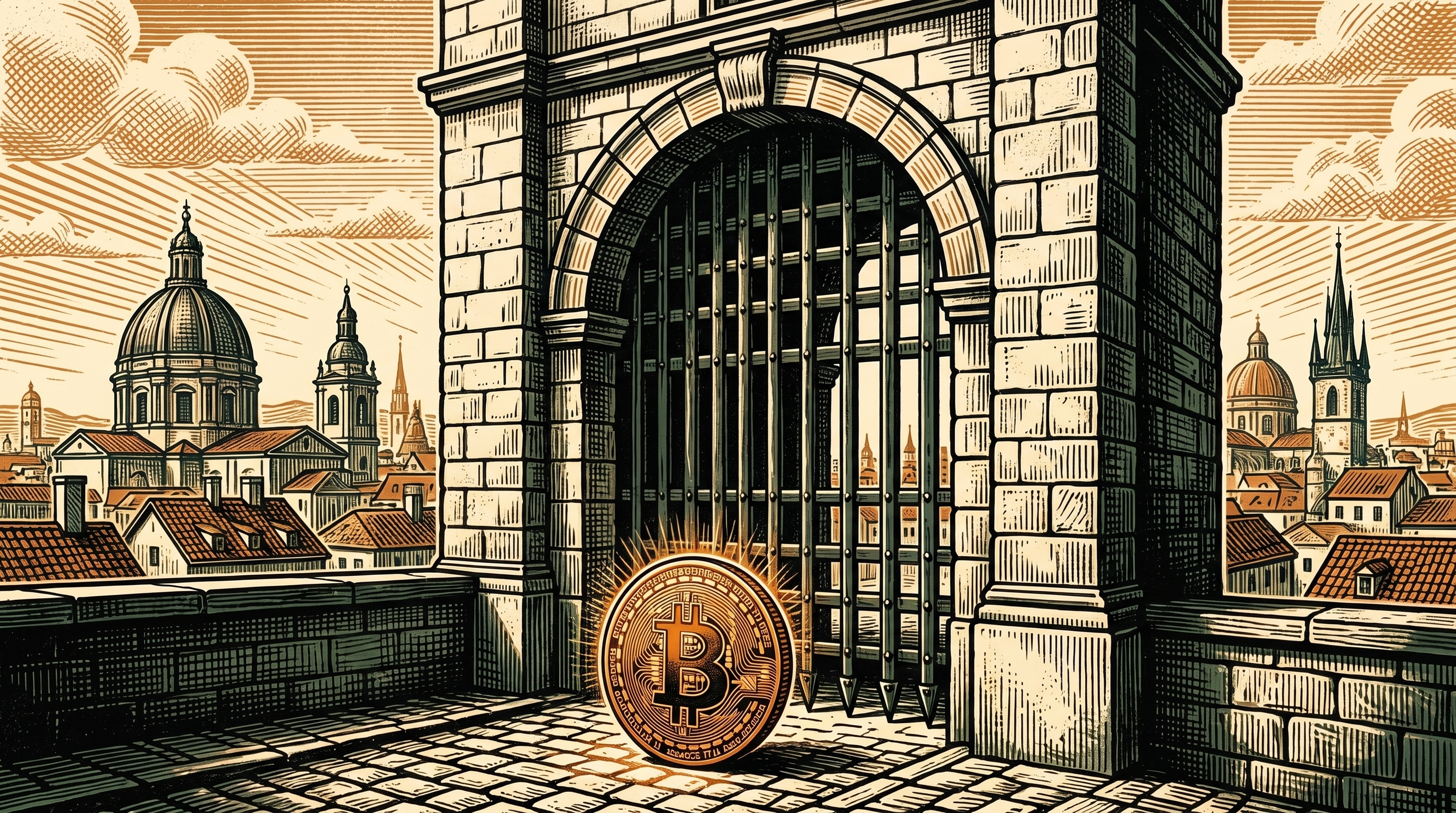
The European Union has spent four years writing rules for crypto. On August 23 it wrote one with teeth. The bloc’s 21st sanctions package, Regulation (EU) 2026/1848, bars every person and company under EU jurisdiction from touching 14 offshore crypto exchanges — no deposits, no withdrawals, no trades, no funding an account. The window to pull money out closed the day before, on August 22. What remains is a paperwork trail: to recover trapped funds, an account holder now needs case-by-case approval from a national regulator such as Germany’s Bundesbank, with a final deadline of November 23.
The named platforms include some of the largest venues outside the Western regulatory perimeter: HTX (the former Huobi), EXMO, BitPapa, Rapira, Aifory Pro and ABCeX. Several are fiat gateways and arbitrage hubs linking Russian, Central Asian and East Asian liquidity to the rest of the market. Cut them off from euros and the price a European sees can drift from the price a trader in Almaty or Dubai sees.
The timing is not accidental. The EU’s Markets in Crypto-Assets regime finished its transition on July 1. Platforms that want European customers must be licensed, and licensed platforms — Coinbase, Kraken and the rest — already screen the counterparties they touch. Bolting sanctions onto that machine forces compliant venues to actively block on-chain flows that trace, directly or indirectly, to the 14 names. The market splits into two rooms: a compliant Western one thick with institutional money, and an offshore one where the same coins trade with rising friction.
Most of these exchanges list dozens of assets, and the sanctions target money-laundering and evasion, not bitcoin as such. But bitcoin is where the argument gets sharpest. An exchange is a company with a bank account, an office and a jurisdiction; it can be named, listed and severed. A bitcoin payment between two self-custodied wallets is none of those things. Brussels can stop a European from wiring euros to HTX. It cannot stop a customer in a non-EU country from receiving bitcoin to a wallet whose keys only they hold.
That is the line the package draws in bright ink. Censorship resistance was never a property of exchanges — they are the most centralised, most seizable part of the system. It is a property of the base layer. The people most exposed to this ban are those who left their coins on someone else’s platform; the least exposed are those holding their own keys and settling peer-to-peer.
In the near term, the friction lands on ordinary users caught mid-flow: a European with a balance on a now-forbidden exchange, facing a November deadline and a bureaucratic recovery process. It lands on the arbitrage desks that made their living stitching offshore and onshore prices together. And it lands hardest on the sanctioned platforms, whose European fiat rails just went dark.
The second-order effect is fragmentation. When fiat on-ramps are walled off region by region, liquidity pools separate and price gaps open — the very inefficiency a single global asset is supposed to erase. Bitcoin’s answer has always been that the coins still move even when the money around them does not: a European cut off from HTX can still be paid in bitcoin and sell it somewhere legal. Whether that flexibility is a feature or a loophole depends entirely on which side of the sanction you sit.
The EU’s case is not frivolous. Sanctions only work if the exits are closed, and crypto exchanges have been an obvious exit — a way to move value across borders outside the banking system that sanctions are built to police. If Brussels can name the venues doing it and cut their access to European banks, that is enforcement working as designed. The counter is equally simple: the same tools, pointed at the same permissionless network, are what a less liberal government would use to wall its own citizens in. The machinery does not care about the motive.
Why it matters: the EU just demonstrated, at scale, exactly what a state can and cannot switch off — the exchange, yes; the wallet, no.
Regulation numbers, the 14 named platforms, the Aug. 22 withdrawal cut-off and the Nov. 23 recovery deadline are per the reporting above. “Crypto exchanges” here list many assets; this piece focuses on the bitcoin-specific stakes of severing exchange fiat rails while the base-layer network remains reachable. Informational only — not financial advice.
Free. Five minutes. No hype.
Subscribe free