 The Bitcoin Beacon
Bitcoin Ekasi pays its workers in sats and the neighbourhood spends them — one of roughly two dozen African circular economies now taking the model on the road.
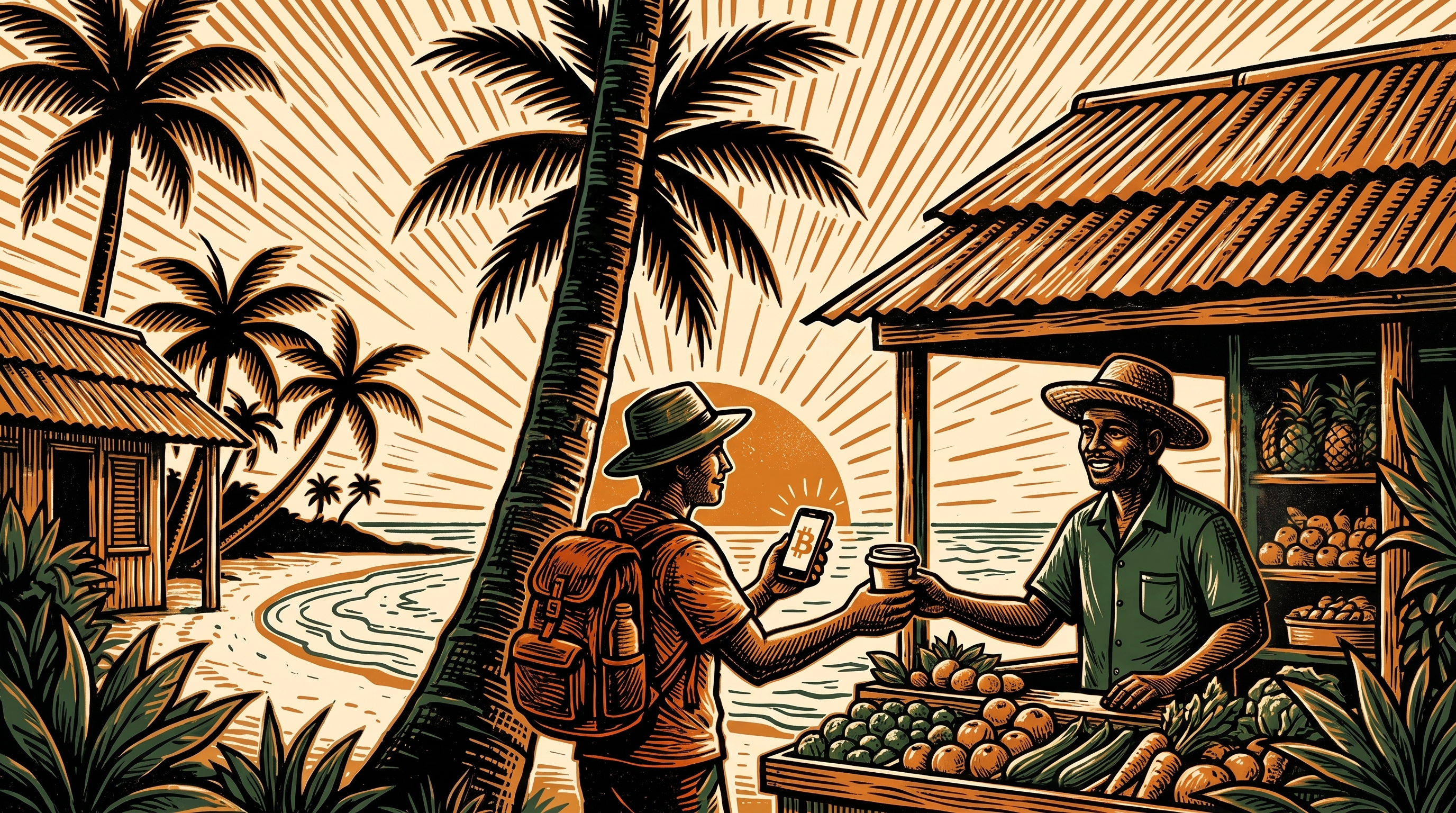
In JCC Camp, a township on the edge of Mossel Bay on South Africa’s southern coast, bitcoin is not an investment to be checked on a phone. It is payday. The coaches and staff of a local surf-and-skate youth project are paid in bitcoin, and the small shops around them — the spazas, the vegetable sellers, the barber — accept it. Money is earned in sats and spent in sats, without a bank in the middle.
The project, Bitcoin Ekasi (“ekasi” is township slang for the neighbourhood), is modelled on El Salvador’s Bitcoin Beach: seed a closed loop where the same currency that pays wages also buys groceries, and adoption stops being a speculative bet and becomes a habit. Salaries paid in bitcoin create merchants who accept it; merchants who accept it give the wages somewhere to go. The loop is the product.
What makes Ekasi worth a dispatch now is that it is no longer alone. By community counts in early 2026 there were roughly two dozen bitcoin circular economies operating across at least nine African countries — Ghana, Kenya, Nigeria, Uganda, Zambia, Mozambique, Tanzania, Burundi and South Africa — with several hundred merchants accepting bitcoin for everyday goods between them. Ekasi’s founders have taken to the road with a pan-African tour, and the movement now has its own gathering, a Bitcoin Circular Economies Summit hosted under the Adopting Bitcoin banner.
The plumbing beneath them is quietly African. Machankura lets people send and receive bitcoin over the Lightning Network using plain USSD codes on basic feature phones, no smartphone or data required — the same trick that made mobile money work across the continent a decade ago. Grant programmes run by Bitcoin Beach and others have seeded offshoots like Uganda’s School of Satoshi and Ghana’s Bitcoin Dua, spreading the template village by village.
The pitch is not price speculation; it is control. In communities the formal banking system never served, a phone number becomes an account, a wage arrives without a middleman’s fee, and savings sit in an asset a local currency’s inflation cannot quietly erode. For a coach in JCC Camp, the advantage is mundane and real: money that shows up in full and spends locally the same day.
These are small economies, and fragile ones. Most everyday prices are still mentally set in rand, with bitcoin the rail rather than the unit of account; a sharp bitcoin drawdown tests the faith of anyone paid in it. The loops depend on donors and grants to bootstrap merchant density, and on a handful of organisers whose burnout could unwind years of work. Scale remains measured in hundreds of merchants, not millions.
Set against that is what already exists: neighbourhoods where a currency no government issues does the ordinary work of money, paid and spent inside the same square mile. It is the least glamorous form of adoption and the most durable — the kind that survives whatever the price does.
Why it matters: the adoption that lasts rarely arrives by decree — it shows up as a wage paid in bitcoin and a loaf of bread bought with it, in a township the banks forgot.
Merchant and circular-economy figures (≈700 merchants across roughly 26 projects in nine countries) reflect community reporting as of early 2026 and are approximate; the model is described as an ongoing state, not a single dated event. Most everyday prices are still set in rand. Informational only — not financial advice.
Free. Five minutes. No hype.
Subscribe free