 The Bitcoin Beacon
No bank account, no card — just a phone number. A cluster of small apps now lets Zambians move between kwacha and bitcoin over Lightning in minutes.
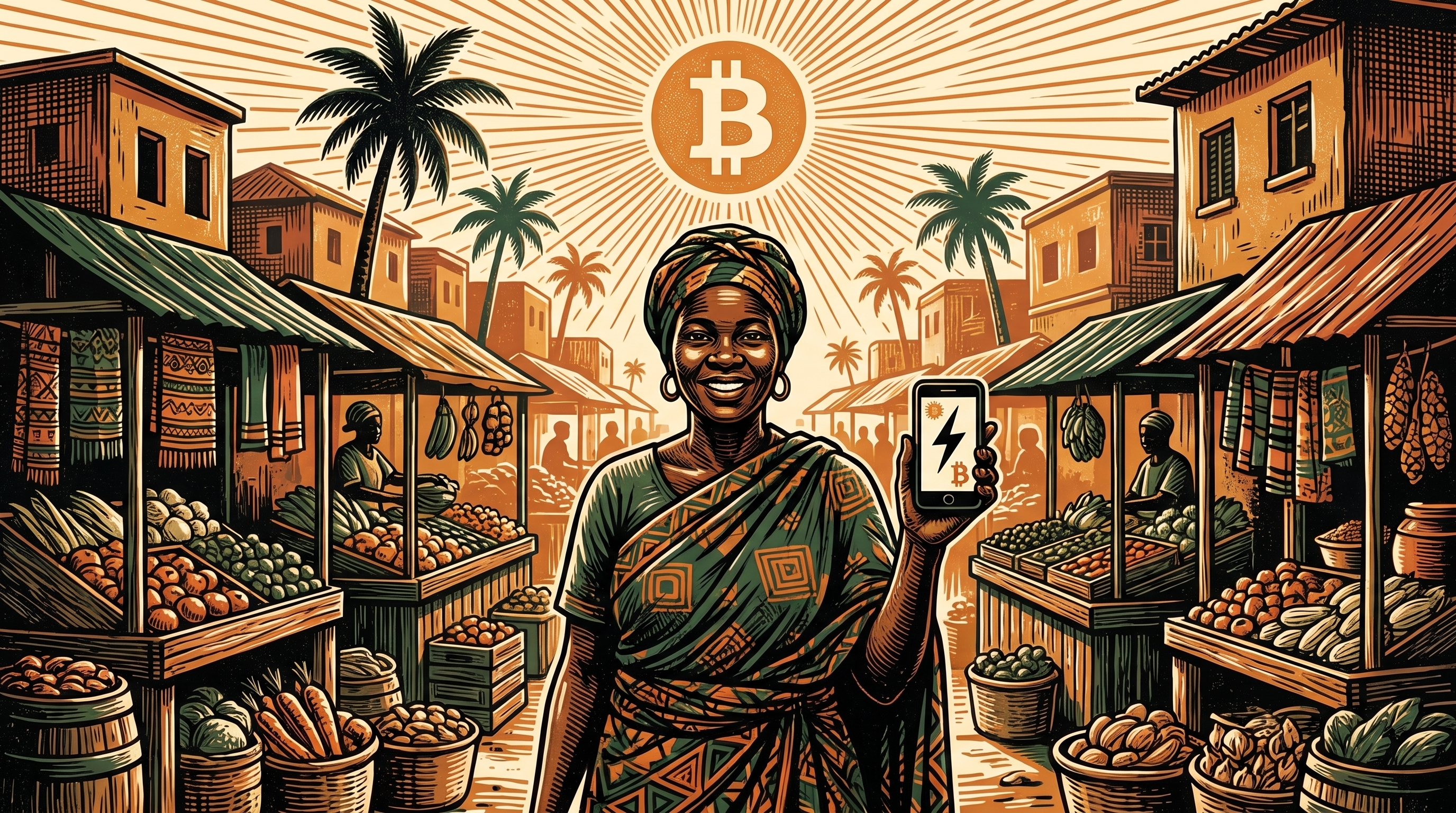
Ask most Zambians how they move money and the answer is not a bank — it is a phone. Mobile-money wallets from MTN, Airtel and Zamtel are how the country pays for airtime, groceries, taxis and school fees, reaching millions who have never held a debit card. The bitcoin economy quietly forming here does not try to replace that habit. It plugs into it.
A small cluster of homegrown services now sits on top of those rails. Bit2Kwacha lets a user buy or sell bitcoin using MTN, Airtel or Zamtel money, converting between BTC and kwacha in, by its own account, under five minutes and without an account. BitZED does the same over the Lightning Network, advertising near-instant payments at sub-cent fees. And Machankura — the pan-African service that runs bitcoin over plain USSD codes — reaches Zambians on feature phones with no smartphone and no data at all.
The design choice that makes this work is that the phone number is the identity. Africa’s mobile-money networks already solved the hard problem — getting value onto a device in the hands of someone outside the banking system — a decade before bitcoin arrived. Lightning slots in as the settlement layer beneath them: a payment clears between two wallets in about a second, for a fraction of a cent, and the recipient can cash out to kwacha mobile money immediately.
That plumbing has been getting deeper. In April 2026, VALR — the continent’s largest crypto exchange by volume — went live with Onafriq, a major African payments gateway, letting users across several countries deposit and withdraw using local currencies, the Zambian kwacha among them, straight from a phone. The effect is that the on- and off-ramps between bitcoin and everyday money keep getting shorter.
The honest use cases are narrow and practical. Zambians who earn or hold bitcoin — freelancers paid by clients abroad, savers hedging a kwacha that has lost ground for years — use these apps to turn it into spendable local money without a bank standing in the middle. Cross-border transfers within the region, notoriously slow and expensive through traditional channels, are the other draw. This is bitcoin as a bridge: value crosses a border or a currency line as bitcoin, then lands as kwacha the moment it arrives.
None of this is a circular economy where wages and prices are denominated in bitcoin. In almost every case the coin is a rail, not the unit of account: the user thinks in kwacha, the merchant is paid in kwacha, and bitcoin exists for the seconds in between. Several of these services are also custodial or semi-custodial — the provider holds keys or floats liquidity — which reintroduces exactly the trust bitcoin is meant to remove, and the single point a regulator could switch off. Volumes are small, and a kwacha off-ramp thins the loop every time someone cashes out.
Set against that is what these tools actually deliver today: a way for someone with no bank account to receive money from anywhere and spend it locally in minutes, at fees a wire transfer cannot touch. Zambia is not being handed a bitcoin standard from above. Its citizens are wiring one together from the parts they already own.
Why it matters: the most durable bitcoin adoption rarely announces itself — it shows up as a phone number that can now receive value from anywhere and turn it into local cash, no bank required.
Zambia adoption described as an ongoing state, not a single dated event; app features per the providers’ own pages. Most flows settle to kwacha mobile money and are custodial — flagged in the piece. Informational only — not financial advice.
Free. Five minutes. No hype.
Subscribe free