 The Bitcoin Beacon
Ray Dalio’s case for bitcoin rests on a debased dollar. A new Fed chair heading to Jackson Hole wants to make that case wrong.
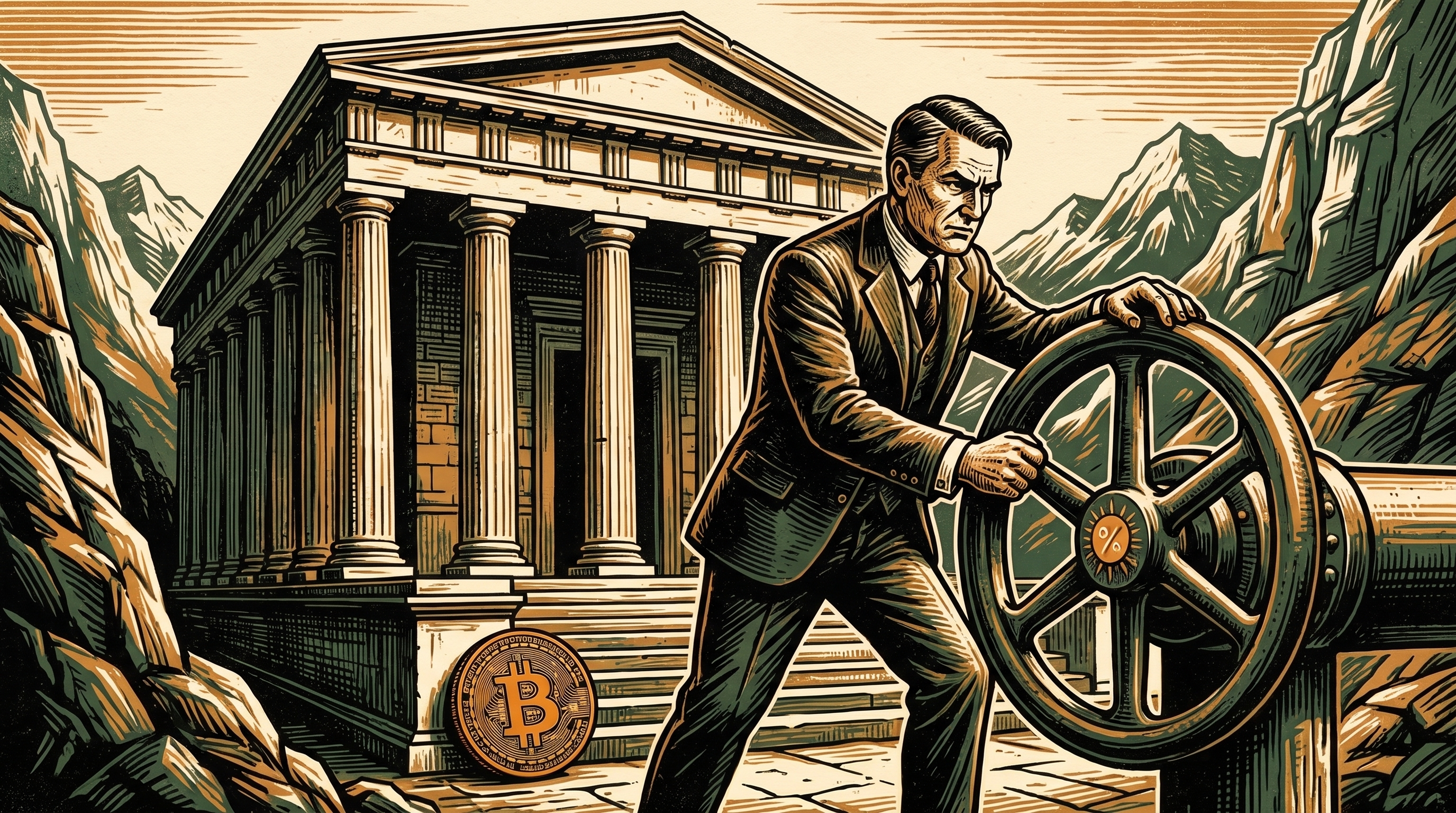
Strip a bitcoin pitch down to its frame and you almost always find the same load-bearing wall: the dollar keeps losing value, so you need an asset the government cannot print. Ray Dalio built exactly that case this week — $40 trillion in debt, a printer that eventually runs, an exit into gold and a little bitcoin. It is the strongest argument the asset has. It is also completely contingent on one institution behaving badly.
That institution now has a new steward who says he won’t. Kevin Warsh, sworn in as Federal Reserve chair in May, arrives at the Jackson Hole symposium this week — running August 27–29, themed “Financial Innovation: Implications for Payments and Policy” — with a hard-money agenda. He wants to replace the Fed’s flexible average-inflation framework with a strict 2% target, and to keep shrinking a balance sheet still north of $6 trillion. In plain terms: less printing, tighter money, a more credible dollar.
If he means it, and delivers it, bitcoin’s marquee argument gets weaker, not stronger. A dollar that holds its value is a dollar you have less reason to flee. The debasement trade that lifts gold and bitcoin together compresses when debasement stops being the base case. Bitcoin has spent much of 2026 trading like a leveraged risk asset — up when liquidity is loose, down when it tightens — which is precisely the wrong behavior for a hedge in a hawkish regime. A serious Warsh Fed is a headwind the price bulls rarely price in.
Here is the steelman for the other side, and it is not weak. Warsh may not succeed: a $40 trillion debt load creates its own political gravity, and a chair who tightens into a slowing economy tends to get overruled by events, if not by the White House. Tight money is easy to announce in August and hard to hold through a recession. And even a credible Fed only disciplines the dollar — it does nothing for the Argentine peso, the Zambian kwacha, the Turkish lira, or the next currency to break. Bitcoin’s debasement case was always strongest at the periphery, not in Washington.
Which is the point worth sitting with. If sound money in America dents bitcoin’s investment story, what survives is the one this paper actually reports: a vendor in Lusaka taking sats for airtime, a Filipino wiring pesos home over Lightning, a Brazilian mill turning cane waste into coins. None of that depends on the Fed being reckless. It depends on bitcoin being useful. The debasement trade is the loudest argument for bitcoin. Utility is the one that doesn’t need the Fed to lose.
Jackson Hole dates (Aug. 27–29), theme, and Chair Warsh’s stated framework goals per the preview reporting above. Opinion; the Beacon’s own view, presented with its counterargument. Informational only — not financial advice.
Free. Five minutes. No hype.
Subscribe free