 The Bitcoin Beacon
An agribusiness in Mato Grosso do Sul is burning the fibre left over from crushing cane to power a pilot bitcoin mine — turning surplus farm energy into hard money.
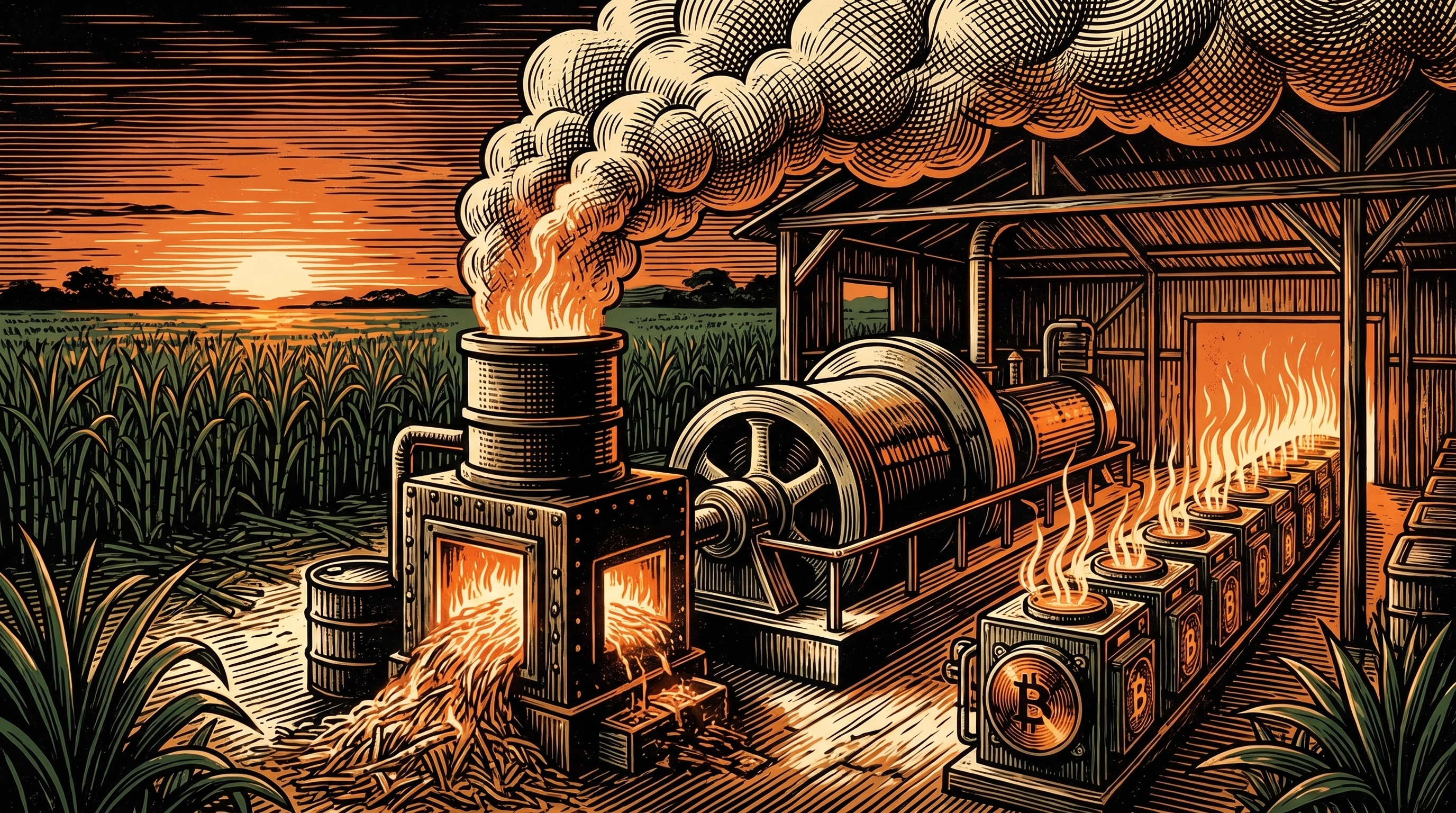
Brazil’s cane belt runs on a simple rhythm: crush the stalks, extract the sugar and ethanol, and burn what’s left to power the mill. That leftover — bagasse, the dry fibrous pulp of spent cane — is now powering something new. In Ivinhema, in the state of Mato Grosso do Sul, the agribusiness Adecoagro has begun running a 10-megawatt bitcoin-mining pilot on its own surplus electricity.
Adecoagro (NYSE: AGRO) is not a crypto startup. It is a large South American producer of sugar, ethanol and farm commodities, and since a controlling investment it is majority-owned by Tether, the issuer of the USDT stablecoin. The mining project is the concrete output of a memorandum the two signed in 2025 to monetize surplus renewable energy. The pilot deploys roughly 1,280 machines; the company’s project manager confirmed the plan publicly on June 1, with a target start of July 1, 2026.
Sugar mills already generate their own power by burning bagasse for steam and electricity. In a large plant the surplus beyond the mill’s own needs is substantial — and it has a chronic problem: it is generated where the cane grows, often far from where power is worth the most, and selling it back to the grid means accepting whatever the utility pays. Bitcoin mining is one of the few buyers that will come to the energy instead of demanding the energy come to it. A container of machines can sit at the mill and turn otherwise-stranded megawatts into a globally liquid asset.
Adecoagro already operates more than 230 megawatts of renewable generation across South America, so the 10 MW pilot is a fraction of its base — deliberately a test, not a bet-the-company rollout. Tether, for its part, is contributing its mining-operations software to run the site. The company has framed the effort as a way to improve the economics of its energy surplus and, potentially, to add bitcoin to its own balance sheet as a long-term reserve.
The pilot lands in the middle of bitcoin mining’s central argument: is it a parasite on power grids, or a buyer of last resort for energy that would otherwise be wasted? Bagasse is a clean case for the second reading. The fuel is a byproduct that exists whether or not anyone mines with it; using it to run machines does not burn extra cane or displace homes on the grid. It is closer to flared-gas mining — monetizing an output that would otherwise be vented or sold at a discount — than to a data center bidding up scarce electricity in a strained market.
Two temper the story. The first is scale: 10 MW and around 1,280 rigs is a rounding error against a global network pushing past 900 exahashes, and a “validation phase” can quietly stall if the numbers disappoint. The second is the Tether connection. This is bitcoin mining, squarely on-charter, but its parent’s core business is a dollar stablecoin, and the venture’s logic is as much about Tether diversifying into hard assets and energy as about advancing bitcoin. Whether Adecoagro scales toward the 40 MW it has floated will say more than the launch does.
Why it matters: it is a template other agricultural economies can copy — turn the energy waste of farming into bitcoin without touching the public grid — and a concrete answer to the charge that mining only ever competes for power.
Pilot capacity (10 MW, ~1,280 rigs), site (Ivinhema, Mato Grosso do Sul) and July 1, 2026 target start per the reporting above; project confirmed by Adecoagro’s project manager on June 1, 2026. New to the Beacon. Informational only — not financial advice.
Free. Five minutes. No hype.
Subscribe free