 The Bitcoin Beacon
The continent’s biggest mining hub has frozen new permits, saying its grid is full. The ceiling on Africa’s hashrate is now physical, not political.
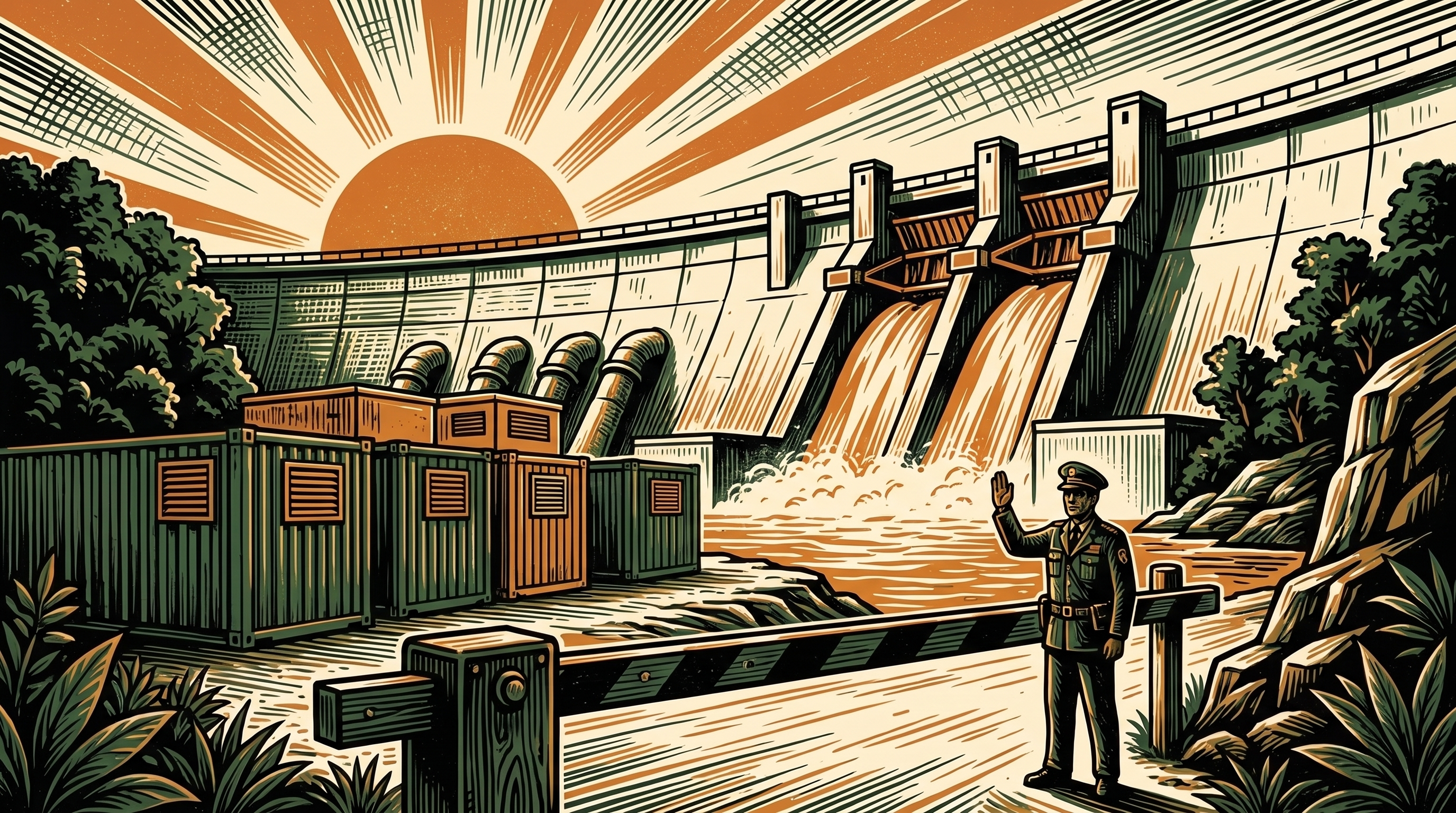
Ethiopia, the country that turned surplus hydropower into Africa’s largest bitcoin-mining industry, has stopped letting new miners in. Officials have halted the issuance of new mining permits, citing a grid that has reached the limit of what it can spare — a ceiling drawn not by ideology but by megawatts.
It is a striking reversal of posture for a state that spent two years courting the industry. Ethiopia legalized bitcoin mining while keeping ordinary crypto trading banned, betting that the dams could earn foreign currency by selling power to rigs. The bet paid: the sector grew fast and pulled in dollars the treasury badly needed.
By 2026 Ethiopia had allocated on the order of 600 MW to mining across roughly two dozen licensed firms, and analysts put the country at around 2.5% of global hashrate — small worldwide, but the dominant share of Africa’s. State reporting earlier tallied tens of millions of dollars in mining revenue over a single 10-month stretch. Much of that hashrate runs on power from the Grand Ethiopian Renaissance Dam, the continent’s largest hydro project and the government’s prized source of exportable electricity.
Because the same electrons have better-paid uses. Ethiopia still has millions of people without reliable power, an industrialization drive that needs energy, and neighbors willing to buy exported electricity at attractive rates. Every megawatt sold to a mining container is one not lighting a household or running a factory. Earlier in 2026 the government had already raised power prices on miners; the permit freeze is the blunter instrument — a cap on growth while the state decides how much of its grid it wants rented to hashrate.
Miners frozen out of Ethiopia do not vanish; they relocate. The industry’s defining trait is mobility — rigs chase the cheapest available watt across borders, as they did out of China in 2021 and into Paraguay and Central Asia after. Kenya, Zambia, Malawi, and other hydro- and geothermal-rich neighbors are the natural next stops, and operators already scouting African sites will read Ethiopia’s ceiling as a signal to diversify.
For the broader network, a permit freeze in one country barely dents global hashrate. For Africa’s mining map, it is a turning point: the continent’s anchor market has told the industry there is a limit, and that limit is the grid itself.
Why it matters: even a government that wants bitcoin miners eventually hits a wall where domestic electricity is worth more than the coins — and Africa’s biggest hub just found it.
Capacity allocation, firm count and hashrate share per the sources above, 2026; figures vary by report. Informational only — not financial advice.
Free. Five minutes. No hype.
Subscribe free