 The Bitcoin Beacon
The Global South’s bitcoin payment boom runs on apps that convert to local cash on contact. That is a real win on fees — and an open question about what ‘adoption’ means.
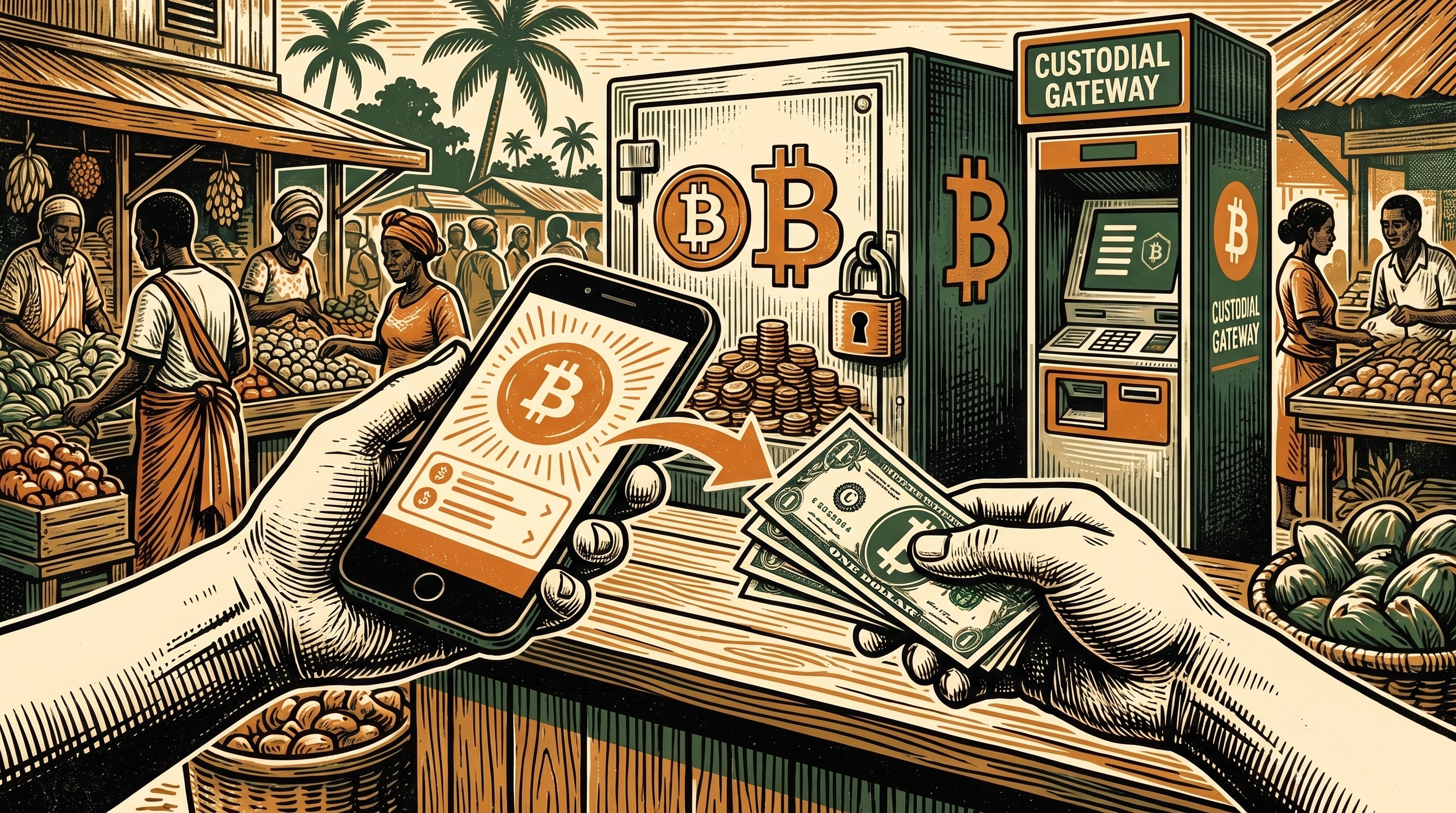
Read this week’s adoption stories back to back and a pattern jumps out. In Manila, a remittance lands as pesos. In Nairobi, a shopper taps a phone and the merchant is paid in shillings. Across Africa, a miner-backed app lets you spend and the till reads local currency. Bitcoin moves through every one of these transactions. In almost none of them does anyone actually hold it.
This is the quiet shape of the payments boom: custodial apps that accept bitcoin, convert it the instant it lands, and hand the user familiar money. The bitcoin exists for milliseconds, as a rail. It is a genuinely useful rail — and it is worth being honest about what it is and isn’t.
Start with what’s real. Fees fall. Settlement that took a day takes seconds. A worker sending money home keeps more of it; a vendor takes a payment that would have been impossible or expensive otherwise. For families living on remittances and thin margins, that is not abstract — it is grocery money. The bull case is sequencing: build the rails, let people transact, and holding comes later, once bitcoin is familiar and the option to keep it is one tap away. Rails first, savers second.
Now the other side. A rail nobody holds a coin on is bitcoin as plumbing, not money. Custodial convert-to-fiat means the user never touches self-custody, never holds a bearer asset, and depends on a company that can freeze, delist, or be ordered to stop. Strip the branding and much of this is a better Western Union — cheaper, faster, and still someone else’s balance sheet. The monetary promise of bitcoin — that you can hold value no one can inflate or seize — is exactly the part these apps route around.
There is a sharper irony in today’s issue. In Kazakhstan, the entity accumulating actual bitcoin is the state, skimming coins from miners into a reserve. On the street, the citizen using a bitcoin app ends up holding pesos or shillings. The government keeps the bearer asset; the user gets the receipt.
Both things are true at once. The rails are a real, measurable improvement in people’s financial lives, and they are not, by themselves, monetary adoption. The honest scorecard tracks two numbers, not one: how much value moves over bitcoin rails, and how many people choose to keep any of it. The first is climbing fast. The second is the bet the whole story rests on — and it is still just a bet.
Why it matters: confusing a payment rail for a monetary standard flatters the numbers. Bitcoin is winning the plumbing. Whether it wins the holding is a different, unsettled question.
Opinion. Examples drawn from reporting cited above and in today’s issue. Informational only — not financial advice.
Free. Five minutes. No hype.
Subscribe free