 The Bitcoin Beacon
Legal operators fell from 71 to 41 as power tariffs doubled. Four big firms now command most of the grid capacity reserved for mining.
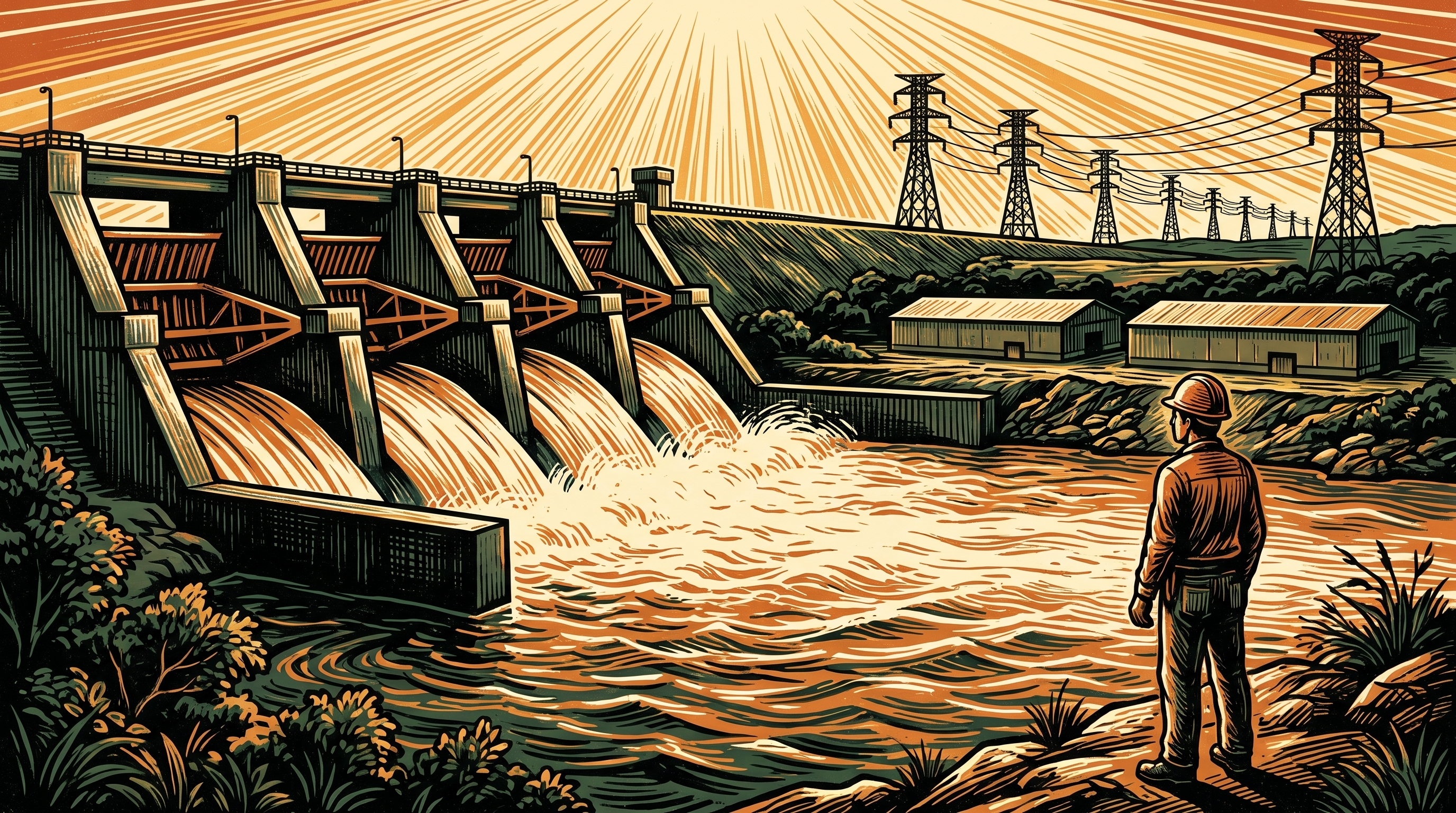
Paraguay's bitcoin-mining boom is consolidating in plain sight. The country's count of legal mining operators has fallen from 71 at the start of 2025 to 41 in 2026 — a drop of about 42% in a year, according to Hashrate Index. The hashrate did not leave; it changed hands.
The 41 survivors reserve 943.8 MW of grid capacity, and just four firms take 730 MW of it — more power than a single Itaipú turbine produces. The market has split into large, well-capitalized players such as HIVE Digital, Penguin and Alps, and a shrinking tier of mid-market operators on medium-tension connections, many of whom are already exiting.
Price. Industrial electricity that once sold near $0.03/kWh now runs $0.037 to $0.050, and medium-tension rates have roughly doubled. Steep deposit requirements did the rest, forcing out undercapitalized operators who lived on the old, cheap rate. What looks like a bust is really a sorting: fewer firms, each bigger, each paying more.
The state utility is the clear winner. ANDE's expected revenue from mining is set to climb from about $100 million in 2024 to $350 million in 2026 — more money from fewer, larger customers. Paraguay still commands roughly 4.3% of global hashrate, around 43 EH/s, on the back of its hydro surplus from Itaipú and Yacyretá.
Two forces will decide who is left. The first is a hard date: ANDE mining contracts expire December 31, 2027, and operators with deep local integration and high-tension infrastructure hold the strongest hand in renewal talks. The second is a rival for the same cheap watts — AI data centers. As hyperscale compute chases stranded and low-cost power worldwide, Paraguay's grid is a target, and bitcoin miners are increasingly bidding against server farms rather than each other.
The lesson travels. The migration that put miners in Paraguay — chasing the last cheap watt after China's 2021 crackdown — does not stop at any border. When tariffs rise or a higher-value buyer appears, hashrate moves again.
Why it matters: cheap power built Paraguay's mining industry, and slightly less cheap power is already reshaping who owns it — a preview of every hydro-rich country that invites miners in.
Operator counts, tariffs and revenue figures per Hashrate Index and ANDE reporting, 2026. Informational only — not financial advice.
Free. Five minutes. No hype.
Subscribe free