 The Bitcoin Beacon
One plumbing decision in Washington flushed $1.4 billion in short bets and drove bitcoin to its highest level since June — proof of what really moves the price now.
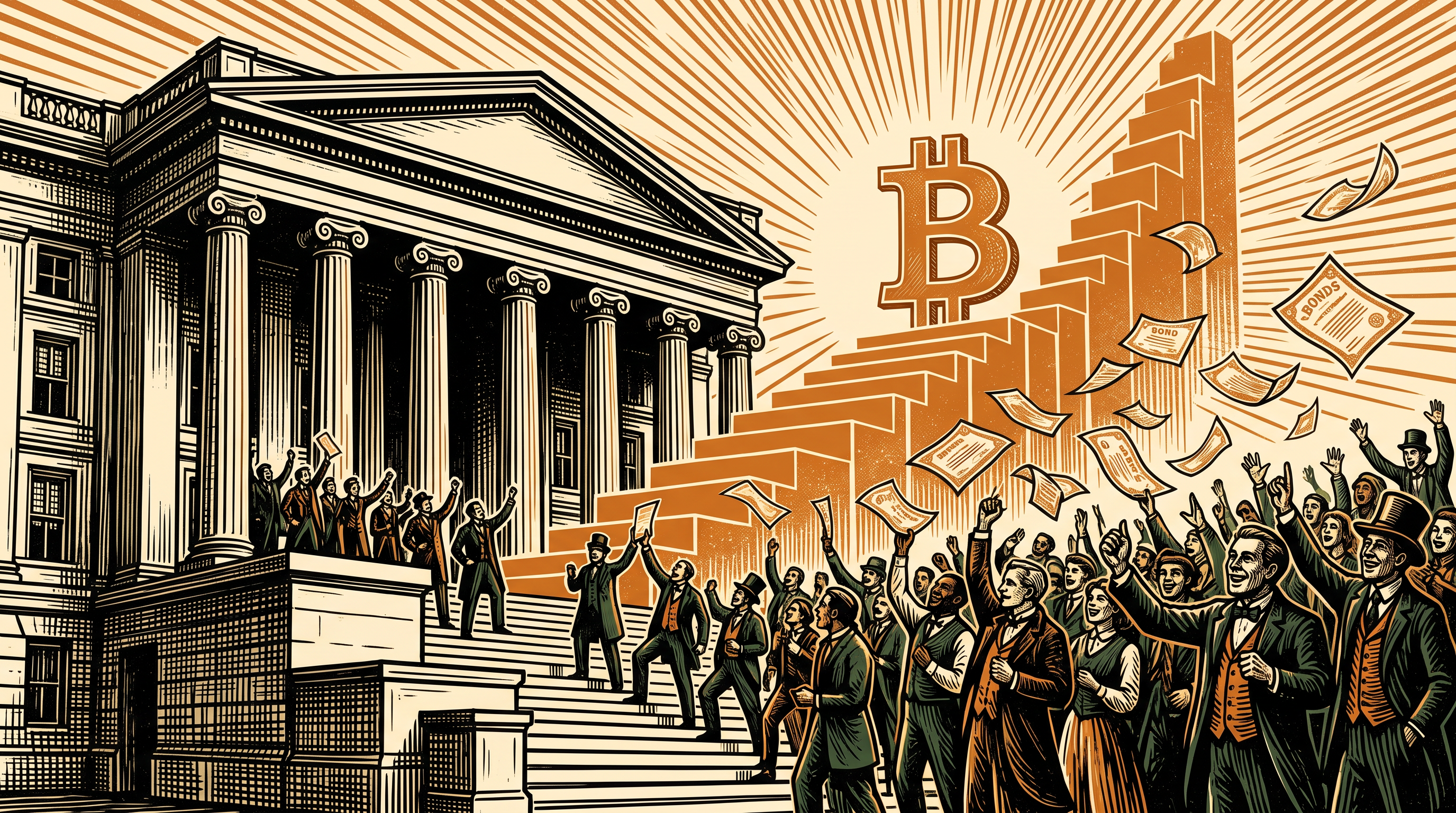
Bitcoin does not usually move because of a Treasury press release about bond buybacks. This week it did. The coin climbed more than 12% in 24 hours, briefly clearing $72,000 for the first time since June, after the U.S. Treasury said it would roughly double the size of its long-dated debt buybacks — to at least $4 billion per operation, up from $2 billion, for 10- to 30-year securities, beginning September 9.
The mechanics are indirect but not mysterious. Bigger buybacks mean the Treasury steps into the market as a larger buyer of its own long-term bonds. That props up bond prices and pushes yields down. The 30-year yield, which had spiked to about 5.34% — its highest since 2007 — slid back toward 5.2%. Lower long yields weaken the dollar and make assets that pay no yield, bitcoin among them, relatively more attractive. Risk appetite returned across the board.
The buyback news was the spark. Leverage was the accelerant. As the price ticked up, exchanges began force-closing traders who had bet on a decline. Those liquidations require buying bitcoin back, which lifts the price further, which triggers more liquidations — a short squeeze. Roughly $1.4 billion in short positions were wiped out in about an hour, according to exchange data aggregators, with total crypto liquidations across the move approaching $1.9 billion.
The result was one of the sharpest single-day advances of 2026. Ether rose alongside bitcoin, briefly reclaiming $2,000, and crypto-linked equities rallied. A same-day White House meeting between administration officials and digital-asset executives added to the risk-on mood, though the buyback and the squeeze did the heavy lifting.
For most of its life bitcoin was pitched as an asset that marches to its own drummer — scarce, apolitical, indifferent to central-bank meetings. In 2026 it trades more like a high-beta macro asset. It rallies when liquidity loosens and yields fall; it sags when bonds sell off and the dollar firms. Just a day earlier, a synchronized spike in global government-bond yields — the U.S. 30-year at a 2007 high, Japan’s 10-year near 2.95%, Brent crude above $92 amid renewed tension around the Strait of Hormuz — had bitcoin pinned in a tight range around $64,000. The buyback headline flipped that overnight.
This is the maturation trade cutting both ways. Deeper institutional ownership — spot ETFs, corporate treasuries, bank custody desks — ties bitcoin to the same money that prices Treasuries and tech stocks. That brings liquidity and legitimacy. It also means a coin marketed as an escape hatch from the fiat system now jumps 12% because that system’s largest borrower adjusted how it buys back its own paper.
Squeeze-driven rallies have a habit of giving back ground once the forced buyers are done. The gains this week were built on liquidations, not on a visible wave of new spot demand; VanEck this month flagged eight of twelve of its capitulation indicators as still active, a sign the market had been leaning bearish going in. If the buyback’s effect on yields fades, or if the September FOMC surprises — futures still price a one-in-three chance of a rate hike — the same leverage can unwind in the other direction.
The bullish read is simpler: the Treasury has signaled it will lean against a disorderly rise in long-term yields, and lower yields are a tailwind for scarce assets. Either way, the episode is a clean illustration of the Beacon’s running theme. The interesting bitcoin story is rarely the price. It is who now sets it — and this week, that was the U.S. Treasury.
Why it matters: bitcoin’s biggest moves now answer to Washington’s debt management, not to any new person choosing to hold the coin.
Price and liquidation figures are as reported during the Aug. 19–20 move; live BTC/USD read from River at 10:15 UTC on Aug. 20. Informational only — not financial advice.
Free. Five minutes. No hype.
Subscribe free