 The Bitcoin Beacon
Five years after making bitcoin legal tender, President Nayib Bukele concedes the everyday adoption never came. What is left is a state reserve — and a lesson.
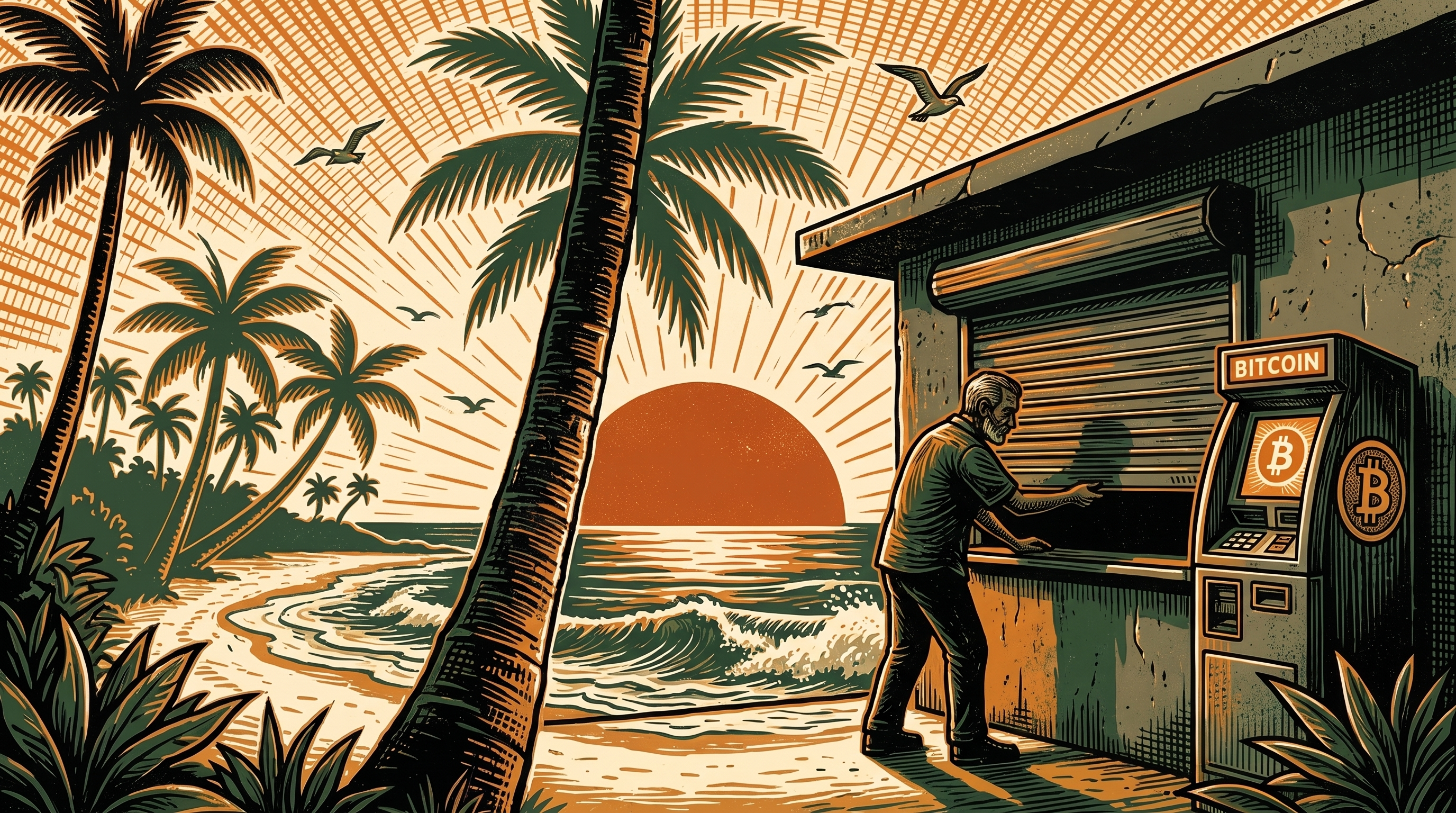
El Salvador’s bet has aged into an admission. Five years after San Salvador became the first government on earth to make bitcoin legal tender, President Nayib Bukele told Time in August that “bitcoin did not receive the widespread adoption we expected.” It is a striking line from the leader who once put laser eyes on his profile picture and turned a Salvadoran beach town into a global bitcoin pilgrimage.
The numbers behind the concession are blunt. Cryptocurrency settled just $35.4 million of the more than $5 billion in remittances Salvadorans received in the first half of 2026 — well under 1% of the flow that keeps many households afloat. Remittances are the use case bitcoin was supposed to transform here, and after five years the transformation is a rounding error.
The framework itself has already been walked back. In January 2025, as a condition of a $1.4 billion IMF financing package, the government stripped bitcoin of its mandatory legal-tender status. Businesses are no longer required to accept it, taxes must be paid in U.S. dollars, and the state-issued Chivo wallet — once the on-ramp for millions — is being wound down. The public sector’s direct involvement has been pared back to satisfy the fund.
What survives is the treasury. El Salvador still holds roughly 7,677 BTC, worth about $480 million after this month’s rally, and has kept adding coins even as the consumer program faded. The experiment that began as “bitcoin as everyday money” has quietly become “bitcoin as sovereign reserve asset” — a very different, and far more modest, proposition.
The uncharitable reading is that a top-down mandate failed. The fairer one is that it was always the wrong instrument. Legal-tender status compelled merchants to accept bitcoin; it could not manufacture a reason for anyone to spend it when the dollar already circulates freely and most prices are dollar-denominated. Where bitcoin has taken root in El Salvador — the El Zonte “Bitcoin Beach” circular economy — it did so through grassroots education and tourism that predated the 2021 law, not because of it.
Defenders point to what the law seeded regardless: a national bitcoin-education curriculum, tourism and investment attention out of proportion to the country’s size, and a reserve now sitting on large paper gains. Those are real. But they are the by-products of a symbolic gamble, not evidence that a decree can bootstrap a currency into daily use.
Why it matters: the first country to legislate bitcoin into money has spent five years learning that adoption follows utility, not statute — a caution for every state now drafting its own bitcoin law.
Figures as reported at the five-year anniversary of El Salvador’s Bitcoin Law; reserve size approximate and rising. Informational only — not financial advice.
Free. Five minutes. No hype.
Subscribe free