 The Bitcoin Beacon
Even after a 12% rally, the price of a bitcoin sits below what it costs the average public miner to produce one — and the industry’s own stress signals are flashing.
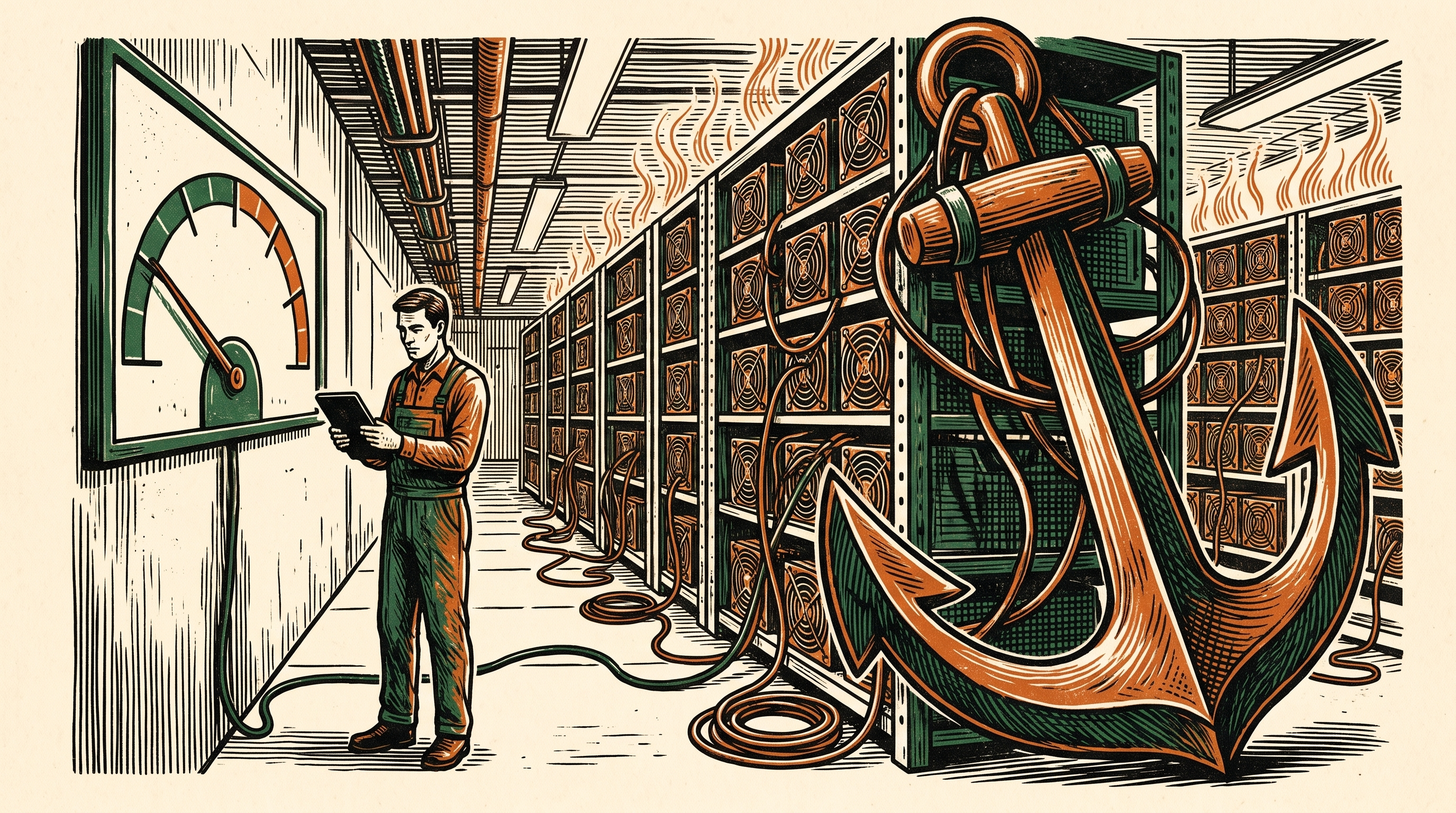
This week’s rally to $72,000 was a relief for almost everyone in bitcoin except the people who make it. By JPMorgan’s estimate, the average all-in cost for a publicly traded miner to produce one bitcoin is around $78,000 — still above the price even after a 12% jump. Before the rally, with bitcoin near $64,000, the gap was a chasm.
The squeeze is structural. A miner’s cost is set mostly by electricity and by network difficulty — the automatic measure of how hard it is to find a block. Difficulty currently sits at a towering 127.48 trillion. When more machines compete, each one earns a smaller slice of the fixed daily supply of new coins, so per-coin costs rise even as the hardware improves. Push the price below that cost and the marginal miner bleeds.
VanEck this month counted eight of twelve of its capitulation indicators as active — the kind of readings that historically cluster near cycle lows, when weaker miners sell reserves, power down rigs, or exit. Public miners have been posting heavy losses and, increasingly, renting their power and buildings to artificial-intelligence tenants that outbid bitcoin for electricity. The pivot keeps the lights on, but it is an admission that mining alone no longer pays at these prices.
A $78,000 average hides a wide spread. That figure describes listed U.S. miners carrying debt, hardware depreciation, and corporate overhead. Operators running on genuinely cheap or stranded power — Ethiopian and Paraguayan hydro, flared gas, curtailed renewables — produce well below the average and stay profitable through the dip. And bitcoin has a built-in release valve: if enough miners quit, difficulty adjusts downward, lowering costs for those who remain. The next adjustment, due in about two days, is estimated at a modest +0.9%.
So the headline is real but self-correcting. Prolonged sub-cost pricing thins the field, concentrates hashrate among the lowest-cost producers, and historically precedes accumulation rather than collapse — VanEck itself suggests a bottom could form by November. For now, the arithmetic is stark: the network has never been more expensive to secure, and this week the coin it produces is still worth less than the cost of producing it.
Why it matters: miner economics are bitcoin’s pressure gauge, and right now the needle is in the red even after the price jumped.
Cost estimate is JPMorgan’s average for public miners and varies widely by operator; difficulty and price read live on Aug. 20. Informational only — not financial advice.
Free. Five minutes. No hype.
Subscribe free