 The Bitcoin Beacon
Seoul is pulling bitcoin trading onshore — pushing OKX and Bybit out of the app store while letting KB and Shinhan buy the domestic exchanges.
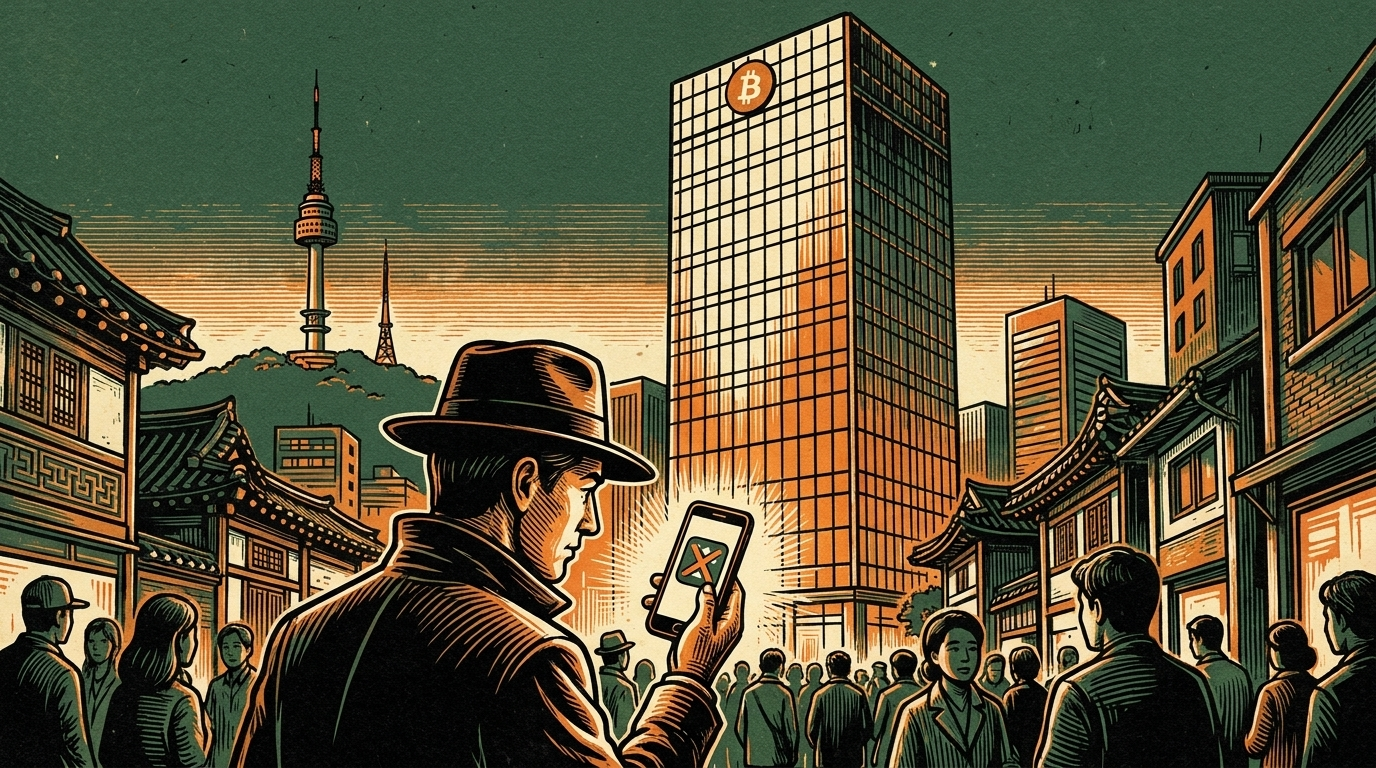
South Korea has one of the most active retail bitcoin markets on earth, and its government has just moved decisively to make sure that activity happens where it can see it. Over recent weeks, the country’s Financial Intelligence Unit pressured Google into enforcing local registration rules on the Play Store, blocking new Android installs of dozens of overseas exchange apps — by one count 29 apps, by another roughly half of the top 50 global overseas derivatives venues. Bybit became unavailable for new installation in July; OKX followed later the same month.
Getting back on the store is deliberately hard. To win FIU registration, a foreign exchange must establish a local legal entity, build anti-money-laundering systems, submit to on-site inspections, and obtain Information Security Management System certification from Korean authorities. Few offshore venues will clear that bar quickly, which is the point: the friction pushes Korean traders toward domestic, regulated platforms.
At the same time, Seoul loosened a rule at home. A 20% cap on ownership of domestic crypto exchanges, set in March 2026, is being softened to allow specific exceptions up to 34% under tight oversight. That change clears the way for the country’s banking giants — names like KB and Shinhan — to take large stakes in, or outright acquire, the domestic exchanges Upbit, Bithumb and Coinone.
Read together, the two moves are a single strategy: pull bitcoin trading inside the national perimeter and put it under institutions the state already supervises. Korea is not banning bitcoin — retail appetite is far too strong for that, and the government has no interest in driving it underground. It is domesticating it. Capital that might have flowed to an offshore derivatives venue now stays onshore, on platforms that are increasingly bank-owned, fully KYC’d, and reportable.
For bitcoin’s founding promise — a way to hold and move value outside the banking system — this is a quiet inversion. The banks that bitcoin was designed to route around are being invited to own the on-ramps. For most Korean users the practical effect is convenience and safety: a bank-backed exchange feels sturdier than a foreign app. The trade-off is that the exit becomes narrower, and every large move more visible.
Korea’s onshoring rhymes with the week’s other policy news. Russia has legalized bitcoin trading but capped how much ordinary citizens can buy and required them to trade on licensed venues. Brazil is preparing a 24-hour hold on large withdrawals to foreign platforms and self-custody wallets. Three very different governments, one instinct: keep bitcoin, but keep it where the state can watch it. The era of the outright ban is giving way to the era of the supervised on-ramp.
Why it matters: the fastest-growing bitcoin markets are being pulled onshore and handed to banks — convenient, safer, and far easier for the state to see.
Figures on the number of blocked apps vary by source (reported as 29 apps, or “50% of the top 50 overseas derivatives exchanges”). The 20% ownership cap was set in March 2026; the softening to allow exceptions up to 34% is the new development. Informational only — not financial advice.
Free. Five minutes. No hype.
Subscribe free