 The Bitcoin Beacon
Regulators add delays, exploits drain nodes, and custodians offer to make it all go away. The friction is the fight.
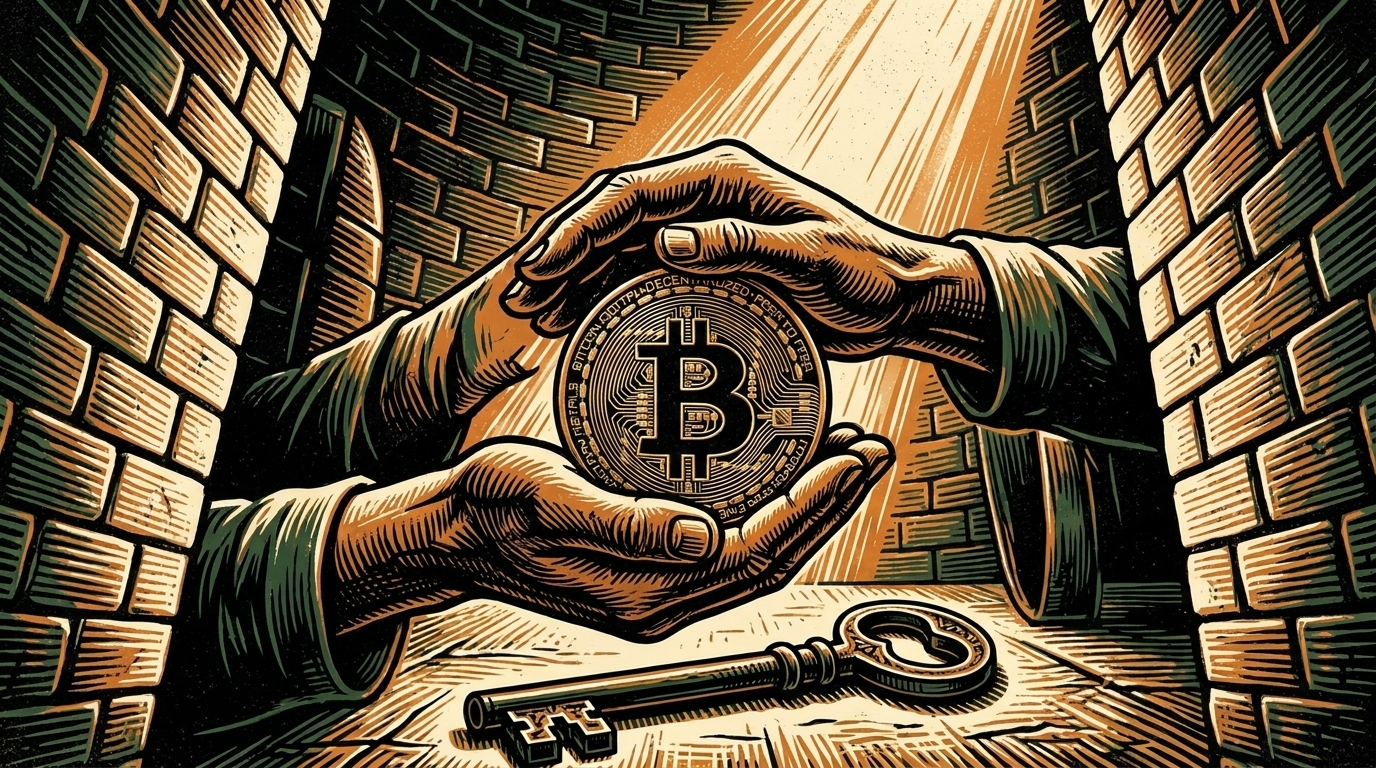
Bitcoin’s founding promise was blunt: hold your own money, move it when you want, and no one can stop you. This week made that promise look more expensive to keep. Three unrelated stories pointed the same direction — toward custodians, and away from doing it yourself.
In Brazil, the central bank published a rule that will make anyone withdrawing more than $10,000 a day off a licensed platform — including to their own wallet — wait 24 hours while the exchange runs a risk check. In the open-source world, a critical bug in BTCPay Server let attackers drain self-hosted Lightning nodes before a patch shipped, the second serious self-custody failure of the summer after a nine-figure Coldcard loss. And on Wall Street, BlackRock keeps lowering the threshold to swap real bitcoin into an ETF share — a frictionless on-ramp that ends with your coins in Coinbase Custody rather than your hands.
None of these is a conspiracy. They are a regulator managing fraud, a volunteer project shipping a fix, and an asset manager competing for flows. But stack them up and the gradient is unmistakable: every path is being smoothed toward letting someone else hold your bitcoin, and roughened for holding it yourself.
Self-custody was never going to be defeated by argument. It gets worn down by inconvenience. Running a node means running a hot wallet that has to be perfect every day. Holding your own keys means no help desk when you fat-finger a seed phrase. Withdrawing to cold storage now means, in a growing list of jurisdictions, paperwork and delay. Against all of that, a custodian offers a reset-password link and an insurance policy. For most people, most of the time, that trade is genuinely rational — and that is exactly why it is corrosive. The convenient default becomes the universal one, and an asset whose point was “not your keys, not your coins” quietly settles into a handful of institutional vaults.
Here is the steelman, and it is strong: most people should not run a Lightning node or engrave their own seed backups. Custodians reduce catastrophic, irreversible loss for ordinary users who will never read a security advisory. The BTCPay exploit and the Coldcard failure are evidence for that view, not against it — self-custody is hard, and pretending otherwise gets people robbed. A regulated exchange with fraud holds and a recovery process is, for a normal saver, safer than a hot wallet they half understand. If bitcoin is going to reach the next hundred million people, most of them will arrive through a custodian, and that is fine.
It is fine right up until it isn’t. The whole reason bitcoin exists is the case where the custodian freezes the account, the exchange fails, or the state decides your withdrawal can wait. Those events are rare, which is precisely why the option to opt out has to survive the long stretches when it feels unnecessary. Self-custody is insurance against tail risk, and insurance you let lapse because nothing has gone wrong lately is insurance you don’t have when it does.
The answer is not purity. It is keeping the exit open. Learn to hold a meaningful amount yourself before you are forced to. Withdraw early rather than late, while it is still frictionless. Support the open-source tools — wallets, nodes, processors — that make sovereignty survivable, and read the advisories when they ship. Treat custodians as a convenience for the coins you can afford to have someone else control, not as the place your entire stack lives by default. The friction is going to keep rising. The response is to make sure that holding your own bitcoin is a muscle you still have when you need it.
Why it matters: the right to hold your own money erodes quietly, one convenience at a time — and the time to use it is before you have to.
This is an opinion column. It draws on this week’s reporting on Brazil’s Resolution 584, the BTCPay Server exploit, and BlackRock’s IBIT in-kind changes, each sourced in its own dispatch. Informational only — not financial or security advice.
Free. Five minutes. No hype.
Subscribe free