 The Bitcoin Beacon
A day of Wall Street headlines is a good time to remember where bitcoin is actually becoming money: on Lightning, in the places banks skipped.
Read today’s bitcoin news from the top and you would think the story lives on a trading floor. BlackRock made it cheaper to swap coins into an ETF. Its Canadian arm slipped a 3% bitcoin sliver into a retirement portfolio. The White House set a deadline to finally define the asset in law. All real, all legitimizing — and all about bitcoin the asset: something to hold, allocate, and classify.
That is a genuine kind of adoption, and this paper covers it without apology. But it is worth saying plainly on a day like this: it is not the kind bitcoin was built to deliver. The white paper promised electronic cash for people the financial system prices out or locks out entirely. That promise is being kept somewhere else.
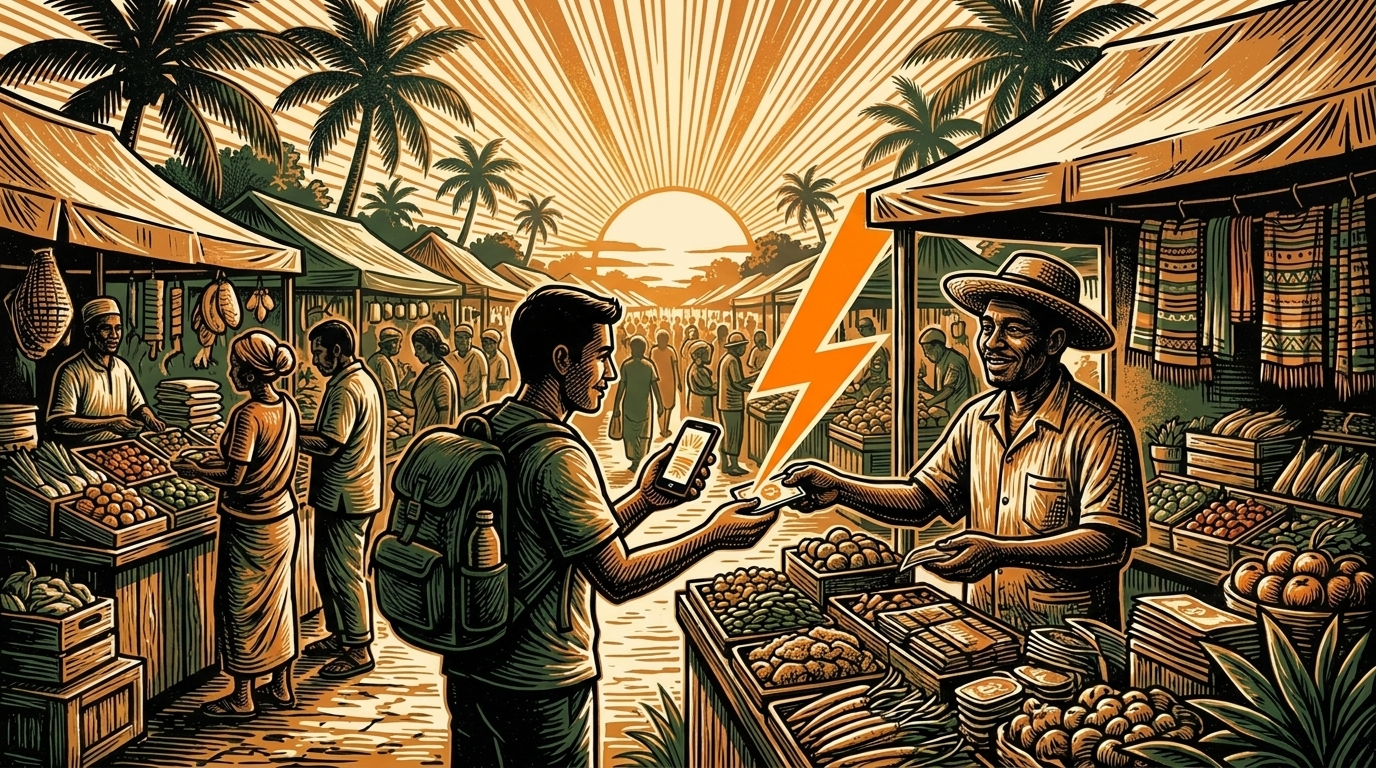
On the Lightning Network, a cross-border payment that costs 6–10% through a remittance company or a card network settles for a fraction of a cent, in seconds. That is not a slogan; it is the arithmetic that has quietly rewired parts of the Global South. In Kenya this year, roughly forty million mobile numbers on M-Pesa became reachable as Lightning addresses, turning the country’s dominant money app into a bitcoin rail without asking users to understand any of it. Machankura lets people send and receive sats over USSD codes on basic phones with no internet, across a dozen African countries. None of this made a Bloomberg chyron.
The ETF holder and the market vendor are doing opposite things with the same asset. One buys bitcoin precisely so they never have to touch it — the appeal is a regulated claim, a custodian, a line on a brokerage statement. The other touches nothing else, because the whole value is a payment that clears when the banking system won’t. Financialization pulls coins toward institutional vaults; circular economies push them through tills. Both can be called “adoption.” Only one of them is bitcoin doing a job that money in that person’s pocket could not already do.
The two are not enemies, and it would be lazy to pretend they are. Institutional demand supports a price that makes savings in bitcoin worth holding for a Kenyan trader as much as a Toronto retiree. The liquidity and infrastructure Wall Street builds — deeper markets, better custody, clearer law — lower the risk for everyone downstream. A world where BlackRock takes bitcoin seriously is, at the margin, a safer world to accept a Lightning payment in. The financial plumbing and the payments plumbing reinforce each other more than either side likes to admit.
Still, when the day’s biggest bitcoin stories are all about who holds it, it is worth remembering who uses it. The measure of this technology was never going to be the size of a fund. It was always going to be whether an ordinary person, somewhere a bank never bothered to go, can get paid and pay others without asking anyone’s permission. Watch the till, not just the ticker.
— The Beacon
This is opinion. Supporting figures — Lightning fee compression, Kenya’s ~40 million M-Pesa Lightning addresses (2026), and Machankura’s USSD coverage — are drawn from the linked reporting and reflect fast-moving grassroots deployments that may lead or lag the live count.
Free. Five minutes. No hype.
Subscribe free