 The Bitcoin Beacon
After a three-year ban, the central bank's rules let regulated banks offer bitcoin trading and custody — inside the app millions already use.
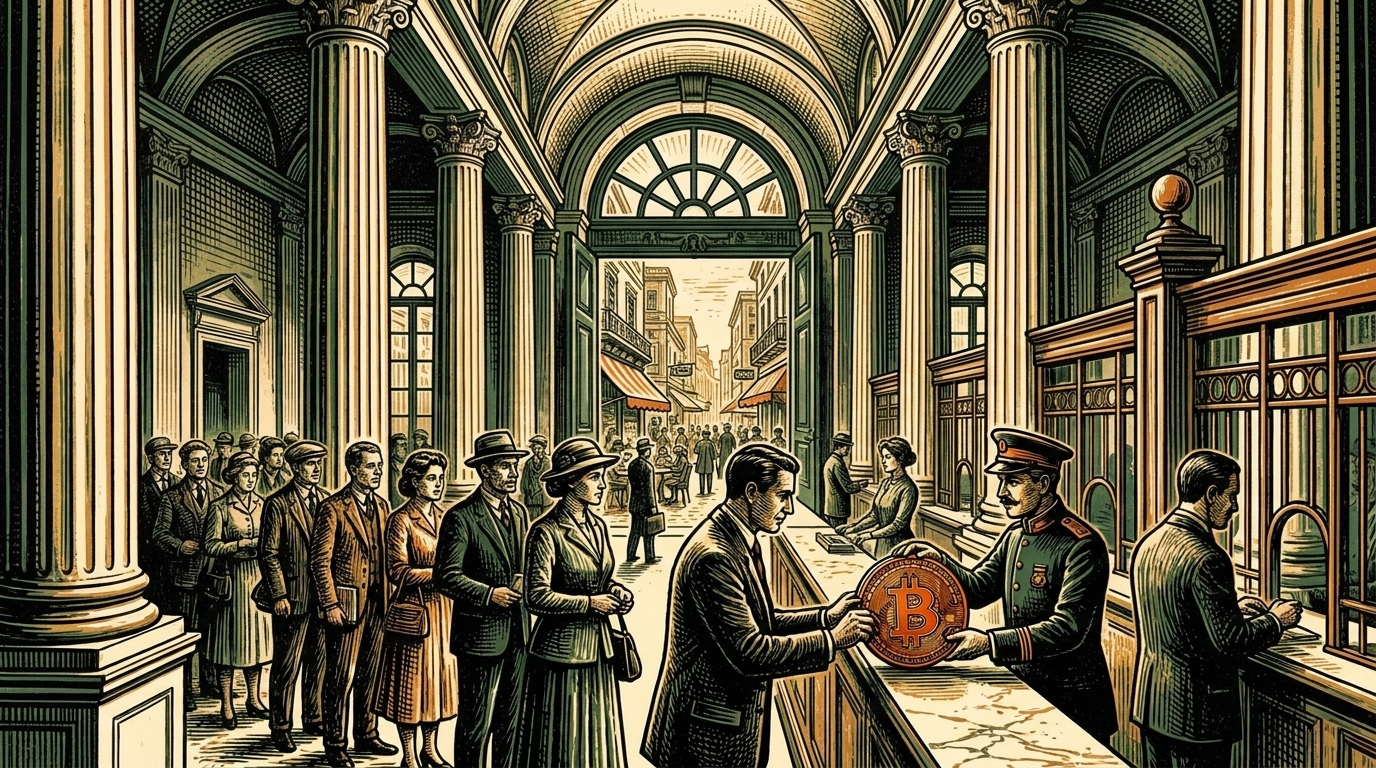
In a country where an entire generation learned to distrust its own currency, the central bank is about to let ordinary savers buy and hold bitcoin at their bank. Under a framework from the Banco Central de la República Argentina (BCRA), regulated banks can offer bitcoin trading and custody directly — reversing a ban that had stood since May 2022.
The mechanics are deliberately conservative. Banks may integrate crypto services into the apps and accounts their customers already use, but only through separate legal units carrying higher capital, security, and liquidity requirements, and only under strict know-your-customer and anti-money-laundering rules. This is not a free-for-all; it is bitcoin brought inside the regulatory perimeter.
Argentina is one of the world’s most intense grassroots bitcoin markets for a simple reason: the peso keeps failing its holders. Years of high inflation taught Argentines to convert savings into dollars — often through the parallel “blue” market — and, increasingly, into bitcoin and dollar-pegged tokens. Demand was never the question. Access through trusted, regulated institutions was.
The policy shift sits inside President Javier Milei’s broader push to liberalize finance. Since he took office in December 2023, the central bank has moved from prohibition toward supervised integration, betting that it is safer to bank the demand than to banish it to unregulated channels.
What changes is not whether Argentines hold bitcoin — many already do — but where and how. Moving that activity from informal exchanges and street-corner dollar traders into licensed banks means custody with recourse, cleaner tax treatment, and a paper trail regulators can see. For a saver who has watched a currency evaporate, the appeal of holding a bearer asset that no central bank can print is obvious; the appeal of holding it somewhere insured and lawful is new.
There is a tension worth naming. Bitcoin’s original promise was self-custody — your keys, your coins, no intermediary. Bank custody reintroduces the intermediary. For most first-time buyers that trade-off is worth it; for the movement’s purists it is a reminder that convenience and sovereignty pull in opposite directions. Both can be true: a bank on-ramp brings millions in, and some fraction of them eventually learn to withdraw to their own wallets.
If the rollout holds, Argentina becomes one of the first countries to fold bitcoin directly into its mainstream banking system rather than treating it as a fringe asset to be tolerated or taxed. In a region where dollarization pressure is chronic, a large economy normalizing bank-held bitcoin is a template neighbors will study.
Why it matters: when the bank down the street will custody bitcoin, adoption stops being an act of rebellion and starts being a default option.
The BCRA framework reverses the May 2022 ban and is being implemented on a 2026 timeline; exact go-live dates and per-bank offerings vary. Framework covers bitcoin alongside other digital assets. Not investment advice.
Free. Five minutes. No hype.
Subscribe free