 The Bitcoin Beacon
The company built a headline-grabbing bitcoin treasury this spring. Seven months later it has sold nearly two-thirds of it to keep the business funded.
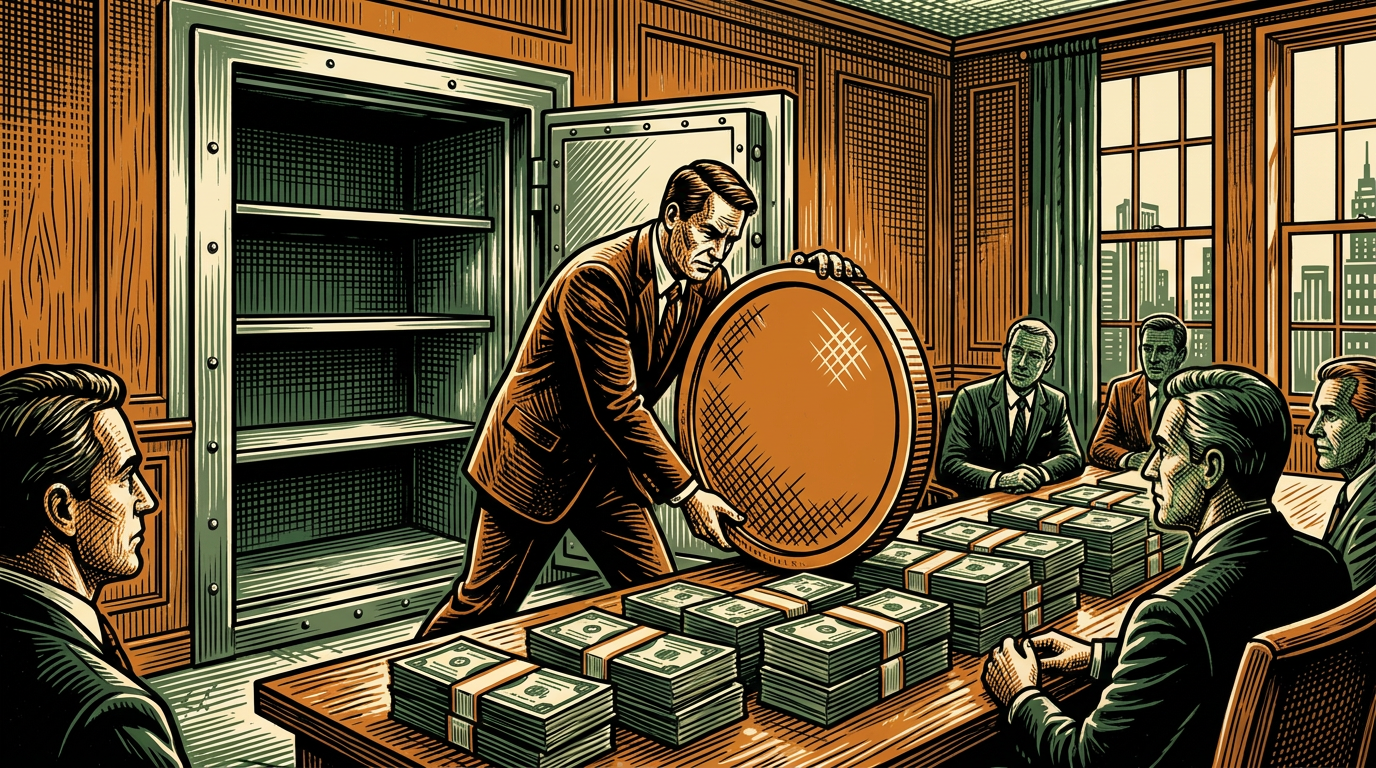
Trump Media & Technology Group spent the first half of 2026 assembling one of the loudest corporate bitcoin treasuries in America. It is spending the second half unwinding it. The company behind Truth Social has sold roughly 7,281 BTC over seven months — about 63% of its holdings — at an average price near $74,855, leaving a stack of around 4,261 coins.
The latest tranche moved 2,628 BTC, worth about $165 million, to Crypto.com. Management says the proceeds fund operations and product work, including a planned financial “Truth” API.
The corporate-treasury playbook, popularized by Strategy, is simple: raise capital, buy bitcoin, let the balance sheet appreciate, repeat. It works while the stock trades above the value of the coins and the core business doesn’t need the money.
Trump Media’s problem is the second condition. Truth Social is not a cash machine; the company runs an operating loss and holds bitcoin against it. When a treasury’s parent must fund itself, the coins stop being a long-term reserve and become working capital. Selling at a $74,855 average — above today’s ~$65,000 — at least means the sales predate the recent softness.
The retreat is not isolated. MicroStrategy, now the largest corporate holder at 847,363 BTC, paused new purchases and built its cash reserve to $3.75 billion to cover preferred dividends and convertible debt — even selling 1,638 coins to do it. The miner Cipher liquidated 1,166 BTC to fund a data-center retrofit. BitGo faces a shareholder suit over a $60.7 million quarterly loss driven by mark-to-market accounting on its own bitcoin.
New fair-value accounting rules cut both ways: they let companies book gains when bitcoin rises and force losses onto the income statement when it falls.
Trump Media’s sale tests a claim the treasury movement rarely says aloud: a bitcoin balance sheet is a bet that you will never be a forced seller. Firms funded with permanent capital — long-dated debt, preferred equity — can ride out a drawdown. Firms funded by an operating business that loses money cannot.
Why it matters: a treasury company only holds through a downturn if the core business can pay its own bills.
Holdings, sale sizes and the $74,855 average are as reported in the cited coverage; company-specific figures may be restated in official filings.
Free. Five minutes. No hype.
Subscribe free