 The Bitcoin Beacon
Tyler Williams, the Treasury adviser who helped design America’s Strategic Bitcoin Reserve, is leaving — and the market-structure bill he championed has stalled before the August recess.
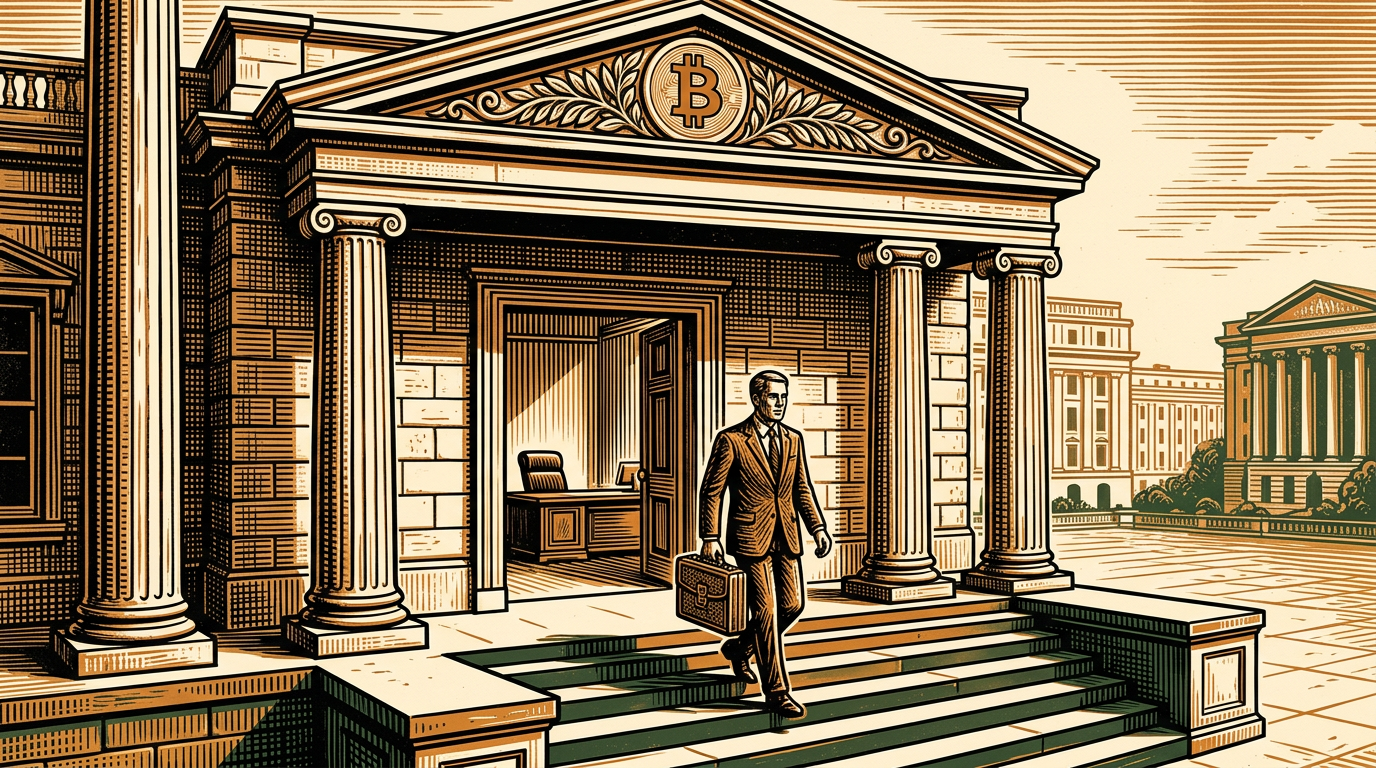
The people who wrote America’s bitcoin policy are leaving the building. Tyler Williams, the senior Treasury official who ran digital-asset policy and advised Secretary Scott Bessent, has resigned, with his last day at the end of the week. His exit lands as the administration’s signature crypto legislation stalls in Congress — and it is not the only departure.
Williams was, by Washington’s own account, central to the effort. He helped shape the Strategic Bitcoin Reserve created by executive order in March 2025 and was described inside Treasury as instrumental to the drive to make the United States, in the administration’s phrase, the “crypto capital of the world.” He is said to be returning to the private sector.
His departure coincides with the Digital Asset Market Clarity Act — the CLARITY Act — stalling ahead of Congress’s August recess. The market-structure bill, meant to divide oversight of digital assets between the SEC and CFTC, has snagged on disagreements over ethics provisions for federal officials. One prediction market now puts the odds of CLARITY passing this session at around 27%.
Williams is not leaving alone. Reporting this summer has tracked a cluster of exits across the SEC, the Senate, and the White House among the officials who had driven crypto policy — a brain drain at exactly the moment the agenda needs shepherds through a divided Congress.
For bitcoin holders, the substance sits in what the reserve is and is not. The Strategic Bitcoin Reserve currently holds an estimated 328,000-plus BTC — roughly 1.6% of all bitcoin — accumulated almost entirely through law-enforcement seizures, including Silk Road and the Bitfinex-hack recovery. It is a stockpile of forfeited coins, not a program of open-market purchases.
Whether it becomes one is the open question. Legislation reintroduced as the American Reserves Modernization Act would authorize Treasury to buy up to 200,000 BTC a year for five years and lock the holdings for two decades; supporters have floated a first purchase as early as the fourth quarter of 2026. But Bessent has publicly said the government will not buy more bitcoin to expand the reserve — a direct contradiction of the legislative ambition, and a gap that the departing staff were supposed to help resolve.
Executive orders establish intent; statutes and staff execute it. A reserve that only holds seized coins costs nothing and does little. A reserve that buys on the open market would make the United States the first major sovereign to actively accumulate bitcoin as a reserve asset — a decision with real budget and market consequences that needs congressional authority and civil servants to implement. Losing the architects while the enabling law is stuck pushes any such move further out.
None of this touches the coins already held; seized bitcoin does not walk out with a resigning adviser. What it touches is momentum. The maximalist case for a state bitcoin reserve was always that policy would compound — order, then law, then purchases. This week that compounding looks slower.
Three things: whether CLARITY is revived after the recess or dies for the session; who replaces Williams and whether the successor shares his brief; and whether Bessent’s “no new purchases” line survives contact with a Congress that keeps drafting bills to the contrary. The reserve is not going anywhere. Its trajectory just lost some of its engine.
Why it matters: America already owns a big pile of bitcoin — but whether it ever buys more depends on laws and staff, and both just got shakier.
Editor’s note: reserve holdings are estimates based on tracked government wallets and seizure disclosures; personnel details reflect reporting on Treasury staffing. Nothing here is financial advice.
Free. Five minutes. No hype.
Subscribe free