 The Bitcoin Beacon
Saudi Arabia is the Gulf’s fastest-growing digital-asset market, driven by under-35s with smartphones — adoption running well ahead of the rules meant to govern it.
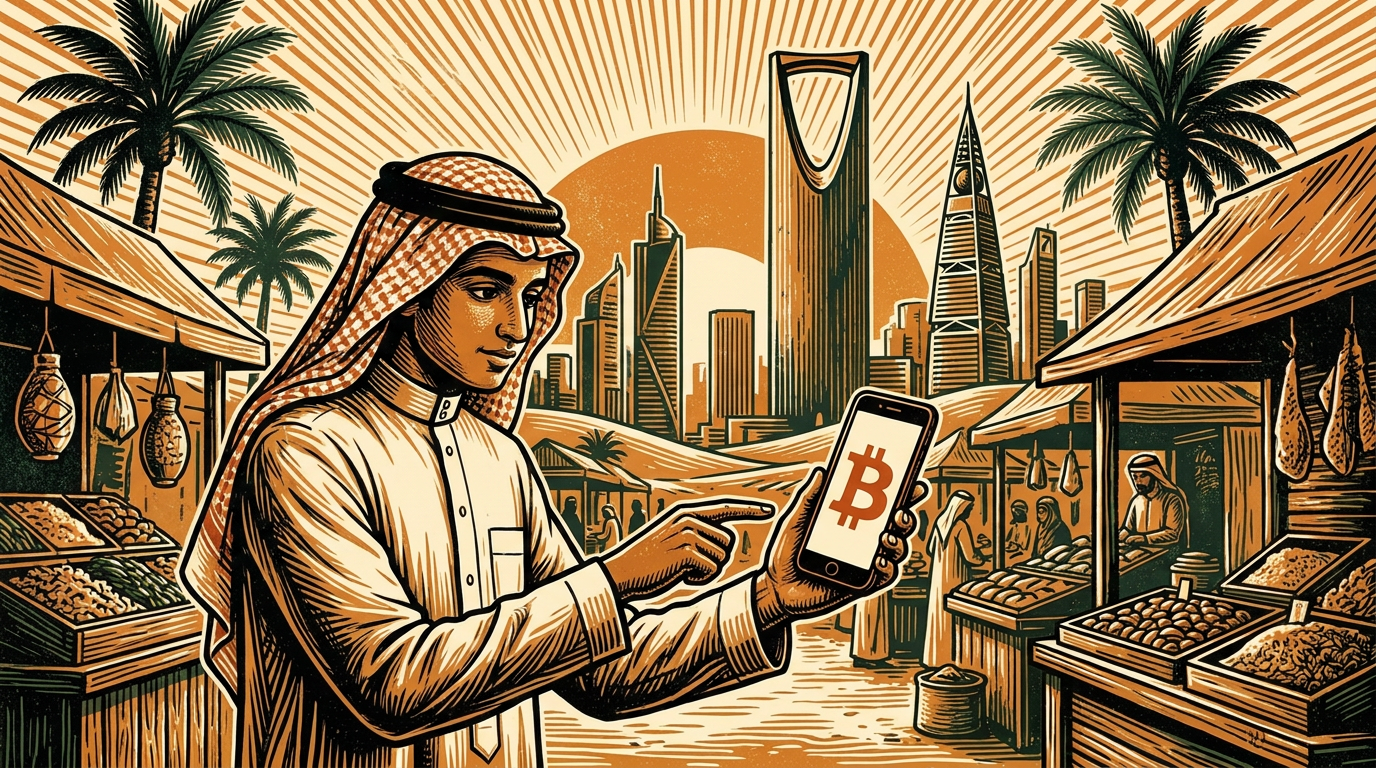
In Riyadh, the fastest-moving bitcoin market in the Gulf is not a sovereign fund or a state miner. It is a generation with smartphones. Saudi Arabia has become the region’s quickest-growing digital-asset economy, and the demand is running well ahead of the rules meant to govern it.
The clearest figure comes from Chainalysis, which found Saudi Arabia grew crypto transaction value by roughly 153% year over year in its most recent regional survey — the fastest in the Middle East and North Africa — on an estimated $47 billion of inflows. An important caveat sits inside that number: it counts all crypto, not bitcoin alone. But in Gulf portfolios bitcoin remains the anchor asset, the thing bought first and held longest, and the growth curve is the point.
Demographics do the heavy lifting. Analysts estimate around 3 million Saudis now hold or trade digital assets, concentrated among 18-to-35-year-olds in a country where smartphone penetration tops 95%. This is not a diaspora sending remittances home or a population fleeing a collapsing currency — the riyal is pegged and stable. It is a young, connected middle class treating bitcoin as a normal line in a savings portfolio.
That makes Saudi adoption a different species from the stories the Beacon usually files. In Lagos or Buenos Aires, bitcoin is a hedge against monetary failure. In Riyadh it is discretionary demand — closer to how a young professional in Seoul or Singapore treats it. The driver is not desperation. It is access, phones, and yield-seeking.
Officially, the ground is still soft. The Saudi Central Bank has long been cautious on crypto and has not enacted a comprehensive framework for trading and custody, even as it explores blockchain and central-bank digital-currency work under the Vision 2030 modernization plan. Much of the activity therefore runs through global exchanges and peer-to-peer channels rather than a licensed domestic market — the familiar pattern in which citizens adopt first and regulators formalize later.
The trajectory points one way. Industry projections cited across the Gulf see the Saudi digital-asset market expanding toward roughly $50 billion by 2034 as Vision 2030 pulls finance and technology into the center of the economy. Whether Riyadh writes rules that channel that demand onshore — as the UAE has aggressively done — or lets it keep flowing offshore is the decision that will shape the next few years.
Two markers matter: whether the central bank moves from study to a licensing regime for exchanges and custody, and whether Saudi capital shows up in bitcoin specifically rather than the broader crypto basket the headline data lumps together. A young market growing at triple digits is a prize. The country that regulates it well gets to keep the activity at home.
Why it matters: the Gulf’s bitcoin story is usually about sovereigns hoarding coins — here it’s ordinary young savers, and their demand is arriving faster than the rulebook.
Editor’s note: headline adoption figures from Chainalysis measure all digital assets, not bitcoin alone, and cover the July 2023–June 2024 survey window; bitcoin is the largest single asset held but is not separately broken out. Nothing here is financial advice.
Free. Five minutes. No hype.
Subscribe free