 The Bitcoin Beacon
Core Scientific will rent its power to AMD for $14 billion and wind mining down. When the megawatts that secure bitcoin chase AI, what secures bitcoin?
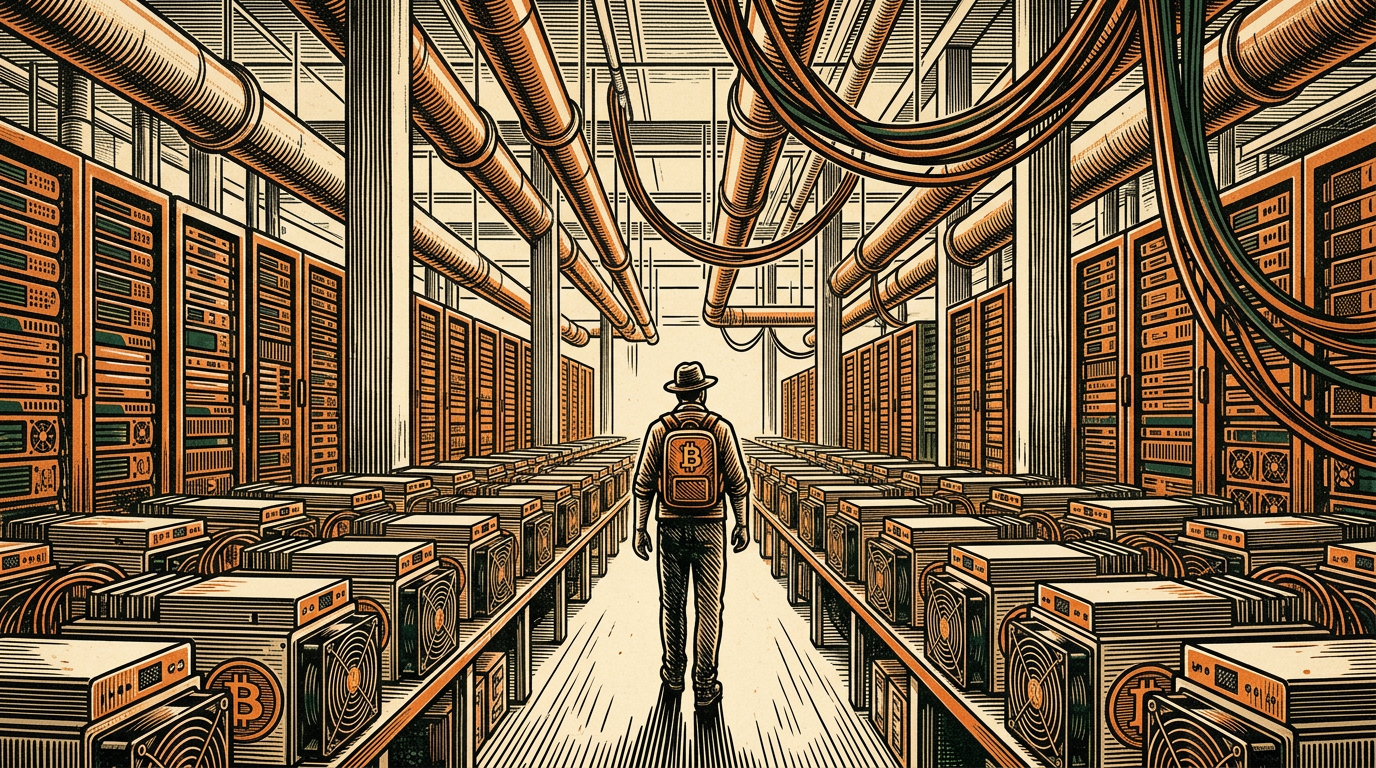
On July 28, Core Scientific — once one of the largest bitcoin miners in North America — signed a 15-year deal to hand 529 megawatts of its power and buildings to the chipmaker AMD for artificial intelligence, worth up to $14 billion in contracted revenue. The fine print is blunter than the headline: the agreement follows the termination of Core Scientific’s machine deal with Block, and coverage of the pact describes its bitcoin mining operation winding down. The rigs are being switched off so the racks can be switched on.
It is not an isolated move. TeraWulf has leased some $19 billion of capacity to the AI lab Anthropic while selling a stake in a Texas data centre. CleanSpark, another miner, signed a multibillion-dollar data-centre lease as it pivots toward compute. The pattern is unmistakable: the companies that spent years building power infrastructure to secure the bitcoin network are re-leasing that infrastructure to artificial intelligence.
The reason is economics, and it is not subtle. A megawatt pointed at bitcoin mining earns whatever the hashprice happens to be — lately a squeezed $29 to $30 per petahash per day, at the mercy of price, difficulty and the halving. A megawatt pointed at AI training earns a long-dated, contracted rate from a customer with a balance sheet and a desperate need for power. One is volatile and shrinking; the other is a fifteen-year annuity. A rational operator does not hesitate.
So the miners are doing the rational thing, and it is hard to blame them. Their real asset was never the ASICs; it was the substations, the cooling, the interconnects and the land. Bitcoin mining was the first tenant willing to pay for that build-out at a time when nothing else was. AI is a richer tenant, and the landlords are re-letting.
The megawatts that secured the network are being re-let to chatbots — because AI pays more per watt than hashing does.
Here is the part the revenue slides skip. Every gigawatt that flips from ASICs to GPUs is a gigawatt no longer defending bitcoin. The network’s security is its hashrate, and its hashrate is, ultimately, power pointed at mining. When the largest operators would rather host AI, the marginal megawatt of security gets more expensive to keep.
The steelman is real and worth stating plainly. Hashrate is near record highs — around 930 exahash — even as these deals are signed, because efficient new machines and other miners keep filling in. No single operator’s exit breaks a network designed to shrug off exactly that. A miner with a diversified, AI-anchored balance sheet is a more durable miner, less likely to fail in a downturn and dump coins or go dark. And the physical build-out does not vanish; some of it can swing back to mining if hashprice ever out-competes AI rents again.
All true. But it leans on a comfortable assumption — that hashrate stays cheap and abundant, that fresh miners always backfill the ones who leave, that the AI bid is additive rather than substitutive. That held while power was plentiful. In a world where the richest buyer of electricity on earth is an AI lab, the price of the security bitcoin has always gotten almost for free is quietly going up.
The test is simple and falsifiable. If the pivot merely adds AI revenue on top of steady or growing mining, it is a strength — healthier miners, same security. If it subtracts hashrate — if megawatts leave mining faster than efficiency and new entrants replace them — then bitcoin is slowly outbidding itself for the one input it cannot synthesise. The next few difficulty adjustments, not the next few announcements, will tell which.
Why it matters: a bearer asset secured by electricity has a new, deep-pocketed rival for that electricity — and the miners are already choosing the higher bidder.
Editor’s note: deal terms are as announced by the companies and contemporaneous coverage; the network-security argument is this newspaper’s analysis, and opposing views are presented above. Nothing here is financial advice.
Free. Five minutes. No hype.
Subscribe free