 The Bitcoin Beacon
Sovereign funds buy bitcoin through ETFs whose keys they never touch. In Lagos and rural Zambia, people hold the coin itself. The gap is the whole point.
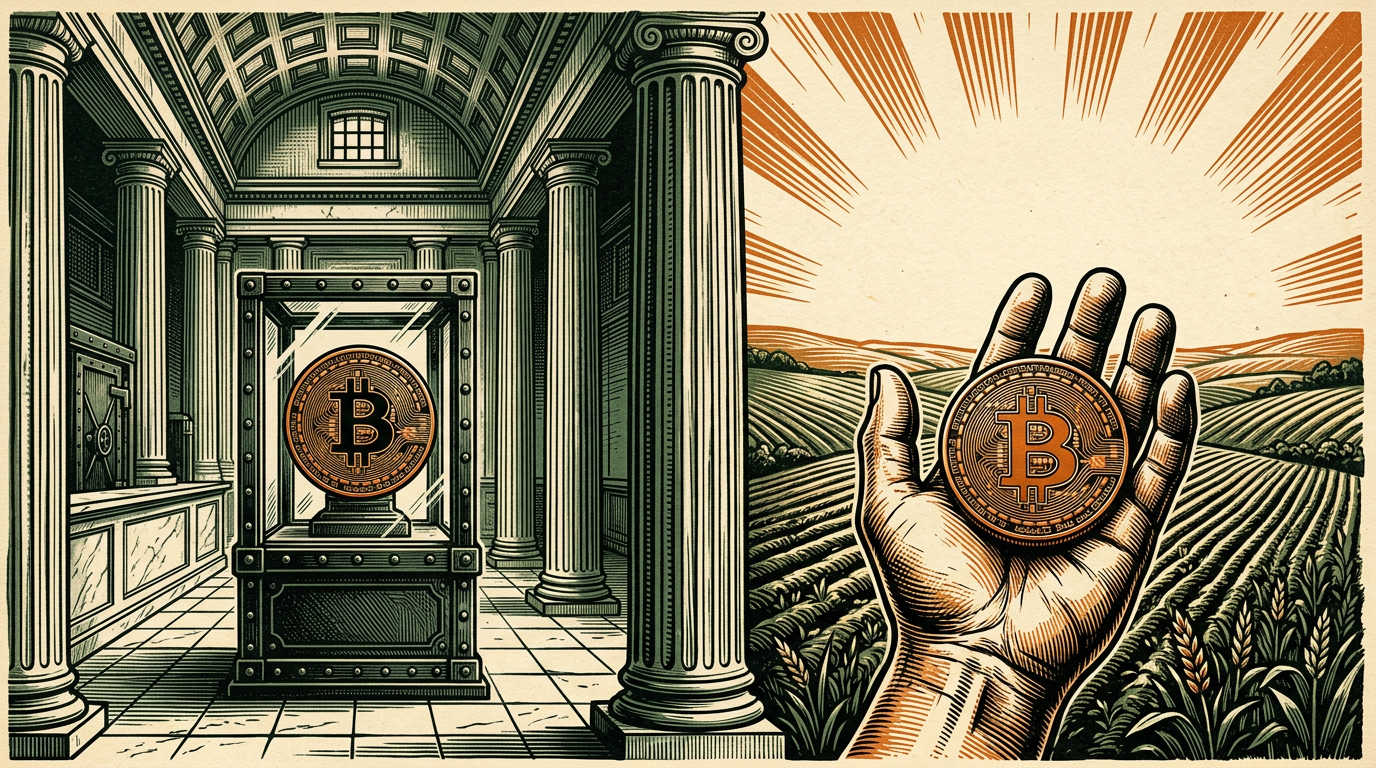
Two headlines, both true, describe the same asset. In one, the world’s most conservative institutions are quietly stacking bitcoin. In the other, a farmer in north-west Zambia and a trader in Lagos are doing the same. They are not, in any meaningful sense, buying the same thing.
Consider the institutional side first. Norway’s sovereign wealth fund — the largest on Earth — holds roughly 11,400 bitcoin indirectly, through its equity stakes in companies that own the coin. Abu Dhabi’s Mubadala disclosed a BlackRock bitcoin-ETF position that ranked among its very largest holdings. Luxembourg became the first eurozone state to route 1% of its national fund into a bitcoin ETF. American pensions, from Wisconsin onward, have followed.
Every one of those positions shares a feature: the fund does not hold a single bitcoin. It holds a share in a wrapper — an ETF, a fund, a listed company — and a custodian holds the keys. That is a deliberate design choice, and a sensible one for a pension: it outsources the operational and legal risk of self-custody to a regulated intermediary.
But it is worth being precise about what has been bought. A bitcoin ETF is exposure to a price. It rises and falls with the asset, and that is all it is meant to do. It cannot be sent across a border on a Sunday night. It cannot be carried out of a collapsing banking system. It cannot pay a supplier when the wire rails are closed. It is a number on a brokerage statement, and the thing that makes bitcoin bitcoin — that you can hold it yourself, and no one can freeze or seize or dilute it — is precisely the property the wrapper strips out.
A bitcoin ETF is exposure to a price. The thing that makes bitcoin bitcoin is the property the wrapper strips out.
Now the grassroots side. The Nigerian who converts a paycheck into bitcoin before the naira sheds another few percent holds the coin in a wallet on a phone. The Zambian mini-grid that stays solvent because a container of miners buys its surplus power is touching bitcoin at the level of the protocol itself. These users did not buy exposure; they bought a tool, and they use it for the one job the ETF cannot do — to possess money that no institution stands between them and.
This is the quiet irony of 2026’s adoption story. The richest, most sophisticated buyers own bitcoin in the form that gives them the least of what bitcoin is for. The poorest, least sophisticated buyers own it in the form that gives them the most.
The counterargument is strong and deserves its say. Institutional demand is not a distraction from grassroots use — it underwrites it. The ETF bids that lift the price are what make a Zambian miner’s revenue viable and a Nigerian’s savings grow. Custody through a regulated wrapper is the only way trillions in pension and sovereign money can touch the asset at all; demanding that Norway’s fund run its own cold storage is a fantasy. And most people, most of the time, do not want the burden of holding their own keys — a custodian is a feature, not a betrayal. Exposure and possession are not rivals; they are rungs on the same ladder, and the institutions are building the lower ones.
All true. But it is worth keeping the two things named. When a sovereign fund “buys bitcoin,” it buys a claim. When a trader in Lagos buys bitcoin, she buys the money. Both count. Only one of them is the point.
Institutions are accumulating bitcoin through wrappers whose keys belong to someone else — exposure without possession. The people who need bitcoin’s actual properties hold the coin itself. As the two converge on one ticker, remember they are not buying the same asset.
Editor’s note: institutional holdings cited are drawn from public filings and disclosures of varying dates and can change quarter to quarter. This is opinion and analysis, not financial advice.
Free. Five minutes. No hype.
Subscribe free