 The Bitcoin Beacon
Iran's currency has lost a third of its value in seven months. With inflation near 69% and the state restricting stablecoins, millions are moving savings into bitcoin no bank can freeze.
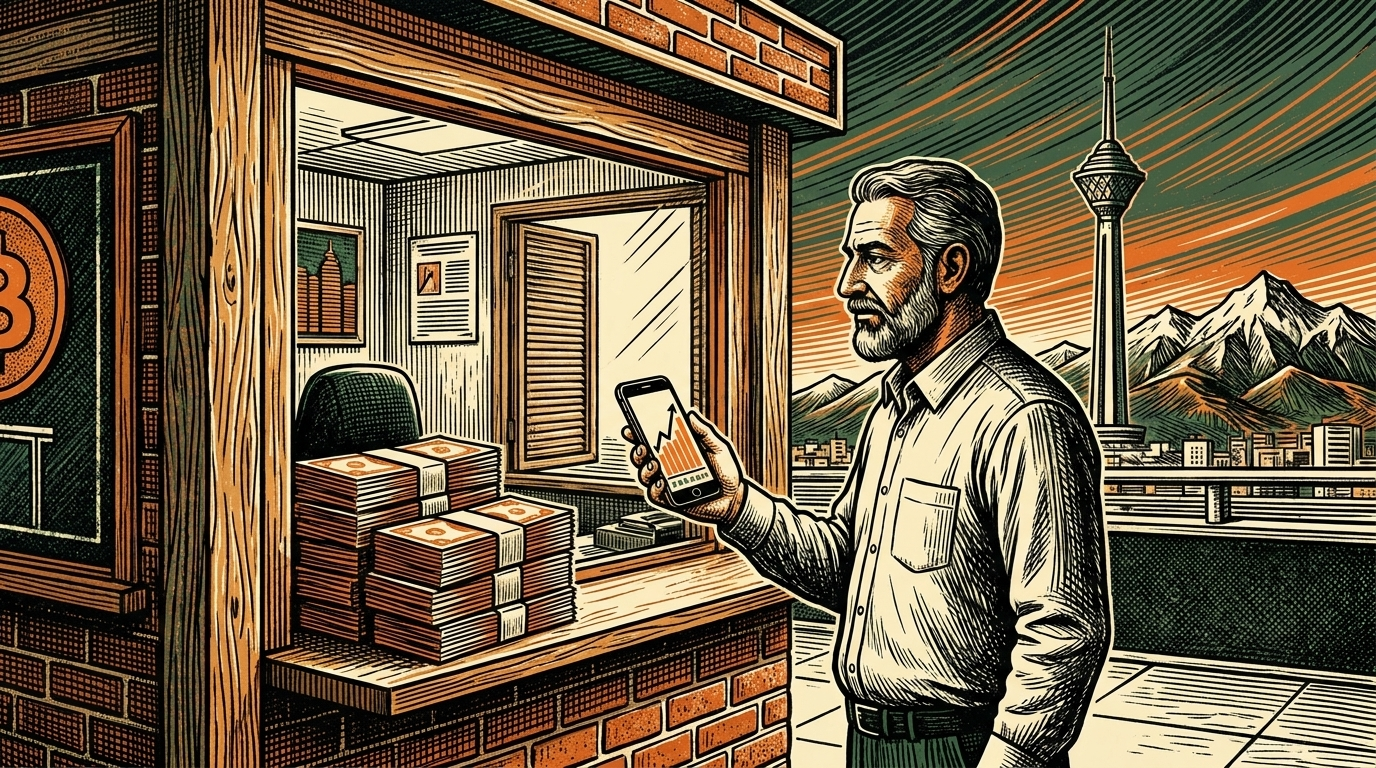
In Tehran, the exchange rate is a daily anxiety. The rial slid past 1.95 million to the dollar on July 20, down roughly a third since the start of the year. When the 2015 nuclear deal took effect the currency traded near 32,000 to the dollar; today it takes sixty times as many rials to buy the same greenback. For anyone paid in the national money, wealth is a puddle in the sun.
That is the backdrop for one of the quietest bitcoin adoption stories in the world — quiet because Tehran would prefer it stayed that way, and because sanctions keep most of it off the exchanges Westerners watch. Iranians are not buying bitcoin to make a bet. They are buying it to stop losing.
The numbers are the argument. The IMF projects inflation near 69% for the year and a 5.4% contraction in output. World Bank figures put food-price inflation above 99% year-on-year earlier in 2026. The minimum wage, converted at the street rate, is now worth about $87 a month. Each of those figures is a reason to hold anything but rials.
Iran International and other outlets trace the latest leg down to damaged energy and transport infrastructure, lost exports, and disruption around the Strait of Hormuz after this summer's conflict — shocks layered on years of sanctions and fiscal strain. The direction has been one way for so long that Iranians treat rial weakness less as news than as weather.
Iranians have hedged with dollars and gold for decades. What bitcoin adds is portability the state cannot intercept. An estimated ten million people — roughly a fifth of adults — now hold bitcoin or other crypto, by the tallies analysts cite, even though the government restricts both mining and stablecoin holdings and periodically throttles the internet.
The operative word is self-custody. A coin held in a private wallet is not sitting in a bank that can be frozen, nor in a currency that can be redenominated overnight. Iranians watched Lebanon's banks lock depositors out and forcibly convert dollar accounts into a collapsing pound; more than 90% of that currency's value vanished. A bearer asset is insurance against exactly that.
Bitcoin is not spreading in Iran because people read the whitepaper. It is spreading because the alternative is watching savings evaporate.
Two qualifiers matter. First, a large share of Iran's crypto activity runs through dollar-pegged stablecoins, not bitcoin — the same dollar hunger, met with a digital dollar. Bitcoin is the harder-money option and the censorship-resistant one, but it shares the market with tokens that simply track the greenback the regime is short of.
Second, measuring adoption in a sanctioned, capital-controlled economy is inexact. Figures come from exchange data, on-chain estimates and survey work, each with blind spots; the state's own restrictions push activity into channels that are hard to count. Treat the ten-million figure as a well-supported estimate, not a census.
Neither caveat changes the through-line. When a currency fails, people reach for money that a central bank cannot debase. In Iran, as in Turkey, Argentina and Lebanon before it, bitcoin's best salesman is the rial.
A third of the rial's value has evaporated in seven months, and Iranians are answering with self-custodied bitcoin the state cannot freeze. It is adoption by necessity — the most durable kind there is.
Editor's note: adoption figures are third-party estimates and hard to verify in a sanctioned economy; much of Iran's crypto activity is dollar-pegged stablecoins, of which bitcoin is one part. Nothing here is financial advice.
Free. Five minutes. No hype.
Subscribe free