 The Bitcoin Beacon
Wall Street trades bitcoin against the dollar and hangs on every FOMC word. The people actually adopting it are hedging a currency that is already failing.
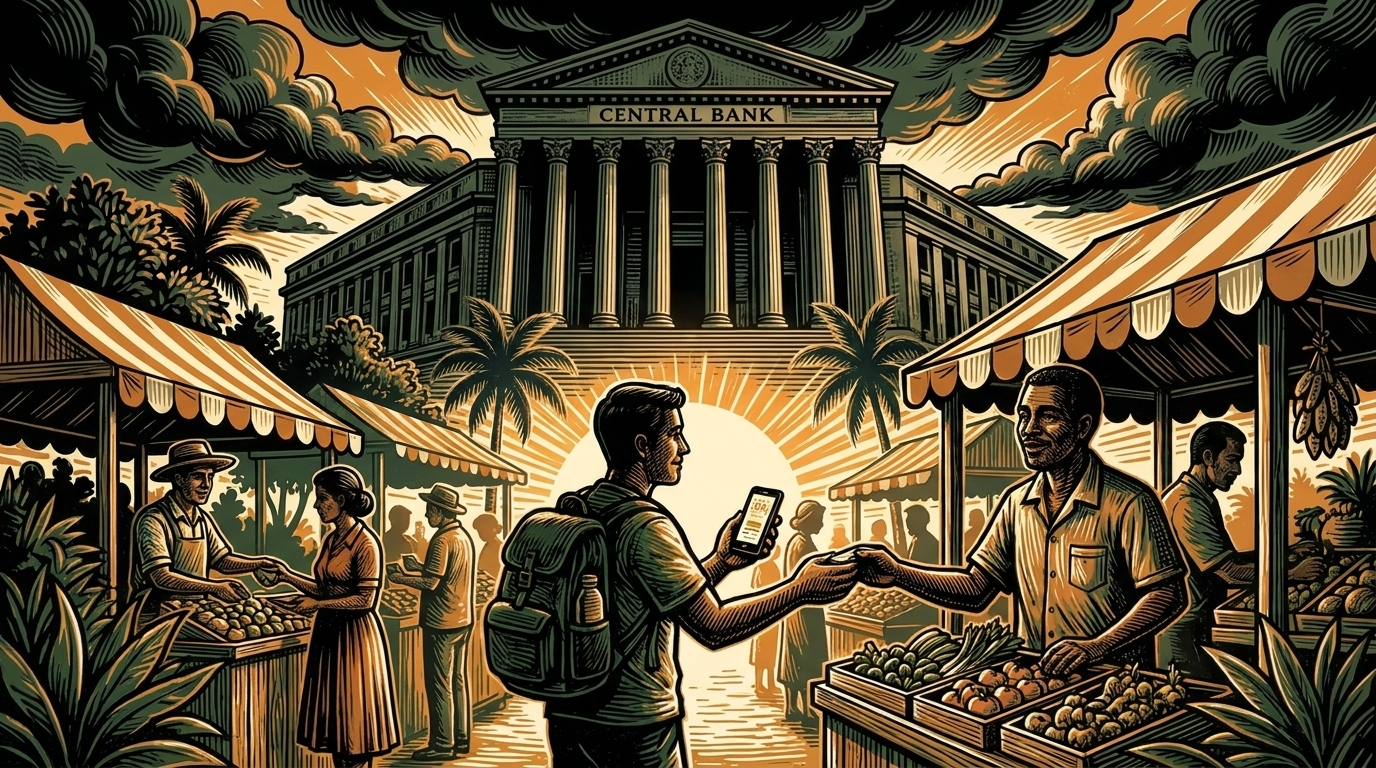
This week the Federal Open Market Committee meets, and every bitcoin trading desk in Manhattan will hang on the wording. Hold rates, and the leverage piles back on. Sound hawkish, and the ETFs bleed. For that bitcoin — the one on Wall Street's books — a quarter-point of forward guidance is the whole story.
It is a real market and a real asset. It is also almost entirely beside the point for the people driving bitcoin's actual adoption.
In Tehran this month the rial slid past 1.95 million to the dollar, down a third this year, with inflation near 69%. In Buenos Aires and Lagos, the story rhymes: a local currency that loses value faster than a central banker can hold a press conference. Nobody in those cities is modeling a September hike. They are modeling how much their savings will be worth by Friday.
These are the same coins with wildly different jobs. To a New York allocator, bitcoin is a risk asset priced against a strong dollar — it rises and falls with liquidity, and the Fed sets the weather. To a saver in a collapsing economy, bitcoin is an exit from a currency that is failing regardless of what Jerome Powell says. One is a bet on monetary conditions. The other is a bet against a specific, local monetary catastrophe.
Wall Street's bitcoin needs the Fed to be gentle. The Global South's bitcoin needs the local central bank to keep being reckless. It usually obliges.
Confusing the two produces bad analysis. When bitcoin sells off on a hawkish Fed, the takeaway is not "adoption is failing." Adoption — merchants, remittances, self-custody in currency-collapse economies — does not move on FOMC minutes. It moves on necessity, and necessity is not on the Fed's calendar. The price chart tracks the Wall Street bitcoin; the usage data tracks the other one, and the two can diverge for a long time.
To be fair to the other side: the two bitcoins are not hermetically sealed. Deep, liquid ETF markets and institutional custody make bitcoin easier and cheaper to acquire everywhere, including in Lagos and Tehran. A higher, more stable dollar price can strengthen the very savings case the Global South relies on. And a violent, Fed-triggered crash can shake even necessity-driven holders. The channels between the two markets are real, and over a long enough horizon they may matter more than today's disconnect suggests.
But this week, when the headlines fixate on what the Fed did to bitcoin, remember which bitcoin they mean. The one that is quietly becoming money for people who need it will not have been watching.
The Fed moves the price of Wall Street's bitcoin. It does not move the reason a Tehran saver holds one. Watch the usage, not just the ticker.
Editor's note: this is an opinion column from The Bitcoin Beacon newsroom. Nothing here is financial advice.
Free. Five minutes. No hype.
Subscribe free