 The Bitcoin Beacon
The honest measure of bitcoin adoption isn't the chart or the corporate treasury. It's how many ordinary places will take it for lunch.
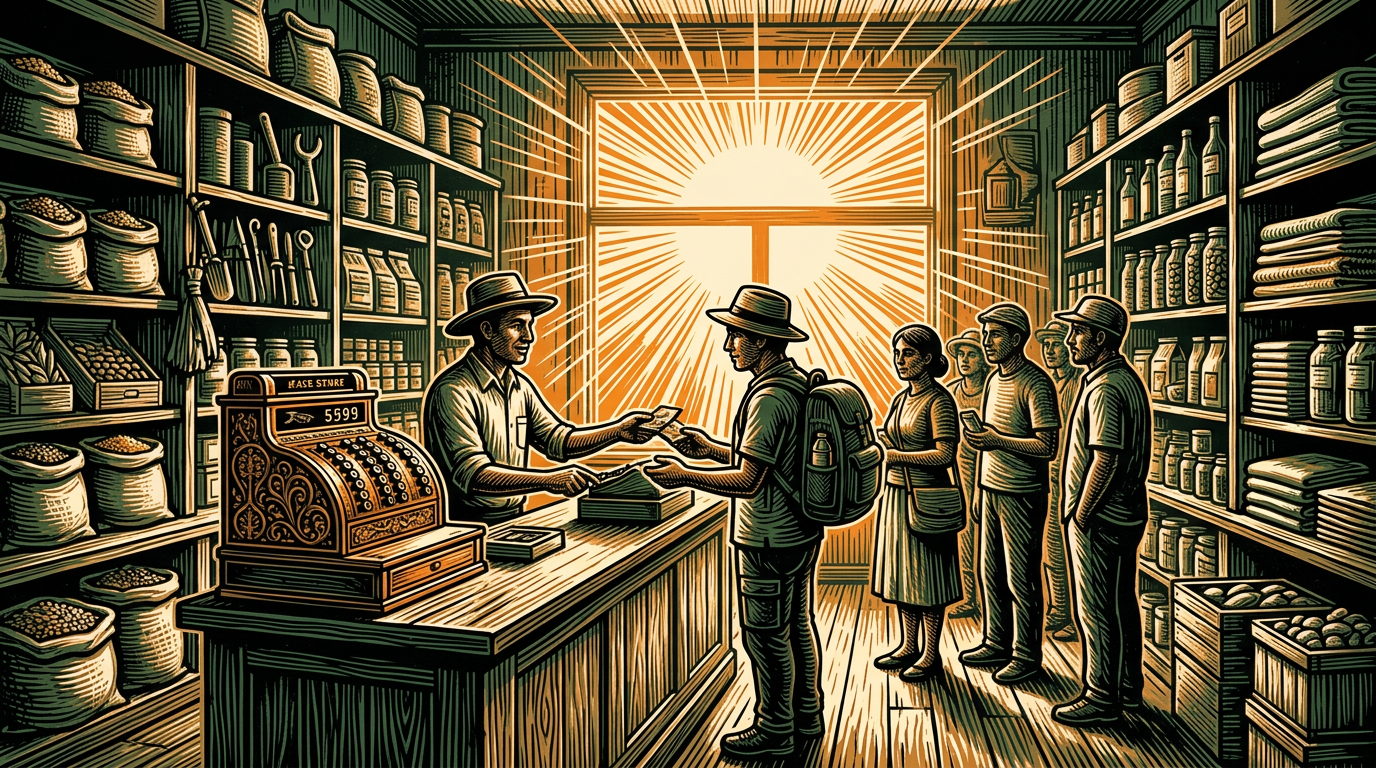
Ask whether bitcoin is winning and most people reach for a number that tells them almost nothing: the price. A close second is the size of some company's treasury. Both are easy to quote and both are nearly useless as a measure of adoption, because both describe speculation — how much people will pay to own bitcoin, not how many places will accept it. If you want to know whether bitcoin is becoming money, count the cash registers.
By that yardstick this week was a good one. Two hundred businesses on Costa Rica's Pacific coast take bitcoin over Lightning and get paid in colones. Some three million Ghanaians use it often enough that their government finally wrote rules. Argentina's banks, which spent four years refusing to touch it, are now lining up to hold it for customers they already lost. None of that shows up on a candle chart, and all of it matters more than one.
Price tells you what bitcoin is worth. The till tells you what it's for.
The distinction is not pedantic. A price rally can happen with zero new users — the same coins changing hands at higher numbers. A treasury purchase is one company's bet, reversible with one board vote, as this month's corporate pause reminded everyone. But a merchant who accepts bitcoin has quietly added it to the small set of things she trusts to settle a sale. That decision is stickier than a price, harder to win, and it compounds: every accepting shop makes the next one easier to convince.
Honesty requires the other side. Circular economies are tiny. Two hundred merchants along a tourist coast is a rounding error next to a single day of exchange volume, and many of them convert every payment to local currency the instant it arrives, which means bitcoin is passing through as a rail, not circulating as money. Payments adoption has been “about to take off” for a decade. And the uncomfortable truth is that liquidity and price still underwrite the whole thing: if bitcoin's value collapsed, the wallets in those surf towns would empty and the registers would stop ringing. You cannot fully separate the speculation from the spending.
All true. But it argues for watching the right meter, not for watching the price. Merchant counts, Lightning traffic, the share of a fintech's payments that settle off-chain, the number of countries writing rules because usage forced their hand — these are noisier and less thrilling than a green candle, and they measure the thing that actually has to happen for bitcoin to become money rather than merely an asset.
So the next time a headline leads with the price, ask a better question. Not what is bitcoin worth today, but where could you spend it — and was that list longer this month than last. On the evidence from Uvita to Accra, it was.
The Take is opinion and analysis from the Beacon newsroom. Nothing here is financial advice.
Free. Five minutes. No hype.
Subscribe free