 The Bitcoin Beacon
A Stellenbosch startup quietly wired the country's checkout counters to bitcoin and the Lightning Network — and the merchants taking it never have to touch the coin.
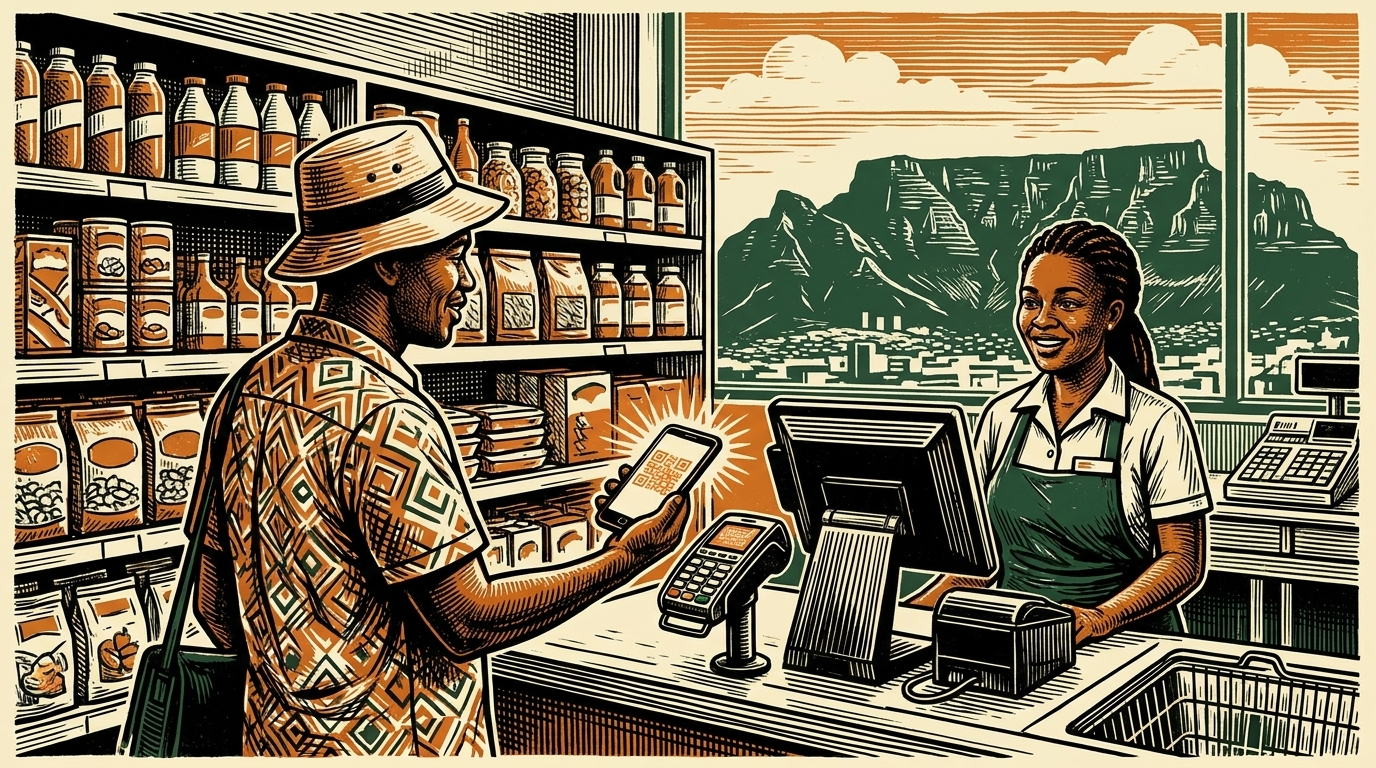
At a Pick n Pay checkout in the Western Cape, paying with bitcoin is an anticlimax. The shopper opens a wallet app, points the phone at the QR code on the card machine, accepts the rand conversion shown on screen, and the receipt prints. No new terminal, no crypto jargon at the counter, no wait. The cashier rings it up like a card tap. That ordinariness is the whole achievement.
The rail behind the moment belongs to MoneyBadger, a company founded in Stellenbosch in 2022 that connects South Africa's existing point-of-sale systems to bitcoin and the Lightning Network. Its first big client, the supermarket chain Pick n Pay, switched on crypto payments across more than 1,500 stores in 2023. In the years since, the reach has stopped being a novelty and become national infrastructure.
The trick is that the merchant never leaves rand. When a customer pays, MoneyBadger's software takes the bitcoin (or Lightning) payment, converts it at the live rate, and settles the store instantly in local currency. The shop's books, taxes and cash flow look exactly as they did before. All the volatility, custody and conversion happen in the background, in the seconds between the scan and the receipt.
On the customer's side, the system speaks to the wallets South Africans already use — MoneyBadger's integration supports major apps including Luno, Binance and VALR, and its API can settle in rand, stablecoins or bitcoin. Lightning is what makes the small, everyday purchase viable: a base-chain bitcoin fee is sized to global demand and can dwarf the price of a loaf of bread, while a Lightning payment clears in about a second for a fraction of a cent.
The merchant sees rand. The customer spends bitcoin. Nobody at the till has to believe in anything.
What turned a single-retailer pilot into a country-wide option was distribution. In April 2026, Bybit — by trading volume the world's second-largest crypto exchange — plugged its Bybit Pay feature into MoneyBadger's network, giving its users a single QR flow across South African retail.
The merchant map is the striking part. Through MoneyBadger's partnerships, a shopper can now pay at more than 650,000 locations via Scan to Pay, 31,000 through Zapper, and over 1,500 Pick n Pay stores, with further coverage online and in-store through Peach Payments and Ozow. The categories are mundane by design: groceries, fuel, travel, retail and dining — the places money actually goes.
MoneyBadger itself is small. It raised roughly R7 million (about $400,000) in a pre-seed round in 2025 and stitched together its coverage by partnering with existing payment gateways rather than trying to sign each merchant one by one. That is the leverage: it did not build a new acceptance network, it taught the ones South Africa already had to speak bitcoin.
This is not a purist bitcoin-only rail, and it would be dishonest to sell it as one. MoneyBadger and Bybit Pay support more than twenty digital assets, stablecoins among them, and many payments settle to the merchant in rand rather than staying in bitcoin. Bitcoin is one lane on a multi-asset road, and on any given day a shopper may be spending a dollar-pegged token instead.
But the direction is what matters. For the first time, a South African who keeps savings in bitcoin can spend them at a national grocer without selling on an exchange, moving money to a bank, and waiting. The off-ramp is the till. And because Lightning underpins the small payments, bitcoin is competing where it is weakest by reputation and strongest by design: everyday amounts.
The adoption numbers explain why merchants bother. South Africa's crypto ownership sits near 9.4% of the population — roughly 5.8 million people — and surveys put the share of holders who have actually spent crypto at about half. That is not a speculative cohort waiting to sell at a price target; it is a base of people who treat these balances as money and want somewhere to use them.
It also fits a longer South African pattern. The country has a deep card and QR payments culture, a volatile currency, and a young, mobile-first population comfortable scanning to pay. Bitcoin acceptance did not have to change consumer behaviour; it had to slot into behaviour that already existed. MoneyBadger's whole design is that slot.
South Africa now offers one of the clearest tests of a simple idea: that bitcoin adoption advances fastest when it is invisible. Merchants settle in rand, customers spend from wallets they already have, and the coin passes through in seconds. It is not legal tender and not a government programme — just a payments rail that happens to run on bitcoin, quietly, at the grocery till.
Editor's note: merchant counts and ownership figures are company- and survey-reported. The MoneyBadger/Bybit Pay network supports multiple assets; bitcoin is one of them. Nothing here is financial advice.
Free. Five minutes. No hype.
Subscribe free