 The Bitcoin Beacon
A country that banned crypto four years ago now has a permanent regulator and a licensing rulebook — and the exchanges where 40 million Pakistanis buy bitcoin are moving onshore.
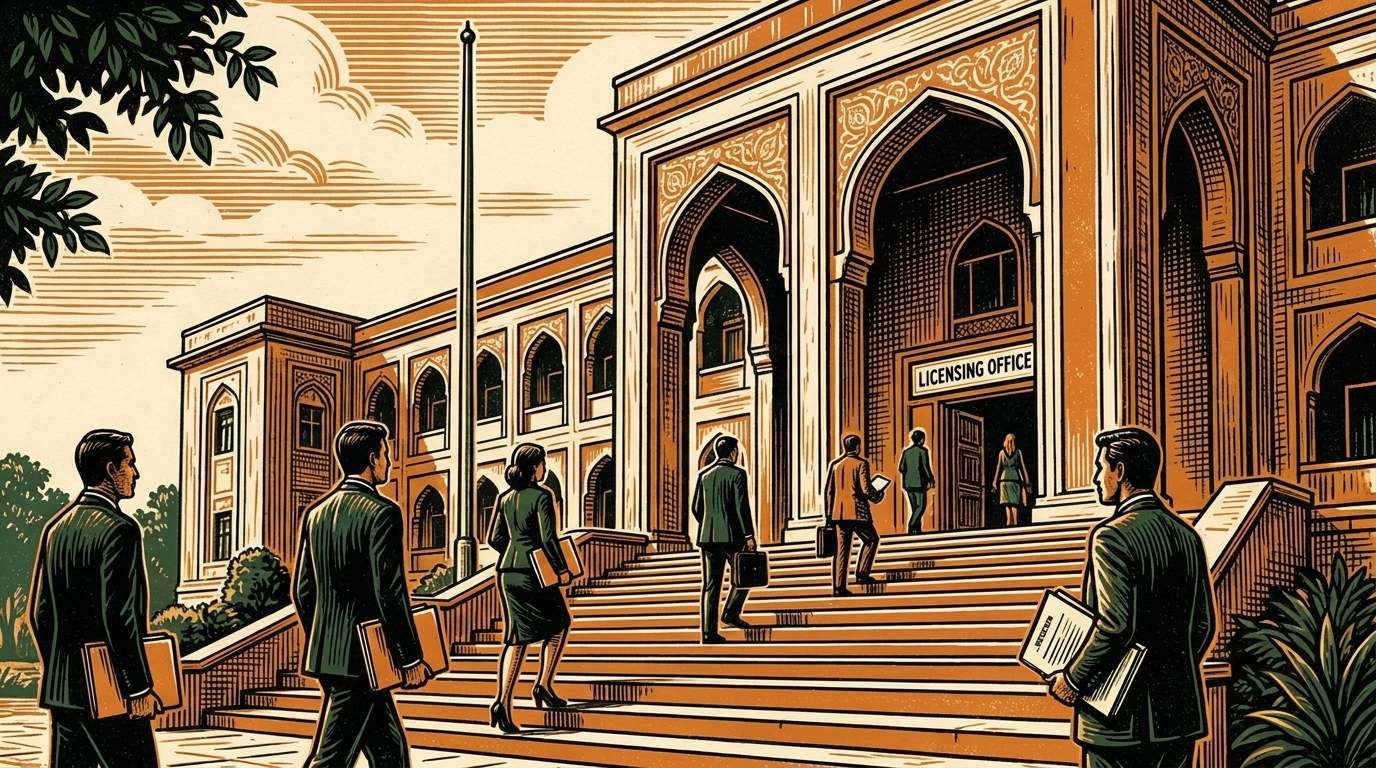
Four years ago Pakistan's official position on bitcoin was that it had none. Regulators warned banks off crypto; the market ran on grey-market exchanges and peer-to-peer trades, out of sight of the state. It grew anyway. By 2026 the country is one of the largest retail crypto markets on earth, and the government has stopped pretending it isn't.
The instrument is the Virtual Assets Act, 2026, which turned the Pakistan Virtual Assets Regulatory Authority (PVARA) from a temporary body created by presidential ordinance in July 2025 into a permanent federal regulator with the power to license and supervise every virtual-asset service provider in the country. This month PVARA closed public consultation on the detailed rulebook that will govern how those licences are granted.
The draft Virtual Asset Services Regulations lay out a ten-category licensing framework covering the full range of providers — exchanges, custodians, wallet operators, token issuers and investment platforms — with a staged path that runs from a no-objection certificate (NOC) to a full licence. The consultation window ran from June 11 to July 2, 2026, and the framework is meant to move firms from a provisional footing to formal, supervised operation.
The bar to entry is deliberately high. When PVARA first invited applications in September 2025, it stipulated that a firm must already be authorised in a major jurisdiction — the United States, the European Union or Singapore — before it could seek Pakistani approval. Binance and HTX were among the first global exchanges to receive NOCs, in December 2025.
A market the state once refused to see is now one it intends to license, tax and watch.
This is a virtual-asset regime, not a bitcoin-specific one, and much of the coming activity will involve stablecoins and other tokens. But for the ordinary Pakistani, the practical effect lands squarely on bitcoin: the exchanges where most people first buy it are the ones being pulled onshore and under supervision. An estimated 40 million Pakistanis hold crypto, many of them freelancers paid from abroad and families using it to move value past capital controls and a depreciating rupee.
Licensing changes their risk. A supervised, locally accountable exchange is harder to vanish overnight than an offshore venue with no address in the country — the exact failure mode on display elsewhere this week, as exchanges wind down and a mining pool files for bankruptcy. Recognition also brings the tax and reporting apparatus, so the same move that offers users protection also puts their activity inside the state's field of view.
Pakistan's turn is part of a wider pattern the Beacon has tracked across the Global South: governments regulate bitcoin only after their citizens adopt it. Kenya, Vietnam and others have written rules in the same order — grassroots use first, licensing second. The state does not grant permission so much as acknowledge a market it can no longer wish away, then attach supervision and revenue to it.
What remains unresolved is enforcement and scope. PVARA is standing up its licensing machinery and has launched a crypto-crime unit alongside it, but the first fully licensed exchanges have yet to be named, and the rules that emerge from consultation could still tighten or loosen the terms. For Pakistan's bitcoin users, the direction is set even if the details are not: the on-ramp is becoming a regulated one.
Pakistan has built the legal scaffolding to license its crypto market rather than deny it exists. For 40 million users, the exchanges they already rely on to buy bitcoin are being brought into the open — safer to trust, easier to tax, and no longer pretending to be somewhere else.
Editor's note: user figures are estimates from industry reports; the regime covers multiple asset types, of which bitcoin is one. Nothing here is financial advice.
Free. Five minutes. No hype.
Subscribe free