 The Bitcoin Beacon
Four years after it froze customer withdrawals, the pool that once led all of Bitcoin mining is being wound down for parts.
In 2019, Poolin sat at the top of Bitcoin mining, coordinating close to a fifth of the entire network’s computing power. On July 22, 2026, it filed for Chapter 11 bankruptcy in a New Jersey court, listing about $173 million in debt against roughly $1.2 million in cash. The pool that once helped secure the network is now being liquidated for its power sites.
The largest creditors are its own former customers. Some 11,700 wallet holders are owed about $164 million in balances that have been frozen since 2022, when a liquidity crisis forced Poolin to halt withdrawals. Four years of promises to make users whole have ended not in recovery but in a supervised wind-down.
Poolin’s collapse traces to the 2022 credit contagion that also took down a string of crypto lenders. The pool had done more than mine; it paid yields — reported between 2% and 8.8% — on user deposits, functioning as an unregulated bank on top of a mining business. When the market turned and liquidity vanished, the deposits could not be honoured, and withdrawals stopped. The mining operations limped on for years afterward under the U.S. affiliates Lonestar Dream and Lonestar Taproot, before halting entirely on July 10, 2026.
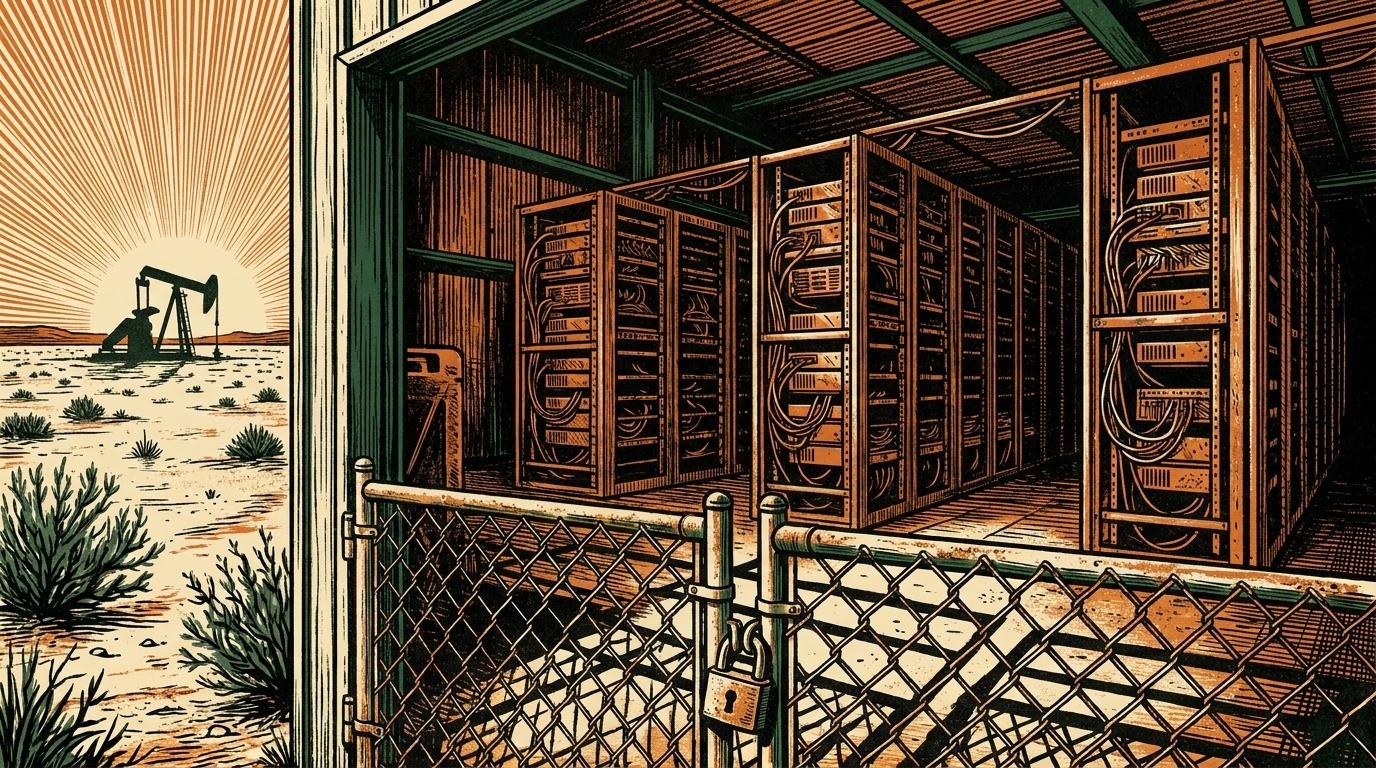
What remains of value is physical: two West Texas mining sites, Tarbush and Pyote, put up for sale at a combined floor price of about $52 million. Against roughly $164 million in unsecured customer claims, that is about 32 cents on the dollar — before administrative costs and priority claims take their share, which means most users will recover far less. This is a liquidation, not a rescue.
The pool that once secured the network is now worth more as real estate than as a business.
Poolin’s specific downfall was a 2022 balance sheet, but the timing of its final shutdown reflects a 2026 problem: bitcoin mining is losing the competition for cheap power to artificial intelligence. Hash price — the daily revenue a miner earns per unit of computing power — has sunk toward multi-year lows, while AI data centres bid aggressively for the same grid connections and energy contracts that miners rely on. Prime power now commands a higher price serving GPUs than ASICs.
That squeeze is pushing older, weaker operators out and reshaping who owns the buyers. The likely purchasers of Poolin’s Texas sites are said to be after the underlying power rights as much as the mining sheds — a quiet sign that a site built to hash bitcoin may end its life humming with something else entirely.
Poolin is the last chapter of the 2022 crypto-credit crisis closing on a business that mixed mining with unregulated yield. Its users are the ones left short. The wider signal — power sites worth more to AI than to bitcoin — is the story to watch across the mining sector this year.
Editor’s note: debt, recovery and hashrate figures are from court filings and contemporaneous reporting. Nothing here is financial advice.
Free. Five minutes. No hype.
Subscribe free