 The Bitcoin Beacon
Purists are right about the risk and wrong about the sequence. You don’t hand a first-time user a hardware wallet; you hand them a working payment.
When Chipper Cash crossed the line this month where most of its bitcoin traffic runs over the Lightning Network, it did so on custodial rails — the company holds the keys, and seven million users hold balances the way they hold money in any app. To a certain kind of bitcoiner, that is not a triumph. It is a betrayal of the movement’s founding rule: not your keys, not your coins.
The rule is correct. It is also the wrong first lesson to teach the next billion people.
Consider the actual alternative facing a market trader in Lagos or a saver in Lima. It is not a choice between a custodial app and a self-hosted node with a hardware signer and a steel seed-phrase backup. It is a choice between a custodial app and no bitcoin at all. Self-custody done properly — verifying your own transactions, guarding a seed phrase, understanding what a private key is — is a real skill, and demanding it as the price of entry keeps bitcoin a club for people with the time to study it.
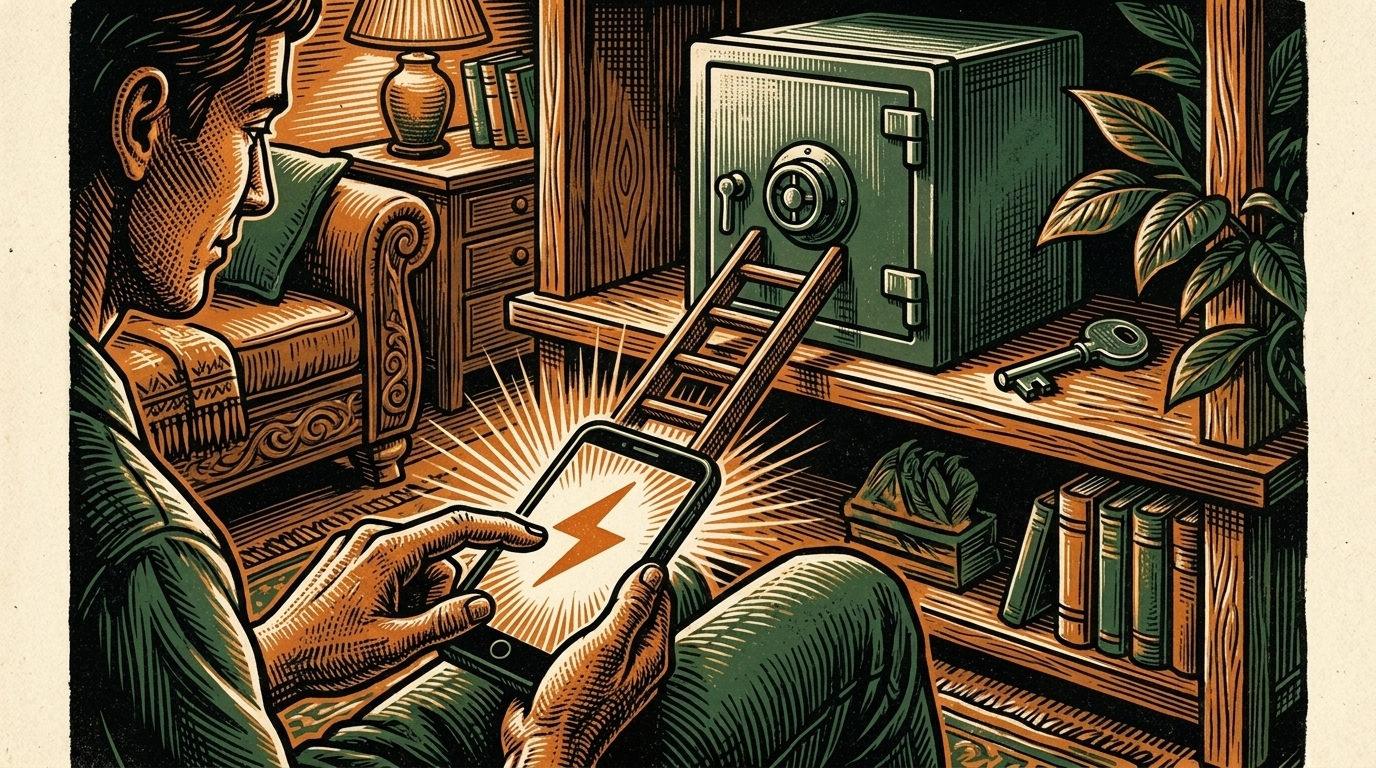
Custodial apps are the first rung of a ladder. A user arrives, sends a remittance that lands in a second for a fraction of a cent, receives wages, watches the balance hold value against a failing local currency — and only then, with something to protect, develops a reason to learn about keys. Cash App and Coinbase onboarded millions who later moved coins to cold storage. The escalator to self-custody starts at the bottom, and the bottom is custodial.
You don’t teach someone to swim by throwing them the deep-end rulebook.
The honest version of this argument does not pretend custody is costless. It says the job is to make the next rung easy: one-tap withdrawal to a self-custodial wallet, plain-language nudges toward owning your keys, defaults that treat custodial balances as a starting point rather than a destination. An on-ramp that never lets you off is a trap; an on-ramp that makes leaving trivial is exactly what mass adoption needs.
The other side deserves the last word. Custodial balances are freezable, seizable and, in aggregate, a honeypot. The counter-case is not theoretical: Celsius, BlockFi and FTX vaporised customer funds, and this very week Poolin filed for bankruptcy owing 11,700 users $164 million they will mostly never see. “Get your coins off the exchange” is advice written in other people’s losses. A custodian that holds seven million users’ bitcoin is both a magnificent on-ramp and a single point of failure — and every user who mistakes the first rung for the summit is one insolvency away from learning the rule the hard way. The ladder only helps the people who actually climb it.
Opinion. The views here are the Beacon’s own and are not financial advice.
Free. Five minutes. No hype.
Subscribe free