 The Bitcoin Beacon
One of Africa's largest fintechs quietly turned the Lightning Network into a mass-market rail — and just crossed the line where most of its bitcoin no longer touches the base chain.
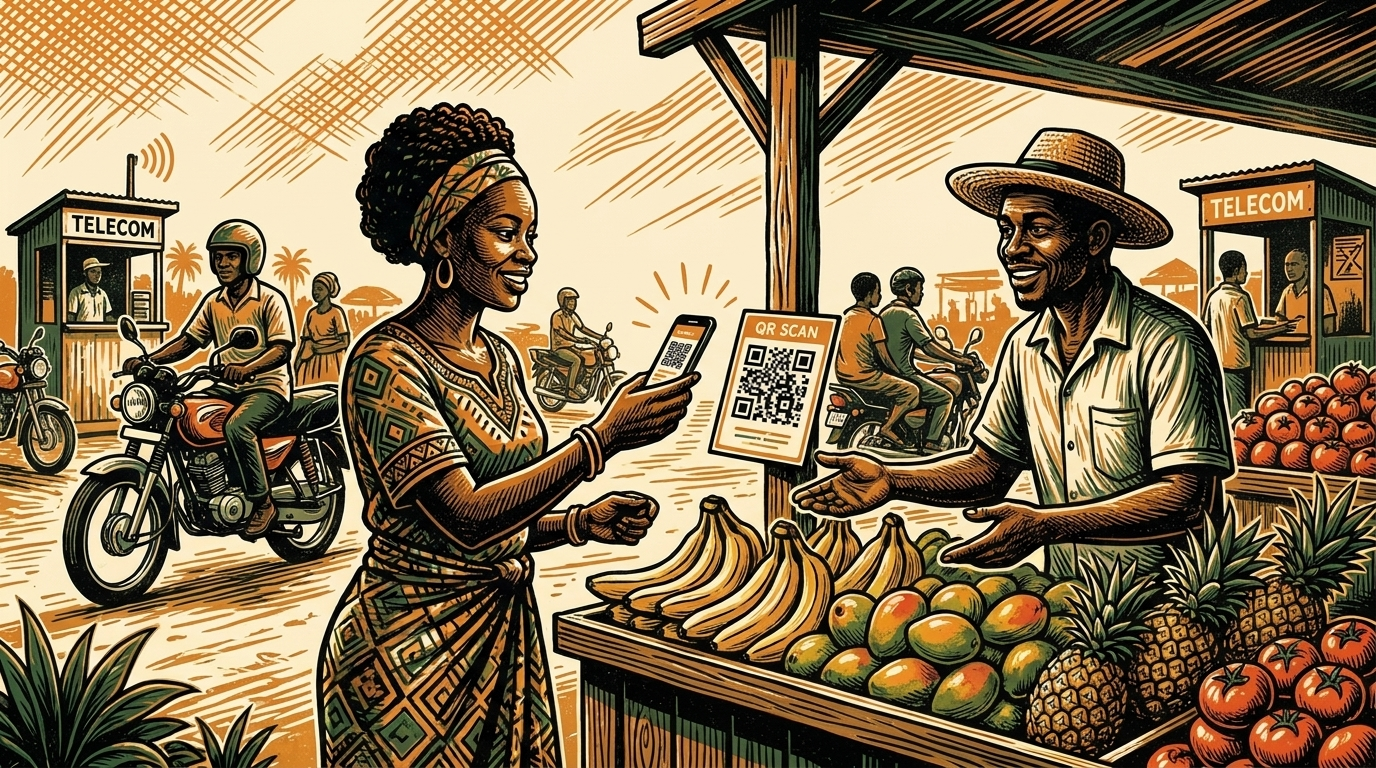
Chipper Cash did not launch a new product to mark the moment. It just crossed a line in its own ledger: more than half of every bitcoin transaction on the platform now settles over the Lightning Network rather than the base chain. For a fintech with more than seven million users across Africa, that makes it one of the largest real-world Lightning deployments anywhere — and the clearest sign yet that Lightning has stopped being a demo and become plumbing.
The number is the story. Not a pilot in a single town, not a conference stage stat, but a majority of live payments on a mainstream app moving over a rail that barely worked at scale five years ago. The base chain still clears the rest; Lightning simply won the everyday traffic, the small and frequent transfers that were always bitcoin's hardest problem.
Bitcoin's base layer confirms a block roughly every ten minutes and charges a fee sized to global demand, not to the value being sent. That is fine for settling large balances and terrible for sending the equivalent of a few dollars to a cousin in the next country. Lightning sits on top: it opens payment channels backed by real bitcoin, then routes value through them near-instantly for a fraction of a cent, settling to the chain only when a channel closes.
Chipper runs that machinery through Voltage, an infrastructure firm that operates Lightning nodes as a managed service so a consumer app doesn't have to babysit channels, liquidity and routing itself. The user sees none of it. They see a transfer that lands in a second and costs almost nothing; the routing, rebalancing and channel management happen out of sight.
Lightning didn't win an argument. It won the traffic.
Chipper Cash launched in 2018 as a peer-to-peer money-transfer app, built to move value across African borders that banks treat as walls. Sending money from Ghana to Nigeria, or Uganda to Kenya, has long meant slow correspondent-bank hops or cash-heavy agents, each taking a cut. Chipper's pitch was to make that transfer feel like a text message.
It has since grown into a full-suite fintech: cross-border payments, Visa-linked virtual cards, access to U.S. stocks, and stablecoin rails alongside bitcoin. Bitcoin inside that stack is not a speculative sidebar; it is one of the pipes value travels through, and Lightning is what made the pipe cheap enough to use for the amounts Africans actually send.
The interoperability is the second-order point. Because Lightning is an open network, a balance that leaves Chipper can arrive at Strike, at Cash App, at any Lightning wallet on the planet. A closed remittance app becomes a node on a global settlement mesh — the recipient doesn't need Chipper, only a Lightning address.
Sub-Saharan Africa is among the most expensive places on earth to send money into. Traditional remittance channels routinely skim high-single-digit percentages on a transfer, a tax that falls hardest on the smallest, most frequent transfers — wages, school fees, a relative's groceries. Lightning attacks exactly that cost. A rail that clears a small transfer for a fraction of a cent doesn't compete with banks on prestige; it competes on the only number a sender cares about.
Chipper's newer remittance layer leans into it, letting a sender push value over crypto rails and have the recipient take delivery in local money across more than two dozen currencies. Bitcoin becomes the invisible middle of the transfer, present for seconds, converted at each end — the user never has to hold it or understand it.
This scale runs on custodial Lightning. Chipper holds the keys; users hold balances the way they hold money in any app. That is what makes onboarding seven million people frictionless, and it is also the opposite of bitcoin's self-custody ideal. A custodial platform can freeze an account, and a user who never controls a key never controls the bitcoin. The counterargument — that a working rail for millions beats a purist wallet for thousands — is a real debate, and we take it up separately in today's opinion piece.
For now, the milestone stands on its own terms. The share of a mainstream app's bitcoin traffic that runs over Lightning is a cleaner adoption metric than price, because it measures use rather than speculation. On that metric, in one of the hardest markets in the world, bitcoin just quietly became infrastructure.
When most of a seven-million-user app's bitcoin stops touching the base chain, the scaling debate is settled in practice, not theory. Lightning is now a mass-market payment rail in Africa. The open question is whether the next wave of users climbs from custodial convenience toward holding their own keys — or whether the rail is good enough that most never bother.
Editor's note: user and transaction figures are company-reported. Nothing here is financial advice.
Free. Five minutes. No hype.
Subscribe free