 The Bitcoin Beacon
On the sixth currency in fifteen years, savers hedge in bitcoin while the state readies a de-dollarization plan and a new crypto tax.
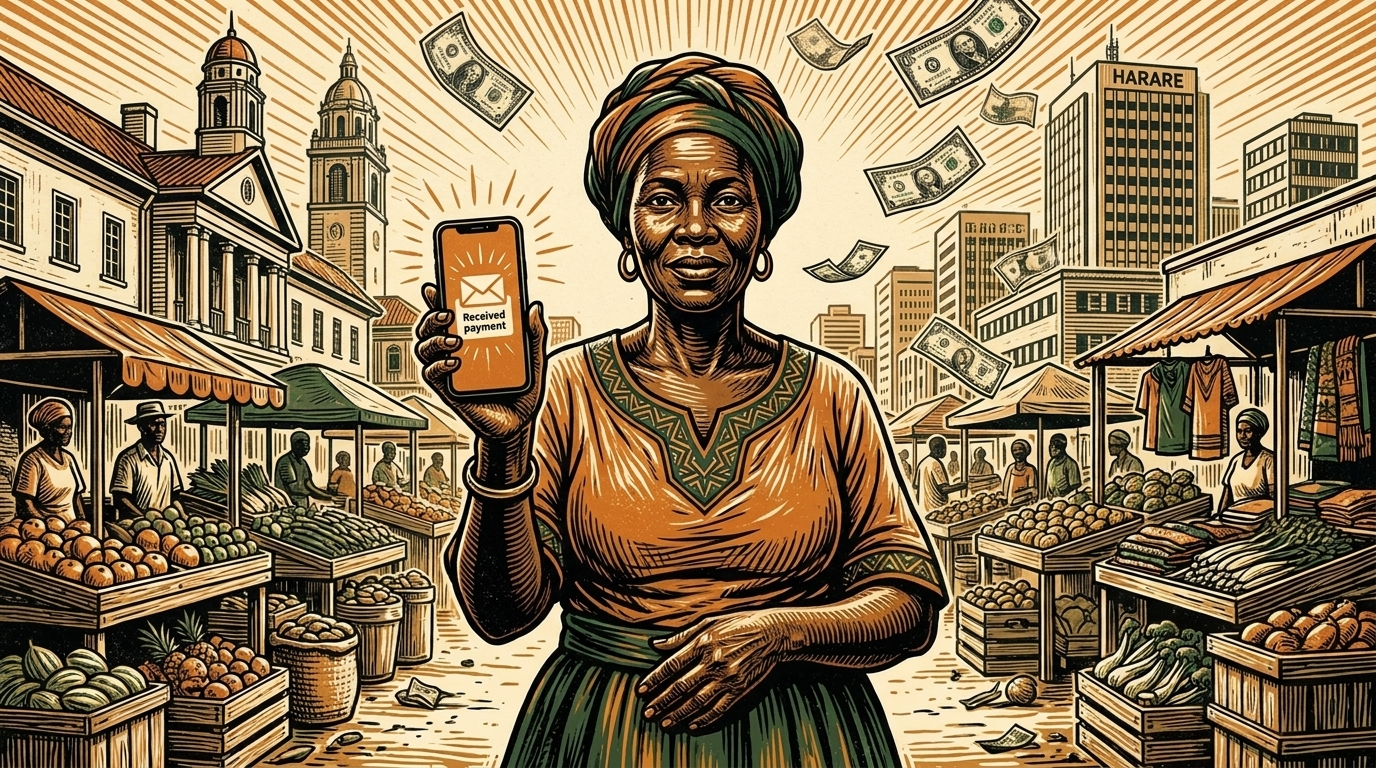
In Harare, the arithmetic of survival runs faster than any official exchange rate. When a paycheck lands, savers move quickly — out of the local unit and into something that holds its value overnight. Increasingly, for a growing slice of Zimbabweans, that something is bitcoin. On a currency that is the country's sixth attempt at stability in fifteen years, the instinct to route around the money is deeply learned.
The currency in question is the ZiG, launched in April 2024 as a gold-backed unit meant to end a long run of hyperinflation and failed relaunches. It is anchored by gold reserves and a foreign-exchange buffer, and the government set an ambitious goal of making it the sole legal currency, phasing out the US dollars that Zimbabweans have leaned on for years. Two years in, confidence remains fragile and the de-dollarization deadline keeps moving.
Zimbabwe's hedging story is not bitcoin's alone; dollar-linked stablecoins do much of the everyday work of preserving value, as they do across the Global South. But bitcoin occupies a specific niche in a country with a long memory of confiscation and currency resets: it is the bearer asset a government cannot print, freeze at the source, or redenominate by decree. For savings held against the possibility of the next reset, that permissionless quality is the feature.
The practical rails are familiar — peer-to-peer trades, mobile phones, and informal networks that have long moved value where the banking system was thin. What has changed is the direction of official policy: the state is no longer only trying to suppress this activity. It is trying to see and tax it.
Bitcoin is the bearer asset a government cannot print, freeze, or redenominate by decree — in a country that has done all three.
Two moves signal the shift. The government has said it will unveil a de-dollarization roadmap, an attempt to chart how and when the ZiG becomes the country's only money — a plan that only sharpens the incentive to hold assets outside the local unit before the switch. And Zimbabwe is formalizing crypto after years of prohibition, with a 2026 framework that includes a 15% withholding tax on payments to offshore crypto platforms.
Taxing the exits is a tacit admission of how much value is already leaving through them. A government that once treated crypto as a threat to monetary control is now treating it as a tax base — the same arc playing out from Nairobi to Brasilia, arriving in Harare with a currency crisis as its accelerant.
The credibility of the de-dollarization roadmap is the whole game. If Zimbabweans believe the ZiG will hold, the flight to bitcoin and stablecoins eases; if they don't, no withholding tax will out-run the incentive to hold value the state can't touch. Watch whether the roadmap sets a hard date, and whether the new crypto tax raises revenue or simply pushes more activity into fully peer-to-peer channels the authorities cannot see.
On its sixth currency in fifteen years, Zimbabwe is watching its savers hedge in bitcoin and dollar tokens while it drafts both a de-dollarization plan and a tax on the exits. The two goals sit in tension: you cannot herd citizens into a new currency and monetize their escape from it at the same time. Bitcoin is where that contradiction shows up first.
Editor's note: much of Zimbabwe's hedging activity uses dollar-linked stablecoins alongside bitcoin; figures on informal flows are estimates. Nothing here is financial or legal advice.
Free. Five minutes. No hype.
Subscribe free