 The Bitcoin Beacon
Kazakhstan, Paraguay, Pakistan, Ethiopia — governments wary of citizens owning bitcoin are happy to mine it for the treasury.
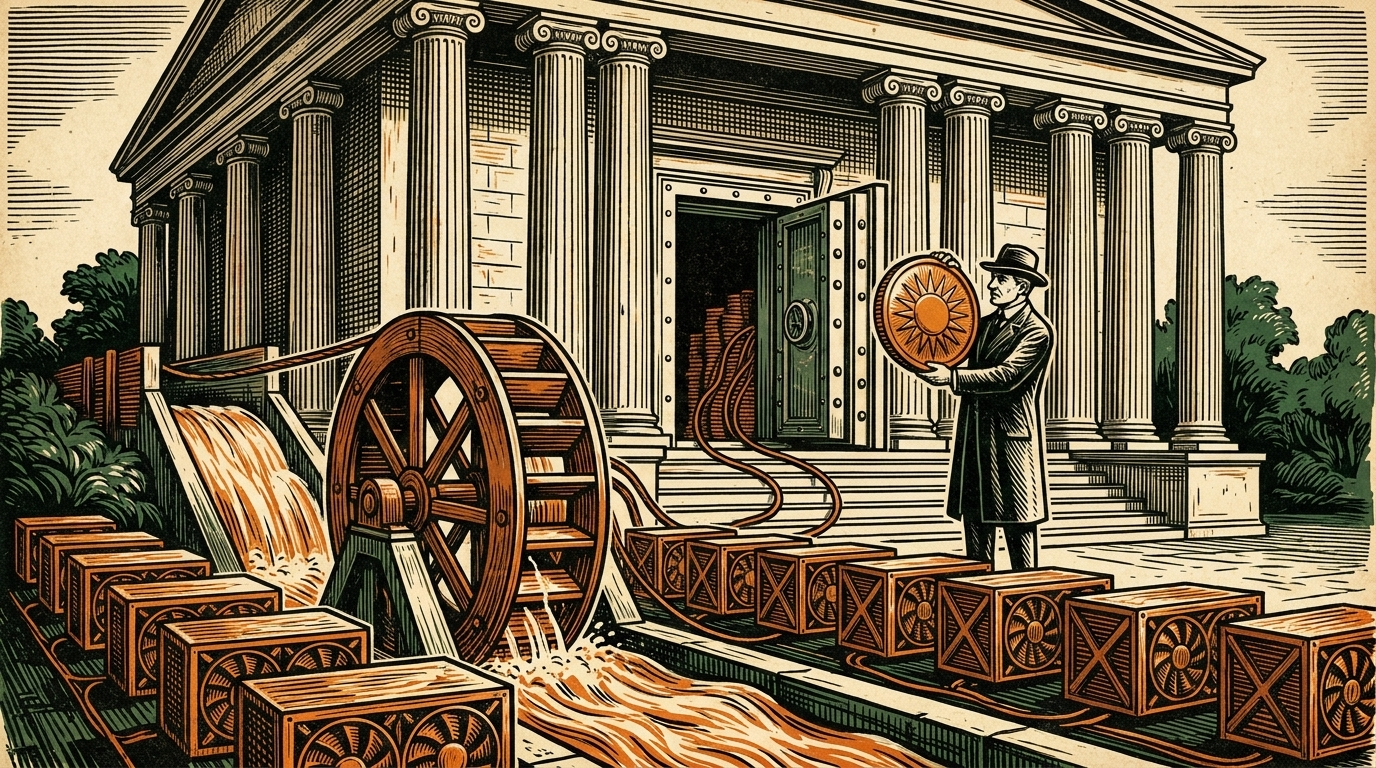
This week Kazakhstan set up a national bitcoin reserve fed by its miners. Paraguay's utility is on track to triple its mining revenue. Both fit a pattern that is now hard to miss: the governments most eager to mine bitcoin are often the ones least willing to let their own citizens simply own it.
Look at the map. Pakistan earmarked 2,000 megawatts for mining and a state reserve while its central bank still treats retail crypto as something between illegal and unwelcome. Ethiopia hosts roughly 600 megawatts of mostly state-linked rigs on its Nile hydropower, yet bars financial institutions from touching crypto and merely tolerates personal use. Kazakhstan is building a sovereign stack while fencing ordinary buyers behind a licensing wall. The state takes the coin as revenue; the citizen gets friction.
The asymmetry isn't hypocrisy so much as incentive. Mining is, from a treasury's chair, just energy policy with a better exit. A state already sells electricity; bitcoin mining is a domestic buyer that turns stranded or surplus power into a hard, portable, dollar-denominated asset. It is metered, taxable, and — crucially — controlled. The government decides who gets the quota, the tariff, the license.
Letting citizens hold bitcoin is the opposite kind of decision. Self-custody is a person the state cannot meter. It is savings that can't be inflated, capital that can't be trapped, a payment that clears without a bank in the loop. For a government managing capital controls or a fragile currency, that is not a revenue opportunity. It is a loss of leverage.
Mining is a tax on electricity the state already runs. Self-custody is a citizen it can't. One is a budget line; the other is a surrender.
The cynical read can be overdone. Mining a volatile asset with public money is not obviously a vote of confidence; some of these programs are opportunism about cheap power, not a considered embrace of bitcoin as money. And the direction of travel may cut the other way over time. Bhutan mined its way to a billion-dollar-plus position and now spends from it. El Salvador both mines and holds — and lets its citizens use bitcoin as legal tender. Familiarity can breed comfort: a treasury that grows easy with bitcoin on its balance sheet may find the case against citizens holding it harder to sustain.
There's a fair point buried in the caution, too. States distinguish between energy policy and monetary policy for real reasons, and a government can rationally welcome an industrial electricity customer while worrying about capital flight. The two positions aren't strictly contradictory.
But watch which door opens first. It is almost always the revenue door. The reserve, the mining tariff, the taxable industrial load — those arrive years ahead of clean rules for a citizen to buy, hold, and self-custody without a licensing maze or a monthly report. That ordering reveals the real hierarchy of comfort: bitcoin as a line item the state controls is welcome; bitcoin as money the state can't is the part that waits.
None of this diminishes the technology. If anything it confirms the thesis. Governments are reaching for bitcoin precisely because it is scarce, portable, and hard to debase — the same properties that make it useful to the citizen they're slower to trust. The state wants those properties for itself first. The question for the next few years is whether it can keep them to itself.
Opinion — The Bitcoin Beacon. Country policies summarized here vary in detail and change quickly; specific figures trace to the sources listed. Nothing here is financial or legal advice.
Free. Five minutes. No hype.
Subscribe free