 The Bitcoin Beacon
State power sales to bitcoin miners are set to more than triple to $350 million as small operators fold and a few giants take the dam's cheap electricity.
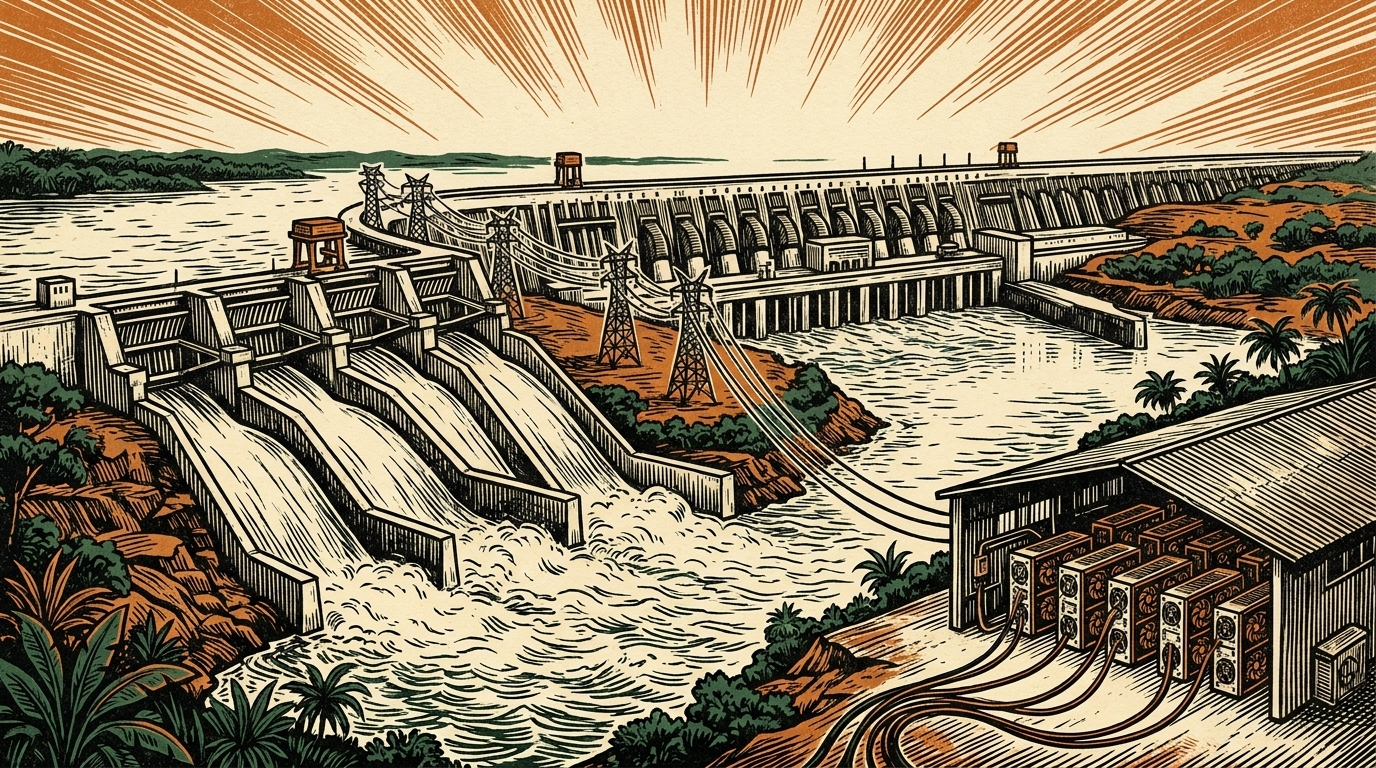
Paraguay is selling more electricity to bitcoin miners than ever, to fewer of them than before. The state utility, ANDE, expects revenue from mining to rise from roughly $100 million in 2024 to about $350 million in 2026 — even as the count of legal operators has roughly halved. More money, fewer names on the ledger.
That is what industrial consolidation looks like when the input is cheap power. The small farms that rushed in are being priced and regulated out; the survivors are a handful of well-capitalized firms big enough to sign long contracts and absorb thin margins.
Paraguay's edge is a dam it cannot fully use. The Itaipú hydroelectric plant, shared with Brazil, hands the country far more electricity than its ~7-million population consumes, and for years the surplus was sold cheaply across the border. Bitcoin mining offered a domestic buyer that shows up wherever power is stranded. At around $0.033 per kilowatt-hour, Paraguay is one of the cheapest legal places on earth to run a rig, and hashrate in the country has grown better than 50% year on year.
Today roughly 41 licensed operators hold about 944 megawatts of contracted capacity — and just four firms account for around 730 of those megawatts. The concentration is the story inside the story.
The surplus that once flowed to Brazil at wholesale now runs through mining rigs — and the state prefers the exchange rate.
This is a reversal. Paraguay spent 2024 debating whether to criminalize mining outright, after miners were blamed for electricity theft and grid strain; a bill floated a multi-year ban. Instead the country chose to formalize and charge — special industrial tariffs, licensing, and enforcement against clandestine operations that steal power. The pivot mirrors a pattern across the mining world: governments discover that a metered, taxable industrial load is worth more captured than expelled.
The upside for the treasury is real, and it is why the policy stuck. The upside for ordinary Paraguayans is thinner: mining is capital-intensive and employs few people relative to the power it draws, so the jobs case is weak. What the country gets is a hard-currency revenue stream from an asset it would otherwise export at a discount.
Concentration cuts both ways. A sector where four firms hold most of the megawatts is efficient but fragile — exposed to a few corporate decisions, and to the same hashprice compression squeezing miners everywhere. If bitcoin's price or fees fall, marginal capacity idles and ANDE's projected windfall softens with it. There is also an opportunity-cost argument: every megawatt on a mining rig is a megawatt not powering new industry or exported for cash. Paraguay is betting mining pays better than the alternatives, for now.
Paraguay is a preview of where cheap-power states land: not banning bitcoin mining, not romanticizing it, but metering it as an industrial customer that turns stranded electrons into dollars. The revenue curve bends up; the operator list shrinks; the grid keeps a flexible buyer of last resort. It is the least ideological bitcoin story there is — a utility selling power to whoever pays best.
Watch whether ANDE's $350 million projection survives a soft hashprice, and whether concentration keeps climbing toward a point where a few firms effectively set the terms. A revenue line that depends on four customers is a strong quarter and a governance question at the same time.
Editor's note: ANDE revenue and capacity figures are official projections and industry estimates that move with bitcoin's price and hashprice; operator counts and megawatt totals vary by source and reporting date. Nothing here is financial advice.
Free. Five minutes. No hype.
Subscribe free