 The Bitcoin Beacon
Bitnob has turned the Lightning Network into a payroll and remittance rail across 23 African countries — and legacy money-transfer fees can't follow it down.
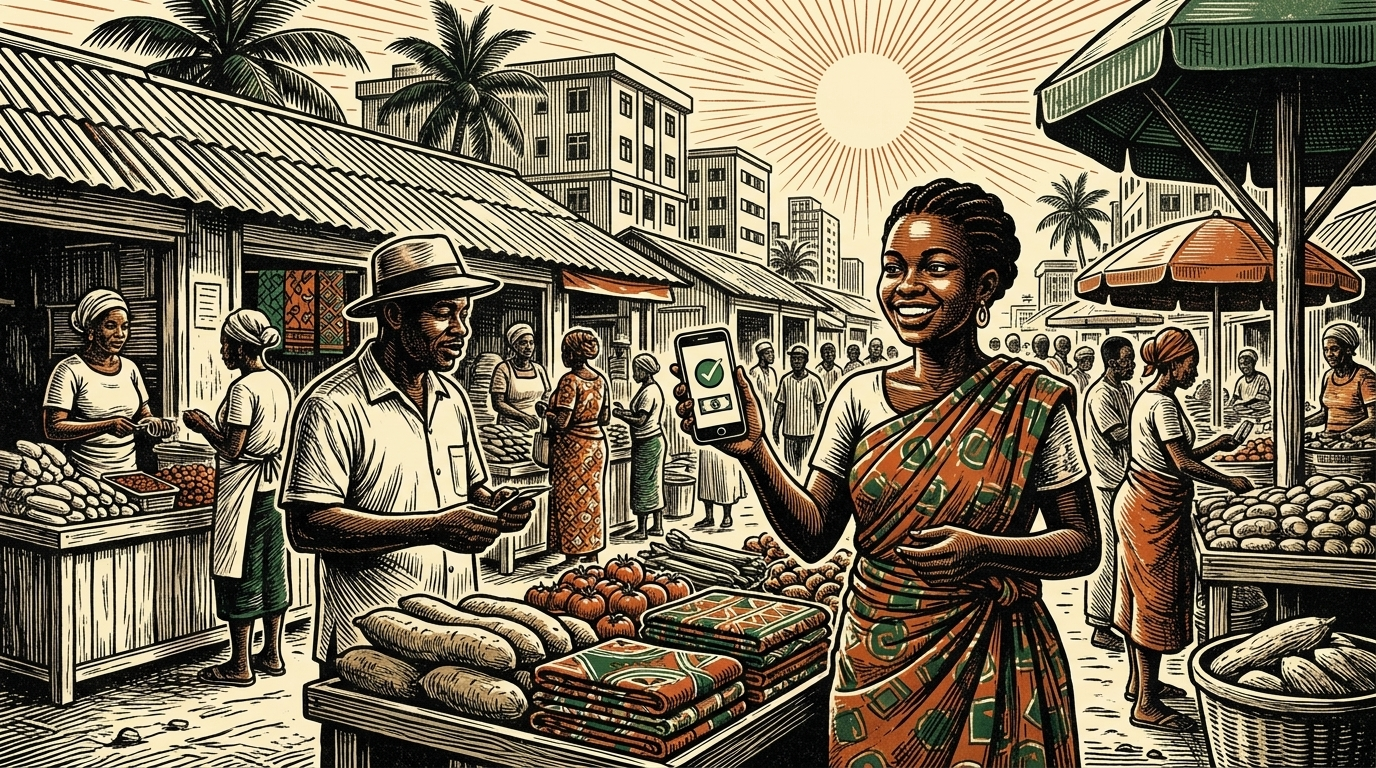
Send $50 to a relative in Lagos through a traditional money-transfer service and the fee is around $3.25. Route the same $50 over the Lightning Network through Bitnob and it arrives in seconds for a cent or two. No headline about a price target explains bitcoin's spread across Africa as well as that single comparison does.
The people using it rarely talk about bitcoin at all. They talk about how much lands on the other end, and how fast. Bitnob has built its business on making the bitcoin invisible — a settlement rail humming underneath apps that quote everything in naira, cedi, or shillings.
Founded in 2020 and, in its own words, built for the world's hardest payment markets, Bitnob now moves payroll for remote workers across 23 African countries. The company reports transaction volume up 340% year on year and more than $4.5 billion routed through its infrastructure since launch. Those are company figures, not audited numbers — worth holding at arm's length — but the direction is corroborated by the wider data: Lightning now clears well over 12 million transactions a month across roughly 18,000 nodes.
The mechanism matters because it is boring. Bitnob's partnership with Strike lets someone in the United States send dollars that arrive as local currency in an African bank account. The sender never buys a coin; the recipient never holds one. Bitcoin is the wire in the wall — converted in, converted out, present for milliseconds. That is the opposite of the "buy and hold" story most people associate with bitcoin, and it is why it works for someone who just needs rent paid.
The customer isn't buying bitcoin. They're buying a two-cent fee and a settlement that clears before they hang up the phone.
The first wave of bitcoin-in-Africa stories was about remittances — a diaspora worker sending money home. The newer wave is payroll. As African developers, designers, and support staff take on remote contracts for companies abroad, they need to be paid across borders without surrendering a tenth of it to correspondent-bank fees and multi-day holds. Bitnob, working with payroll firms including Bitwage, has leaned into that: international salaries paid over Lightning, received in a wallet as bitcoin or converted straight to a stablecoin or local cash.
In June the company launched Bitnob Enterprise, packaging its wallets, payouts, treasury, and settlement tools for banks, fintechs, and developers to build on. That is the tell of a company that thinks the rail — not any single consumer app — is the product. It is selling picks to everyone digging.
Most of the value moving through African crypto rails is not bitcoin; it is dollars in the form of stablecoins. In Sub-Saharan Africa, stablecoins now account for roughly 43% of on-chain activity, and a large share of that is business payments, payroll, and savings by people who want dollar stability, not bitcoin's volatility. Bitnob itself settles in bitcoin or stablecoin depending on what the user wants, and many choose the dollar.
That is not a defeat for bitcoin so much as a division of labour. Lightning is the cheapest neutral rail between walled-garden mobile-money systems and mismatched currencies; whether the thing riding the rail is a satoshi or a tokenized dollar, the settlement layer underneath is bitcoin's. The asset people save in and the network they move value over need not be the same thing.
Adoption in the Global South has never tracked the price chart. It tracks the cost of getting paid. When that cost falls from several dollars to a rounding error, the people who feel it first are the ones sending $50, not the ones speculating on $500,000. Bitnob's growth is a reminder that bitcoin's most durable foothold in Africa is not an idea about money. It is an invoice that settled cheaply.
The trend to watch is not Bitnob's app downloads but whether its Enterprise rails get picked up by banks and payroll firms that would never brand themselves "crypto." If the plumbing spreads while the word "bitcoin" disappears from the marketing, that is adoption working exactly as it should.
Editor's note: transaction-volume, country-count, and total-value figures are reported by Bitnob and its partners and are not independently audited; fee comparisons are illustrative and vary by corridor and amount. Stablecoins, not bitcoin, carry the majority of value on these rails. Nothing here is financial advice.
Free. Five minutes. No hype.
Subscribe free