 The Bitcoin Beacon
Bitdeer broke ground on a $36 million SEALMINER factory in the Nevada desert, aiming to loosen China's grip on the machines that secure Bitcoin.
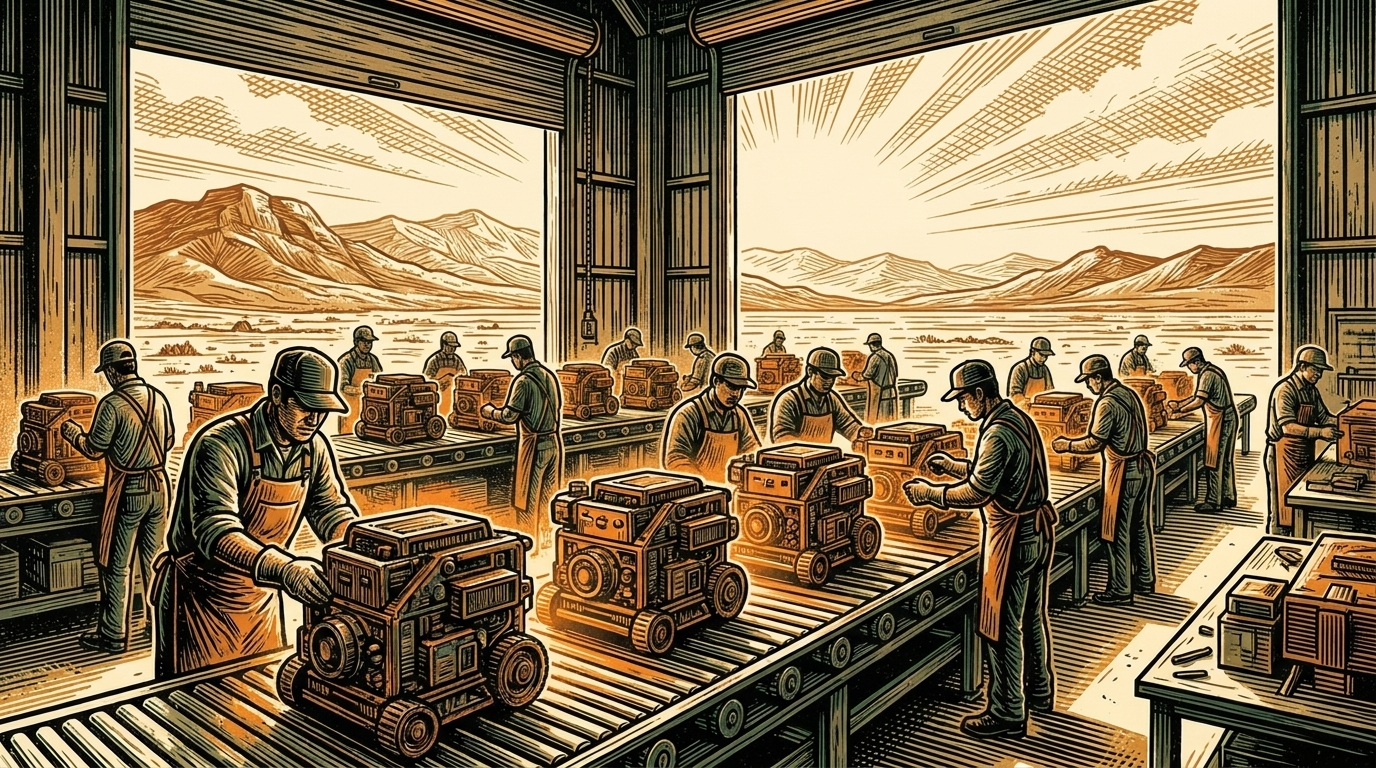
Almost every machine that secures the Bitcoin network is built in one place: China. Bitdeer wants to build some of them in the Nevada desert instead.
The mining firm has broken ground on a $36 million manufacturing plant in Sparks, Nevada — a 187,000-square-foot facility that will assemble its proprietary SEALMINER ASICs, the specialized chips that perform bitcoin's proof-of-work. At full tilt the plant is designed to turn out 10,000 units a month, with trial production slated for December 2026 and 70 jobs across engineering and skilled trades.
The strategic target is concentration. For a decade, ASIC design and fabrication have been dominated by a handful of Chinese firms led by Bitmain — a single point of failure for a network that prizes decentralization everywhere else. Tariffs, export controls, and shipping delays have turned that dependence into a business risk as much as a philosophical one.
A U.S. assembly line does not end the dependence overnight; the underlying silicon is still fabricated abroad. But it moves the final, highest-value stage of production onshore, inside the world's largest mining jurisdiction.
Bitdeer can afford the wager because its core business is surging. The company reported 990 BTC mined in June, a 388% jump year over year, with self-mining hashrate of 73 exahashes per second and an AI-cloud business running at a $76 million annualized rate.
The timing is still aggressive. Mining revenue per unit of hashing power has compressed to roughly $30 per petahash a day, squeezing older machines into the red and pushing rivals to convert sites to AI computing. Building a chip factory into that headwind is a bet that the squeeze is temporary and that vertical integration is the way through it.
A national-security argument, dressed as a factory announcement — and in 2026, that framing sells.
If it works, the payoff is more than corporate. Domestic ASIC supply would make the U.S. mining industry less hostage to a geopolitical rival and give American operators a hedge against the next export shock. That is the pitch, at least; the desert plant has to ship working machines first.
Onshoring the last mile of ASIC production won't decentralize bitcoin mining by itself. But it chips at the industry's most uncomfortable dependency — and does it at the worst point in the margin cycle, which is either brave or early.
Editor's note: production capacity (10,000 units/month) and the December 2026 trial-production date are company projections; ASIC fabrication remains offshore. Mining economics are volatile. Nothing here is financial advice.
Free. Five minutes. No hype.
Subscribe free