 The Bitcoin Beacon
Bill 42.25 would license exchanges under the central bank, reversing a 2017 prohibition that never actually stopped Moroccans from buying.
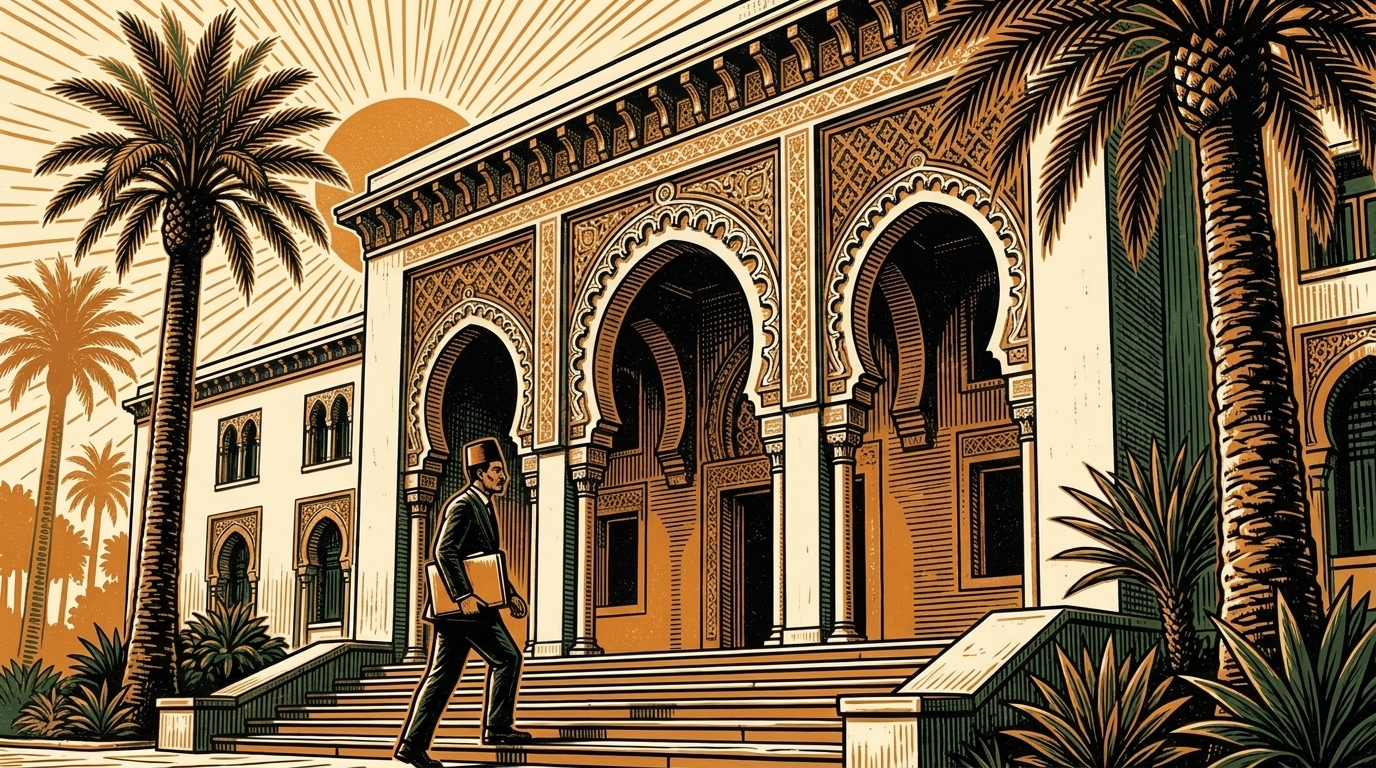
In 2017, Morocco did what several nervous governments did that year: it declared bitcoin illegal. The Foreign Exchange Office and the central bank warned that trading digital assets broke exchange-control law and carried penalties. Nearly a decade later, the ban's main achievement is clear — Moroccans kept buying anyway, and the country became one of Africa's most active peer-to-peer bitcoin markets. Now the state is preparing to stop pretending the market does not exist.
The vehicle is Bill 42.25, a draft law on digital assets that would replace prohibition with supervision. It was published for public consultation in November 2025, and officials have signaled that parliamentary review and possible adoption could come as early as this year.
The bill is not a fringe initiative. It was developed jointly by the Ministry of Economy and Finance, Bank Al-Maghrib — the central bank — and the AMMC, the capital-markets authority. Under the draft, exchanges and service providers would need a license from the central bank and would fall under anti-money-laundering and counter-terrorist-financing rules.
The stated aims are conventional regulator language: protect consumers, police fraud and laundering, define what a digital asset is, and set out licensing and oversight. What matters for adoption is the reversal of posture. A transaction that was nominally criminal would become a licensed, taxable, supervised activity.
The eight-year prohibition is the real context. Bans on bitcoin tend to fail in a particular way: they push activity off regulated exchanges and onto peer-to-peer channels, informal brokers, and messaging-app trades, where the state has less visibility, not more. Morocco is a textbook case — consistently near the top of African adoption rankings despite the asset being formally illegal.
That is the pattern the Beacon keeps documenting from Lagos to Harare: prohibition rarely removes demand driven by a soft currency and a young, phone-first population. It just removes the paper trail. A licensing regime is, among other things, an admission that the paper trail is worth more than the ban.
A ban moved Moroccans' bitcoin off exchanges and onto WhatsApp. A license is the state deciding it would rather watch than pretend.
Morocco is arriving late to a movement already reshaping North and West Africa. Nigeria and Ghana have built licensing regimes this year; Zimbabwe put its market on a register; across the Maghreb and the Gulf, 2026 has been a year of prohibition giving way to paperwork. A Bank Al-Maghrib official has indicated the regulation now sits with the economy ministry to shepherd through the adoption process, one more sign the direction of travel is set.
For bitcoin specifically, the honest read is mixed. Licensing tends to favor stablecoins and custodial exchanges as much as it favors bitcoin, and dollar-pegged tokens dominate payment volume across the region. But a legal on-ramp lowers the friction and fear around simply acquiring bitcoin — and it moves the debate from “is this allowed” to “who is licensed to help you.”
Bill 42.25 will not, by itself, turn Morocco into a bitcoin economy. What it marks is the end of a fiction — the idea that declaring bitcoin illegal made it go away. It didn't. The state is now choosing to license and tax what it could not stop, which is usually the moment adoption stops hiding and starts compounding.
Editor's note: Bill 42.25 is a draft in the legislative process; its final provisions and timeline may change, and adoption dates cited by officials are targets, not law. Stablecoins account for much of the region's on-chain payment volume. Nothing here is financial advice.
Free. Five minutes. No hype.
Subscribe free