 The Bitcoin Beacon
Bolivia just blessed dollar-pegged USDT for everyday payments. Bitcoiners winced. They should be relieved — and clear about which job bitcoin was built for.
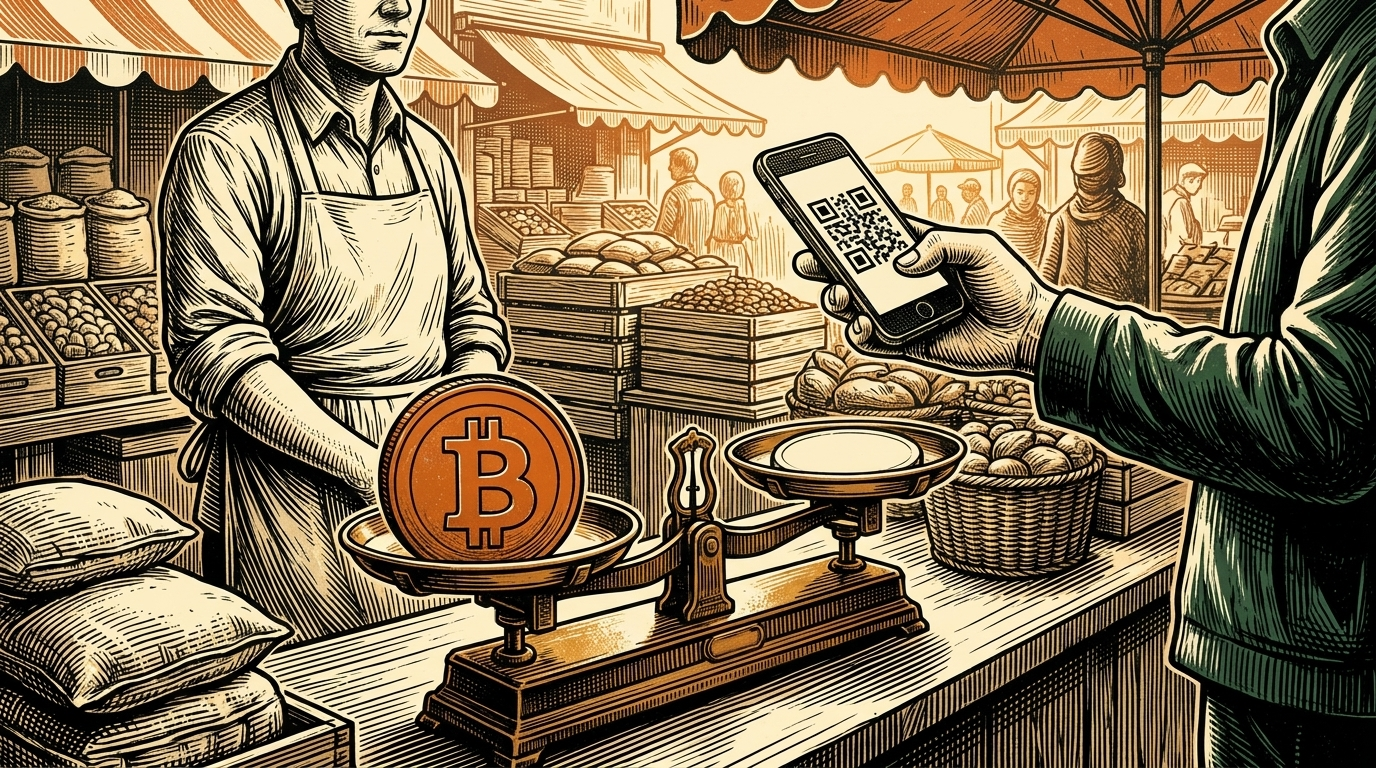
This month Bolivia's economy minister, José Gabriel Espinoza, said the government was drawing up a framework to let the dollar-pegged stablecoin USDT circulate “as just another currency,” alongside the boliviano and the dollar. In a country strangled by a dollar shortage, importers were already paying for fuel and vehicles in tokenised dollars. The state simply moved to bless what was happening.
A certain kind of bitcoiner reads that headline as a defeat — proof that when real people need to move money, they reach for a dollar token, not for bitcoin. They have the facts right and the conclusion backwards.
An asset that can swing five percent between breakfast and dinner is a poor way to price a loaf of bread, and insisting otherwise has cost this movement credibility for a decade. Even El Salvador — the country that made bitcoin legal tender — sees crypto handle well under one percent of its remittances, and its state Lightning wallet is used far more for moving dollars than for hoarding sats. People are not confused. They are choosing the right tool for the task in front of them.
The task at the counter is stability: a unit that will be worth the same at closing time as it was at open. A dollar stablecoin does that. Bitcoin, by design, does not. Pretending it can is how you lose the argument with the one person you most need to convince — the shopkeeper who can't afford to gamble on the till.
Losing the checkout isn't a defeat. It's a division of labour.
Bitcoin's edge was never that it holds still. It's that no one can print more of it, freeze it, or switch it off. That makes it a savings technology first and a payment rail second — the asset you hold precisely because it sits outside anyone's control.
And here is the part the “stablecoins won” crowd misses. A stablecoin is a dollar with extra steps. It inherits every weakness of the thing it tracks: it can be inflated by the Federal Reserve, frozen by its issuer, and blacklisted at a single address by a compliance desk in New York. Tether has frozen wallets before and will again. The moment a Bolivian saver needs money that can't be debased by a foreign central bank or switched off by a foreign company, the dollar token is exactly the wrong asset — and the volatile, ungovernable one becomes the point.
So let the stablecoins have the checkout. Let them win the corner-store tap, the fuel invoice, the taxi fare. Every one of those transactions still runs on tokenised dollars that someone, somewhere, has to escape eventually — when the country runs out of them, when the issuer complies with a sanction, when the peg they trust turns out to have an owner. That exit has one destination with no counterparty.
Adoption is not one race with one winner. Stablecoins are winning payments because payments reward stability, and that's fine. Bitcoin is winning the slower, quieter contest for savings that can't be seized — and that's the one that matters when the dollar you're holding stops being yours to spend.
Editor's note: this is an opinion column. Bolivia's USDT framework was described by officials as under assessment, not finalised at publication. Nothing here is financial advice.
Free. Five minutes. No hype.
Subscribe free