 The Bitcoin Beacon
The world's biggest grassroots crypto market spent five years trading around a banking ban. Now its regulator is inviting the exchanges back through the front door.
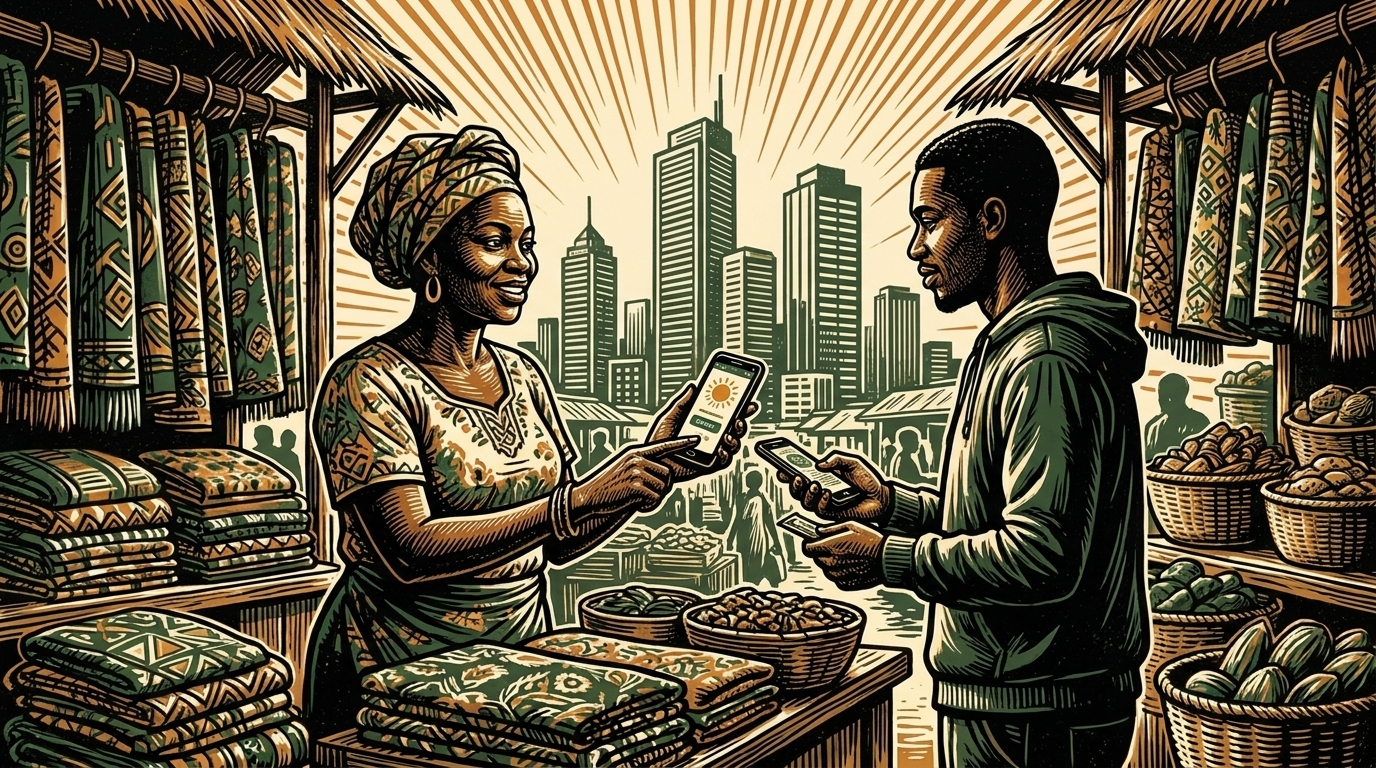
For five years, buying bitcoin in Nigeria has been an act of quiet defiance. In February 2021 the central bank ordered banks to stop serving crypto firms, and the market did what markets do when a door closes: it went out the window, onto peer-to-peer platforms and informal desks. Nigeria kept trading. It just stopped using the banking system to do it.
Now the country's Securities and Exchange Commission is building the door it once bricked up. Through its Accelerated Regulatory Incubation Programme — ARIP — the SEC is granting provisional approval to exchanges to operate onshore under supervision, and the roster is growing fast.
Luno Nigeria, the local arm of the exchange founded in Africa in 2013, became the first global platform admitted to ARIP, receiving Approval-in-Principle from the regulator. In early July the SEC added GIGX Technologies and Kucoin Nigeria, bringing the number of supervised firms in the programme to nine. Approval-in-Principle lets them operate provisionally while working toward full registration.
The shift has a legal spine. Nigeria's Investments and Securities Act designated the SEC as the regulator for digital assets, ending years of ambiguity over who was in charge. Domestic exchanges such as Busha and Quidax now operate under the ARIP framework with direct naira on- and off-ramps, and a naira-pegged stablecoin, cNGN, has cleared regulatory approval.
The reversal is striking mostly because the ban failed so completely. Nigeria consistently ranks at or near the top of global grassroots-adoption indices; the central bank's 2021 order didn't shrink the market so much as push it out of view. Licensing the exchanges is, in part, an admission that prohibition never worked — and a bid to tax and supervise what was already happening.
The honest caveat is that this is not primarily a bitcoin story by volume. In Nigeria, dollar stablecoins do the heavy lifting: Nigerians reach for tokenized dollars to hedge a naira that has lost much of its value and to move money across borders that the banking system prices dearly. Stablecoins are the workhorse; bitcoin is the neutral, issuer-less base layer underneath the market.
But the ramp being built is bitcoin's ramp too. A licensed onshore exchange is where a Nigerian buys bitcoin with naira legally, with recourse if something breaks — the front door that the P2P era never offered. For the world's largest bottom-up crypto market, that is not a small change.
The ban didn't kill the market. It just taught the market to live without the banks — and now the state wants back in.
Two cautions belong on the page. "Incubation" is not a full licence; ARIP is a supervised waiting room, and the terms of graduation — and how many firms actually make it through — will decide whether this is genuine liberalization or a holding pattern. Regulators can narrow a gate as easily as they widen it.
And access is not custody. An account at a licensed Nigerian exchange is a claim on that exchange, not bitcoin held in one's own keys. The freedom that pushed Nigerians to bitcoin in the first place — money no bank or regulator can freeze — is exactly the freedom a custodial, supervised on-ramp doesn't provide. The front door is welcome. It is still a door someone else controls.
Nigeria tried to ban its way out of a market it couldn't stop, and gave up. Licensing the exchanges legalizes a trade that never paused — a legal ramp for the world's biggest grassroots crypto economy. The open question is whether "incubation" becomes real access, or just a more polished form of control.
Editor's note: ARIP admissions are dated July 2026; Approval-in-Principle is a provisional, supervised status, not a full licence. Stablecoins, not bitcoin, account for most Nigerian on-chain volume; the bitcoin-specific point is the legal on-ramp. Nothing here is financial advice.
Free. Five minutes. No hype.
Subscribe free