 The Bitcoin Beacon
The continent's biggest bitcoin miner has spent two years renting hydropower to foreign machines. Now the state wants a share of the rigs themselves.
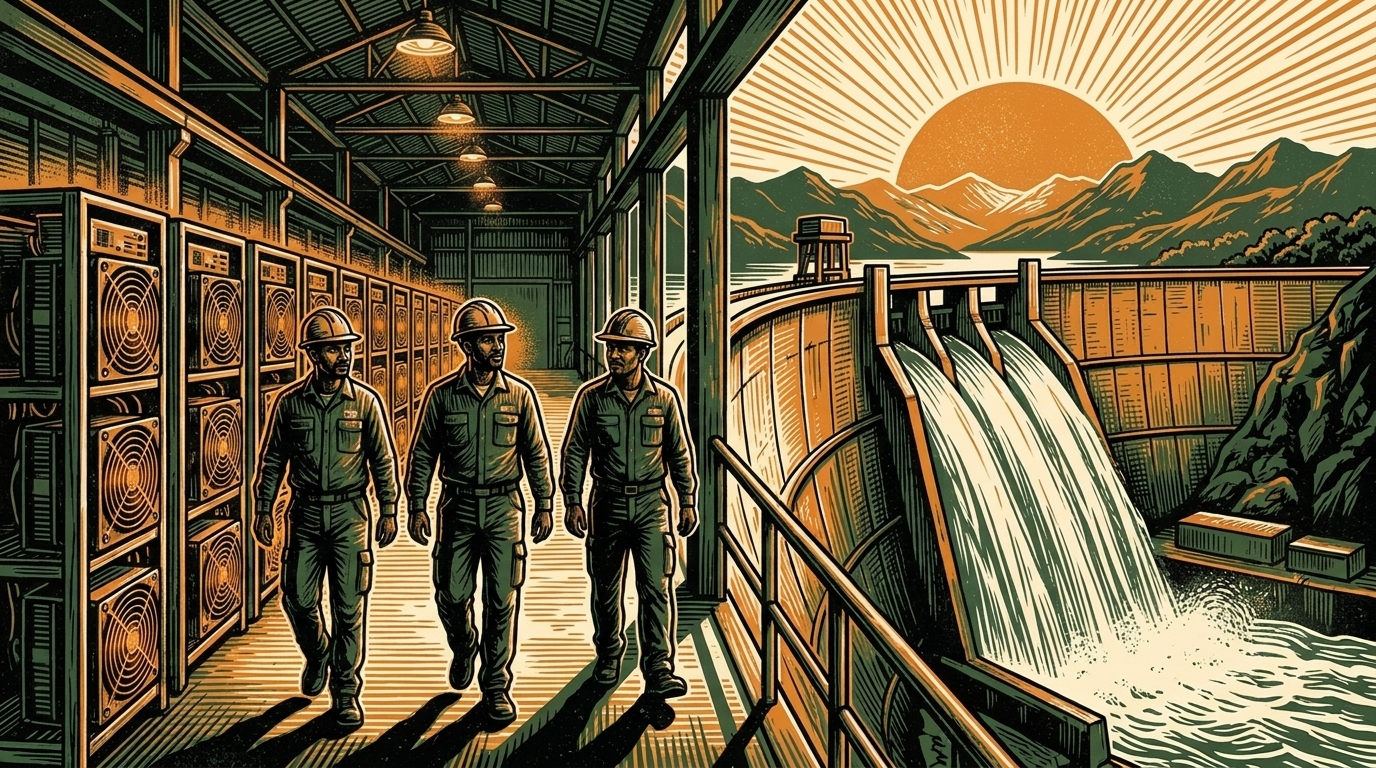
Ethiopia became one of the world's biggest bitcoin miners almost by accident. It had a giant dam, more electricity than its grid could carry, and a line of foreign miners willing to pay hard currency for the surplus. What it did not have was a stake in the business running on its rivers. That is the part the government now says it wants to change.
Speaking at the Finance Forward Ethiopia 2026 conference, Prime Minister Abiy Ahmed said Ethiopian Investment Holdings — the state's sovereign wealth fund — is seeking partners who can bring capital, technology and mining expertise, so the country earns revenue directly rather than only collecting power bills from private operators.
The pivot is already underway on paper. In February, Ethiopian Investment Holdings announced a $250 million tie-up with Data Center Service, a subsidiary of the West Data Group, to build infrastructure for bitcoin mining and AI training. Under the arrangement, the fund expects to own a 20–30% stake in the mega-facilities being built on Ethiopian soil.
That is a different posture from the one that made Ethiopia a mining hub in the first place. Until now the model was simple landlording: the state utility sold cheap power and let others take the price-and-difficulty risk. Taking equity means the government stops being merely the electricity vendor and becomes a partner in the upside — and the downside.
The scale it is building on is real. Ethiopia is already among the ten largest bitcoin-mining countries, contributing an estimated 2.5–2.7% of global hashrate. By mid-2025 it hosted around 23 mining operations drawing close to 600 megawatts, at an average power cost near $0.032 per kilowatt-hour — among the cheapest industrial electricity anywhere.
All of it rests on the Grand Ethiopian Renaissance Dam, which can generate more than 6,000 megawatts — more than the domestic grid can absorb even at half output. Mining is, in effect, a buyer of last resort for power that would otherwise be spilled: it monetizes stranded energy and turns it into foreign-currency revenue for a state that badly needs it.
The numbers are climbing. Ethiopian Electric Power earned roughly $55 million from supplying miners in an earlier year; projected utility revenue tied to the sector is now measured in the hundreds of millions, with figures around $350 million cited for 2026. For a government chronically short of hard currency, a dam that prints dollars is an asset it would rather own than lease.
A country that once sold its surplus watts by the kilowatt now wants a seat on the board of the machines burning them.
There is a harder question underneath the revenue math, and it deserves stating plainly. A large share of Ethiopians still lack reliable grid electricity. Directing hundreds of megawatts of the country's cheapest power toward machines that produce bitcoin, rather than toward homes and factories waiting for connections, is a genuine political choice, not a free lunch.
The government's answer is that mining consumes power the grid physically cannot deliver to those homes yet — transmission, not generation, is the bottleneck — and that the dollars it earns can fund the very build-out that closes the gap. That may be true. It is also the kind of claim worth watching against what actually gets built.
The commercial risks are ordinary but real. Mining revenue rides on the bitcoin price and network difficulty, both of which have been unforgiving in 2026; taking equity converts a stable power-sales line into a volatile one. AI data centers are now competing for the same cheap Ethiopian power, which could bid up the price of the surplus that made mining attractive. And concentrating the sector around a state fund and a handful of large partners builds in the single-operator fragility that has bitten other national programs.
Ethiopia is trying to graduate from bitcoin's landlord to its shareholder. If it works, a state fund turns stranded hydropower into an owned, dollar-earning asset. If the price stays low or the power gets more valuable elsewhere, it will have taken on a miner's risks to chase a miner's rewards.
Editor's note: the Prime Minister's "seeking partners" statement and the $250M Ethiopian Investment Holdings tie-up are drawn from Ethiopian and industry reporting; hashrate share, megawatt and revenue figures are estimates and projections that move with the bitcoin price and network difficulty. Nothing here is financial advice.
Free. Five minutes. No hype.
Subscribe free