 The Bitcoin Beacon
One line of bitcoin-holding companies still raises hundreds of millions on demand. The other can't fill a rights issue at a 10% yield. The gap is the story.
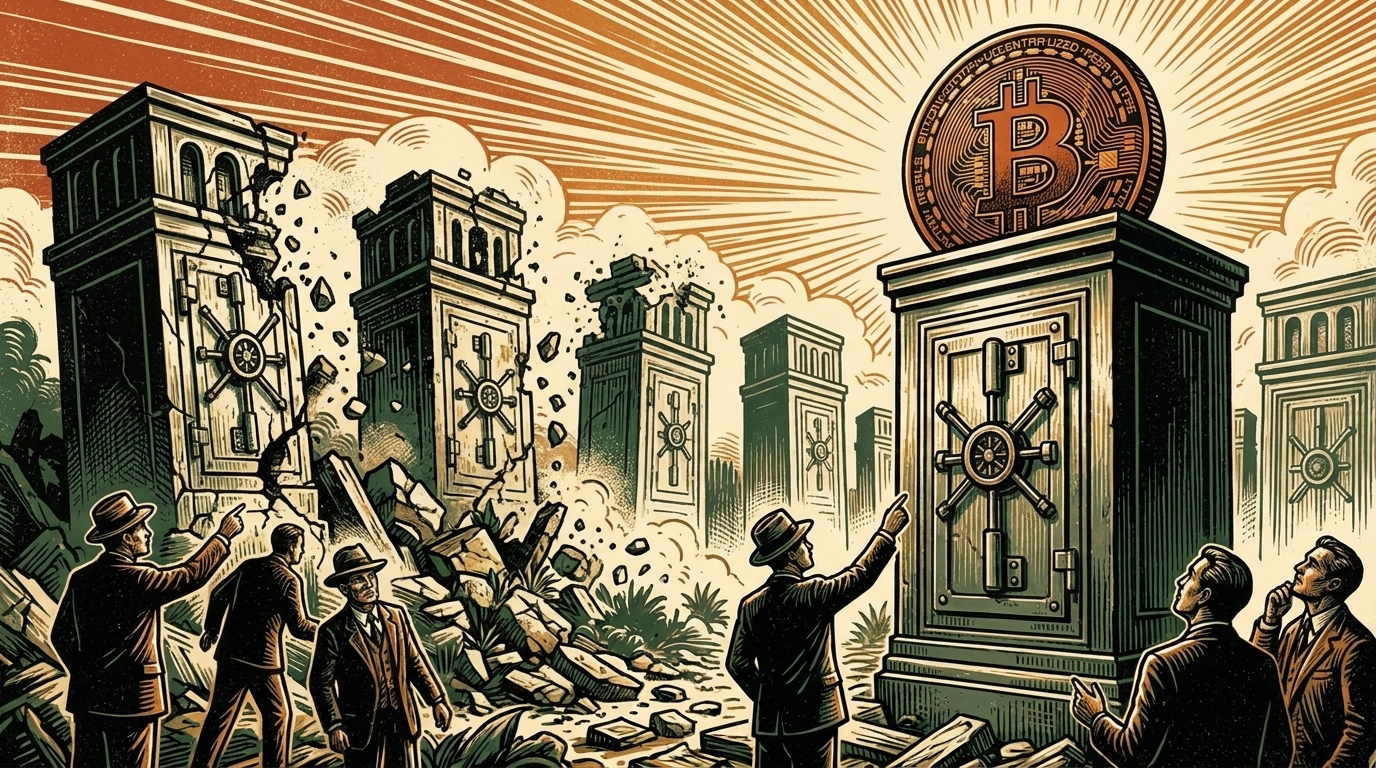
There is a comforting way to read the bitcoin-treasury industry — hundreds of companies, more than a million coins on corporate balance sheets — and a truer one. The truer one is that the sector has quietly split into two tapes, and the distance between them is widening.
On one tape, money still arrives on demand. Treasury B.V. raised €126 million (about $147 million) in a private round led by Winklevoss Capital and David Bailey's Nakamoto, aiming to become Europe's leading bitcoin treasury via a reverse listing on Euronext Amsterdam. The pitch — a euro-denominated balance sheet built to accumulate bitcoin — found deep-pocketed backers without breaking stride.
On the other tape, the same pitch can't clear the shelf. In Sweden, Bitcoin Treasury Capital's preferred-share rights issue closed in June just 52% subscribed — roughly SEK 12 million of a SEK 23 million target — despite a headline 10% dividend. A yield that generous going unmet is not a footnote; it is a verdict on how much appetite is left for financially-engineered bitcoin equity in a cool market.
Even marquee names have proved mortal. Bitcoin Standard Treasury — Adam Back's vehicle, built to debut holding some 30,021 BTC — watched its planned SPAC listing collapse earlier this month. When a headline sponsor can't get a deal over the line and a 10% coupon can't fill a modest raise, the market is telling you something it wasn't telling you a year ago.
A 10% dividend that goes unsubscribed isn't a rounding error. It's the market pricing the difference between a bitcoin company and a bitcoin costume.
The dividing line is the premium — the gap between a company's share price and the value of the bitcoin it holds. When shares trade well above the coins (a high mNAV), a treasury can issue stock, buy more bitcoin, and lift the value of the shares it just sold: a flywheel. When shares sink toward or below the coin value, the flywheel jams. New stock dilutes rather than accretes, and raising becomes impossible precisely when a company most needs to.
So the survivors are the ones with something beyond leverage: a trusted brand, cheap or patient capital, or — the durable version — real cash flow. That last model is the one to watch. Ricardo Salinas's recently launched holding company sweeps the earnings of operating businesses into a bitcoin treasury, buying coins with profits instead of borrowed hope. A treasury funded by cash flow doesn't care what its premium does this quarter.
The bearish read can be overdone, and fairness requires the other side. A half-filled raise still lists; a niche product can find its buyers slowly; Sweden's preferred share is a different risk instrument than a spot holding, and pricing it cautiously is rational, not damning. Premium compression is arguably healthy — it clears out the vehicles that only ever made sense at a bubble multiple.
And one cycle's vaporware is another's survivor. Several of today's giants looked shaky in earlier drawdowns; leverage that looks reckless at $63,000 can look visionary at a new high. The shakeout is not proof the model is broken. It is proof the model is being priced — finally — on something other than enthusiasm. That is what a maturing market looks like: not everyone who bought bitcoin through a ticker gets to keep the ticker.
The bitcoin-treasury trade isn't dying; it's sorting. Money still floods the companies with brand, cash flow, or cheap capital, and drains away from the ones that were only ever a leveraged bet in a costume. Watch which side raises easily this quarter — that's the list that survives the next drawdown.
Editor's note: opinion. Figures on Treasury B.V. ($147M raise, Euronext plan), Bitcoin Treasury Capital (~52% subscription, 10% dividend) and Bitcoin Standard Treasury (~30,021 BTC, collapsed SPAC listing) come from company disclosures and trade reporting. Nothing here is financial advice.
Free. Five minutes. No hype.
Subscribe free