 The Bitcoin Beacon
A bill before the National Assembly would let bitcoin and stablecoins settle debts when both sides agree — El Salvador’s idea, minus the mandate.
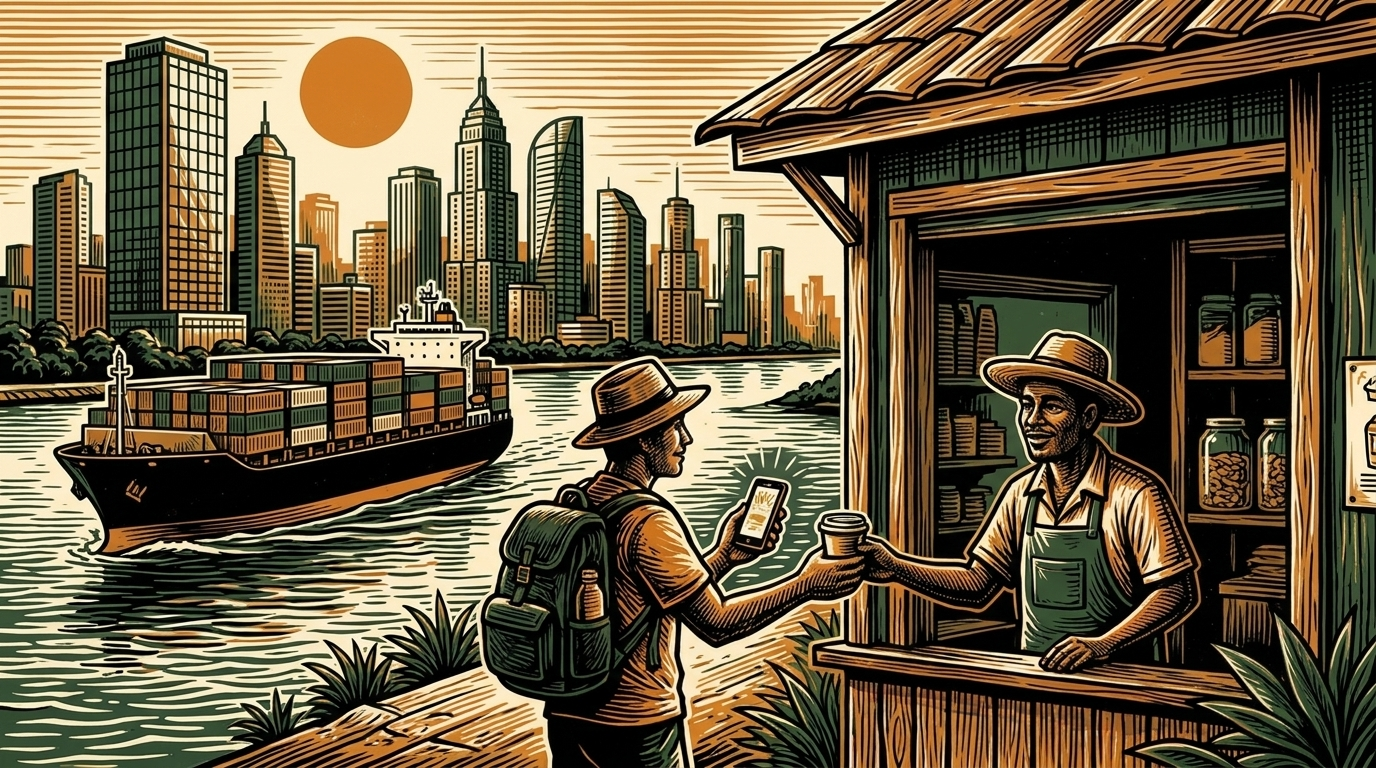
Panama already runs on someone else’s money — it has used the U.S. dollar as legal tender for more than a century. Now a bill moving through its National Assembly would add a second option, letting bitcoin, stablecoins and other digital assets settle a bill whenever buyer and seller both agree to it.
The measure, presented in early 2026 as Anteproyecto de Ley N° 314, is Panama’s attempt to convert a large informal crypto economy into a supervised one. It recognizes digital assets as a valid means of payment for goods, services and debts — explicitly by mutual consent, not by decree — and builds a licensing regime around the businesses that move them.
Two things, mostly. First, it removes the legal grey zone: a merchant who wants to accept bitcoin, or a landlord who agrees to take a stablecoin for rent, would be doing something the law names and permits rather than tolerates. No one is required to accept it, which is the crucial difference from El Salvador’s 2021 law.
Second, it regulates the intermediaries. Firms that qualify as virtual-asset or crypto-asset service providers would need a license, an anti‑money‑laundering program, minimum capital, governance standards and a local compliance officer, under the supervision of the banking regulator (SBP) and the financial-intelligence unit (UAF). Sandbox and AML guidance is expected to follow through the year.
No one must take bitcoin. The law would simply stop pretending no one does.
Every Central American crypto-payments law now lives in El Salvador’s shadow, and Panama’s drafters clearly wrote with that experience in mind. San Salvador made bitcoin legal tender in 2021 and, under later IMF pressure, walked back the parts that obliged businesses to accept it. Panama is starting where El Salvador ended: voluntary from day one.
That makes the bill less dramatic and, arguably, more durable. There is no state wallet to distribute, no national bitcoin purchase, no requirement that ripples through every cash register. The state’s role is to license, supervise and tax — a regulatory posture closer to Panama’s existing identity as a banking and shipping hub than to Bukele’s bet.
Panama has been here before. A broader crypto bill cleared the Assembly in 2022 only to be vetoed by the president over money-laundering and constitutional concerns, and it never took effect. The current draft’s heavy emphasis on AML, licensing and supervision reads as a direct answer to the objections that killed the last attempt.
It is still a bill, not a law. It must clear committee and the full Assembly, and the details — capital thresholds, which assets qualify, how strict the compliance burden is — can shift or stall. But the direction is notable: a dollarized economy choosing to formalize bitcoin as a payment option rather than ban it or ignore it.
Panama isn’t declaring bitcoin money; it’s declining to pretend bitcoin isn’t already used as money. In a country that has outsourced its currency for a hundred years, letting people also settle in an asset no government issues is less a revolution than an admission.
Editor’s note: Anteproyecto de Ley N° 314 is in the legislative process, not enacted; provisions (which assets qualify, capital and compliance thresholds) may change before any vote. A prior Panama crypto law was passed in 2022 and vetoed. Stablecoins, not bitcoin, dominate payment volume in dollarized economies. Nothing here is legal or financial advice.
Free. Five minutes. No hype.
Subscribe free