 The Bitcoin Beacon
A Gulf oil state is licensing regulated miners to burn wasted gas and spare power into bitcoin — the mirror image of Laos and Paraguay pricing miners out.
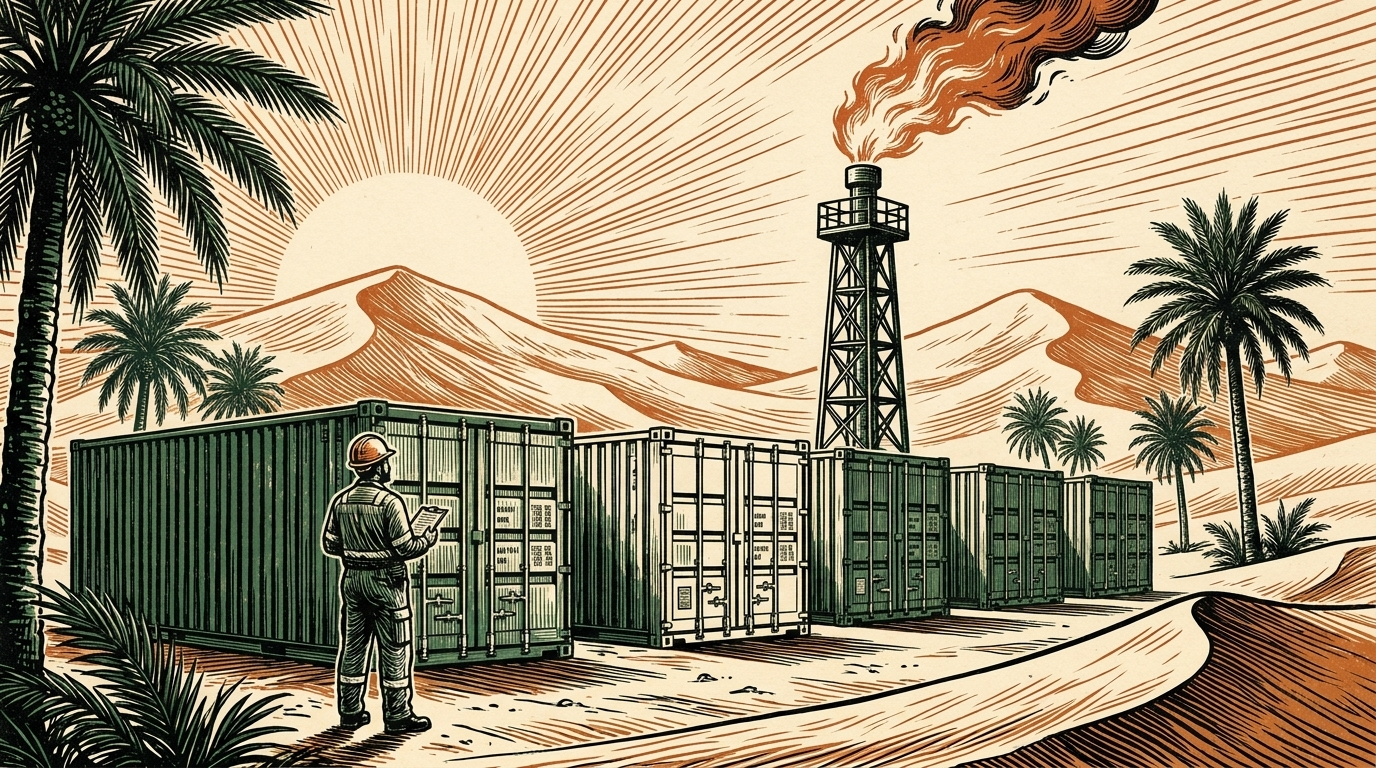
For decades the standard fate of the gas that comes up alongside oil, in fields too remote to pipe it anywhere useful, was to be set on fire. A flare turns a stranded hydrocarbon into heat, light and carbon, and nothing else. Oman’s wager is that a bitcoin miner parked next to that flare can turn the same gas into something that leaves the country richer.
The sultanate is building a state-guided mining sector around exactly this idea: license regulated operators, point them at flared gas, surplus grid power and solar, and treat the industry as an export business rather than a nuisance to be taxed away. It is a deliberate contrast with the states that spent the past year showing miners the door.
Bitcoin mining is uniquely suited to stranded energy because it is location-agnostic and interruptible. A data shed full of machines can sit at a wellhead, consume gas that has no pipeline and no buyer, and convert that otherwise-wasted energy into hashrate — and into bitcoin — then throttle down when the power is needed elsewhere. No transmission line required.
For a hydrocarbon economy trying to diversify, the appeal is layered. Flare-gas mining monetizes a resource that is currently burned for zero return, can cut the visible flaring that draws environmental scrutiny, and creates a domestic tech industry — data centers, cooling, maintenance, and the vendors and jobs around them — on top of the same fields Oman already runs.
The gas was going to burn either way. Oman’s bet is that it should mint bitcoin on the way up.
What distinguishes Oman from the wildcat mining booms of the past is the emphasis on rules. The sultanate has framed its push as a licensed, KYC-and-AML-bound activity aimed at attracting credible international operators rather than anonymous machines chasing cheap power. That posture has helped move Oman up the ranks of national mining hosts, alongside a broader 2026 shift in which Gulf and emerging-market states court miners as energy-monetization partners.
It is the opposite trajectory from the one dominating this year’s mining news. Laos cut power to its miners to redirect it toward industry and AI; Paraguay roughly doubled tariffs and let its licensed fleet shrink. Those are grids reclaiming electricity from an industry they had merely rented it to. Oman, sitting on gas it cannot sell, is inviting miners in to buy the one thing it has in surplus.
The economics still ride on two things Oman does not control: bitcoin’s price and network difficulty, both of which have been unkind in 2026. A flare-gas mine is cheap to feed but not free to build, and a sustained price slump can turn a monetization story into a stranded-capex story. Concentrated, state-blessed operators also carry the usual single-point risks.
And the environmental math is contested. Proponents argue mining flared gas is strictly better than venting or open flaring, because engines burn the methane more completely; critics counter that any framing which makes fossil extraction more profitable slows the transition, whatever it does to a given flare. Both can be true. What is clear is the strategic logic: a petro-state hedging its future by converting waste energy into a bearer asset it can hold.
Editor’s note: Oman’s mining push is a state strategy that is being built out through 2026; capacity and ranking figures are industry estimates, not audited totals, and mine economics depend on bitcoin’s price and network difficulty. The environmental case for flare-gas mining is genuinely contested. Nothing here is investment advice.
Free. Five minutes. No hype.
Subscribe free